Menopause Hot Flashes, Brain Fog & Sleep: The Neurological Truth
Menopause Is a Neurological Transition: Understanding Hot Flashes, Brain Fog, and How Plants Support Your Body Through the Change
If you’re in perimenopause or in menopause and feeling like your body has been hijacked by an alien force, you’re not imagining it. The hot flashes that wake you drenched at 3am, the brain fog that makes you forget why you walked into a room, the mood swings that surprise even you, and the vaginal dryness that makes intimacy uncomfortable, these aren’t “just menopause.” These are your brain and body responding to a massive neurological and endocrine shift.
Menopause isn’t just about your ovaries stopping. It’s about your brain adapting to a completely different hormonal landscape. And while your body is remarkably intelligent and will eventually find its new balance, the transition can be brutal.
Let me show you what’s actually happening in your body, and how specific plants can support each system as it navigates this change.
The Hypothalamus: Your Body’s Thermostat Goes Haywire
Hot flashes aren’t about being “too hot.” They’re about your brain’s temperature control center getting confused.
Here’s what happens: Deep in your brain sits a tiny region called the hypothalamus. Within it, there’s a specialized group of neurons called KNDy neurons (named for the three peptides they contain: kisspeptin, neurokinin B, and dynorphin). These neurons have a dual job. They control both your reproductive hormones AND your body temperature regulation.
When estrogen levels are normal, KNDy neurons stay relatively quiet and your thermostat functions smoothly. You have a comfortable range, called the thermoneutral zone, between the temperature that triggers sweating and the temperature that triggers shivering. This zone gives your body flexibility to handle normal temperature fluctuations without dramatic responses.
But when estrogen drops during menopause, KNDy neurons hypertrophy. They get larger and more active, forming denser networks of connections. They start overexpressing neurokinin B, which directly stimulates your heat loss mechanisms. Your thermoneutral zone narrows dramatically, sometimes to less than half its normal width.
What this means practically: a tiny elevation in core body temperature, something that wouldn’t have registered before, now triggers your body’s emergency cooling system. Blood rushes to your skin surface (the flush), your sweat glands activate (the drench), and you feel an intense wave of internal heat. Your body thinks it’s overheating when it’s not.
This is why hot flashes often happen at night. Your core body temperature naturally rises slightly during certain sleep phases. In a narrow thermoneutral zone, that small rise crosses the threshold and boom, you wake up in a pool of sweat.
The hypothalamus isn’t malfunctioning. It’s responding appropriately to the signals it’s receiving. The problem is those signals are being generated by neurons that are working overtime trying to compensate for missing estrogen.
Your Brain on Low Estrogen: Why Brain Fog Is Real
If you’ve been forgetting words, losing your train of thought mid-sentence, or walking into rooms with no idea why you’re there, you’re experiencing one of the most common and distressing symptoms of menopause: brain fog.
This isn’t in your head (well, it is, but not in the way people mean when they dismiss it). This is a real neurological phenomenon happening in your brain right now.
Estradiol, the primary form of estrogen that works in your brain, does something critical at the cellular level: it pushes your brain cells to burn glucose more efficiently. Glucose is your brain’s main fuel. When estradiol levels drop, there’s an overall reduction in brain energy levels. Your brain is literally running on less fuel than it’s used to.
Studies using brain imaging have shown decreased glucose metabolism in the hippocampus and frontal cortex of menopausal women, the exact regions responsible for memory formation, information processing, and executive function. This energy deficit can trigger not just brain fog, but also hot flashes, mood changes, anxiety, and the cascade of other cognitive symptoms women experience.
Here’s where it gets interesting: your brain doesn’t just give up when estrogen drops. It tries to adapt. Brain scans show that postmenopausal women have significantly higher densities of estrogen receptors in key brain regions compared to premenopausal women. Your brain is essentially creating more “estrogen catchers,” trying to grab every molecule of the hormone that’s still circulating.
This compensation process takes time. Your brain is reorganizing its circuitry, upregulating receptor density, finding new metabolic pathways. During this transition phase, typically perimenopause and the first few years of menopause, cognitive function can feel noticeably impaired. The good news? For most women, once the brain completes this adaptation, brain fog improves. It’s temporary, not permanent cognitive decline.
Estradiol also directly regulates the neurotransmitters involved in cognition and mood: serotonin, dopamine, and norepinephrine. When estrogen levels fluctuate or drop, these neurotransmitter systems get disrupted, affecting not just memory and focus, but also mood, motivation, and emotional regulation.
Sleep: The Missing Link in Menopause Symptoms
You might think your sleep problems are just from night sweats waking you up. That’s part of it, but not the whole story.
Estrogen and progesterone directly regulate your sleep cycles. Without adequate levels of these hormones, your brain cannot properly regulate deep sleep, the phase where your brain detoxifies and clears out metabolic waste. This is when the glymphatic system (your brain’s waste removal system) operates most efficiently.
When you’re not getting enough deep sleep because your hormones can’t regulate sleep architecture properly, metabolic waste and cellular debris accumulate in your brain. This makes brain fog worse. It also contributes to mood issues, as your brain doesn’t get the restoration it needs.
Poor sleep also disrupts the hypothalamic-pituitary-adrenal axis, your stress response system, leading to elevated cortisol levels. Chronically elevated cortisol further impairs memory and cognitive processing.
It’s a vicious cycle: hormone changes disrupt sleep, poor sleep worsens cognitive function and mood, stress from these symptoms elevates cortisol, which further disrupts sleep. Breaking this cycle requires addressing sleep at the hormonal level.
Mood Swings and Depression: Your Brain Chemistry in Flux
The mood changes during menopause aren’t just about being stressed or tired (though those don’t help). They’re about fundamental shifts in brain chemistry.
Estrogen receptors are found throughout the brain regions that regulate mood: the prefrontal cortex, hippocampus, amygdala, and others. Estrogen doesn’t just sit passively in these receptors. It actively regulates the synthesis, metabolism, and receptor activity of mood-regulating neurotransmitters.
When estrogen levels fluctuate wildly during perimenopause, these neurotransmitter systems become unstable. You might feel fine one day and inexplicably irritable or tearful the next, not because anything external changed, but because your brain chemistry is in flux.
It’s not just low estrogen that causes mood issues. It’s the fluctuation and the rate of decline. Research shows that women whose estrogen drops more rapidly tend to have more severe mood symptoms.
Vaginal Dryness and Tissue Changes
Estrogen maintains the health of vaginal tissue, supporting thickness, elasticity, lubrication, and blood flow. When estrogen drops, vaginal tissue thins, becomes less elastic, produces less natural lubrication, and is more prone to irritation and discomfort.
This isn’t just about sex (though that’s certainly affected). This can cause general discomfort, increased susceptibility to infections, and a feeling of dryness that affects quality of life.
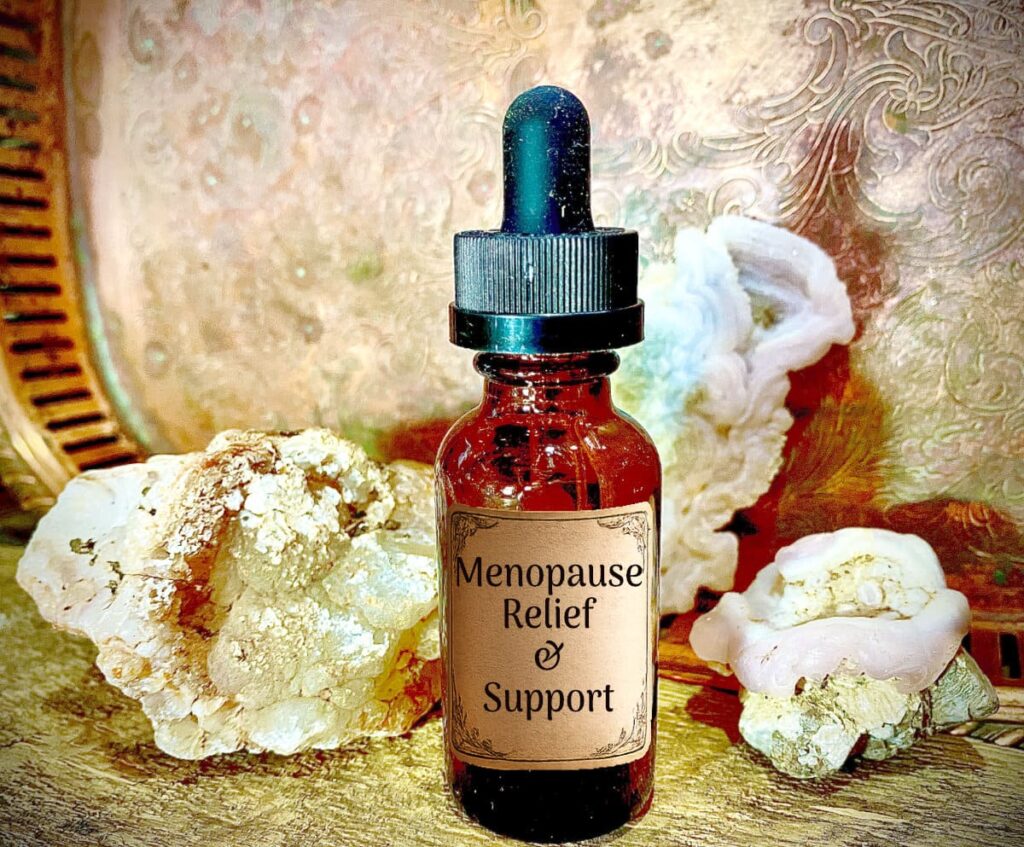
The Plants That Support Your Body Through This Transition– Menopause Relief Support
These aren’t 27 random herbs thrown together. Each one addresses specific aspects of the neurological and hormonal shifts happening in your body during menopause.
Cooling and Vasomotor Support
Mint and Sage provide cooling properties that help modulate the body’s heat response. In traditional herbal medicine, cooling herbs have been used for thousands of years to address excess heat in the body. They work through multiple pathways, including supporting circulation and providing a mild vasodilatory effect that can help prevent the rapid vasodilation that characterizes hot flashes.
Fennel contains phytoestrogens, plant compounds with mild estrogenic activity. These don’t replace your body’s estrogen, but they can provide gentle support to estrogen receptor sites, helping to moderate the dramatic receptor upregulation your brain is attempting.
Fleabane has traditionally been used as a cooling herb that helps modulate inflammatory heat responses in the body, supporting the thermoregulatory challenges of menopause.
Mood and Neurotransmitter Support
St. John’s Wort is one of the most researched herbs for mood support. It modulates serotonin, dopamine, and norepinephrine, the same neurotransmitters disrupted by estrogen fluctuation. By supporting these systems, it helps stabilize mood during the transition when your brain chemistry is in flux.
Vervain acts as a nervous system tonic, supporting emotional balance and reducing stress response. When your HPA axis (stress system) is overactivated, vervain helps bring it back into regulation.
Lemon Balm has been used traditionally for anxiety and restlessness. It supports GABA activity in the brain, the calming neurotransmitter that helps reduce anxiety and promote relaxation.
Brain Energy and Cognitive Support
Ginseng is an adaptogen that supports mitochondrial function and energy production at the cellular level. Remember how your brain’s glucose metabolism drops during menopause? Ginseng helps support cellular energy production, giving your brain more metabolic fuel to work with during the adaptation period.
Rosemary contains compounds that support cerebral blood flow and protect brain cells from oxidative stress. Better blood flow means better oxygen and nutrient delivery to brain tissue.
Reindeer Moss is rich in usnic acid and other compounds that support cellular energy and provide neuroprotective effects.
Sleep Support
Hops contains compounds that bind to GABA receptors, promoting relaxation and sleep. When your hormones aren’t regulating sleep properly, hops can provide support through a different pathway.
Maypop (Passionflower) supports GABA activity and helps reduce the racing thoughts and restlessness that can interfere with falling asleep.
Wild Yam has traditionally been used for its hormone-balancing properties and its ability to support restful sleep during hormonal transitions.
Hormonal Regulation and Transition Support
Red Clover contains multiple types of isoflavones (phytoestrogens) that provide gentle estrogenic support. These plant compounds can occupy estrogen receptor sites and provide mild activity, helping to ease the dramatic receptor upregulation your body is attempting.
Motherwort has been used for centuries specifically for menopausal symptoms. It supports cardiovascular function (your heart can be affected by estrogen decline too) and provides nervous system support during the transition.
Evening Primrose contains gamma-linolenic acid (GLA), an omega-6 fatty acid that supports prostaglandin production. Prostaglandins play a role in hormone signaling and inflammatory response, and supporting this system can help moderate menopausal symptoms.
Wild Yam has traditionally been used for its hormone-balancing properties. It contains diosgenin, a compound that supports the body’s own hormone production pathways and helps ease hormonal fluctuation.
Spiderwort and Fleabane both support the body’s adaptation to hormonal changes, helping ease the transition by supporting multiple body systems simultaneously.
Reproductive Tissue Support
Mulberry provides phytoestrogens and supports tissue health throughout the body, including reproductive tissues.
Raspberry is rich in fragarine and other compounds that specifically support uterine and reproductive tissue health during transition. It helps maintain tissue tone and integrity during hormonal changes.
Yarrow has astringent and toning properties that support tissue health and circulation, particularly beneficial for the vascular changes that occur with estrogen decline.
Lymphatic and Circulatory Support
Ocotillo moves stagnation unlike anything else I’ve worked with, particularly in the pelvic region. During menopause, circulation and lymphatic flow can become sluggish, contributing to tissue changes and discomfort. Ocotillo gets things moving.
Loose Strife supports circulatory health and helps maintain healthy blood flow to tissues affected by hormone changes.
Smartweed and Cinquefoil support vascular health and tissue integrity.
Adrenal and Energy Support
Trumpet Flower and Bindweed support the body’s adaptation to stress and hormonal changes. With Bindweed giving extra support to the skeletal system as well.
Raspberry is rich in fragarine and other compounds that specifically support uterine and reproductive tissue health during transition.
How These Work Together
This isn’t about replacing your estrogen. This is about supporting your body through the massive neurological and hormonal reorganization it’s undergoing.
First, the cooling herbs (Mint, Sage, Fennel, Fleabane) help moderate the vasomotor symptoms, your hot flashes and night sweats, by supporting your body’s heat regulation from a different angle than the estrogen pathway.
Second, the mood-supporting herbs (St. John’s Wort, Vervain, Lemon Balm, Motherwort) stabilize neurotransmitter systems that are in flux due to estrogen changes. They provide support through serotonin and GABA pathways that aren’t dependent on estrogen.
Third, the brain-energy herbs (Ginseng, Rosemary, Reindeer Moss) support cellular energy production and blood flow, helping your brain function better during the period when glucose metabolism is compromised.
Fourth, the sleep-supporting herbs (Hops, Maypop, Wild Yam, Vervain) work through GABA and other pathways to help regulate sleep when your hormones can’t do it effectively on their own.
Fifth, the phytoestrogenic herbs (Red Clover, Mulberry, Fennel, Wild Yam) provide gentle estrogenic activity, offering mild support to estrogen receptors without the risks associated with hormone replacement.
Sixth, the tissue and circulatory support (Raspberry, Yarrow, Spiderwort) helps maintain integrity of reproductive and vascular tissues as they adapt to new hormone levels.
And throughout, the adaptogenic, circulatory, and system-balancing herbs (Ocotillo, Evening Primrose, Loose Strife, Smartweed, Cinquefoil, Trumpet Flower, Bindweed) support the physical changes happening in your cardiovascular system, reproductive tissues, lymphatic flow, and throughout your body as it navigates this major transition.
Your body is intelligent. It will adapt to this new hormonal landscape. But the transition can be smoother when you give your body the support it needs through multiple complementary pathways.
Why Pair This With Skeletal Support and Women’s Aphrodisiac
Menopause doesn’t happen in isolation. The same estrogen decline causing hot flashes and brain fog is also affecting your bones and your libido, and addressing all three creates comprehensive support for this transition.
Skeletal Support: Protecting Your Bones
Estrogen plays a critical role in bone metabolism. It inhibits osteoclasts (the cells that break down bone) and supports osteoblasts (the cells that build bone). When estrogen drops at menopause, bone breakdown accelerates while bone building slows down. This is why osteoporosis risk increases dramatically after menopause.
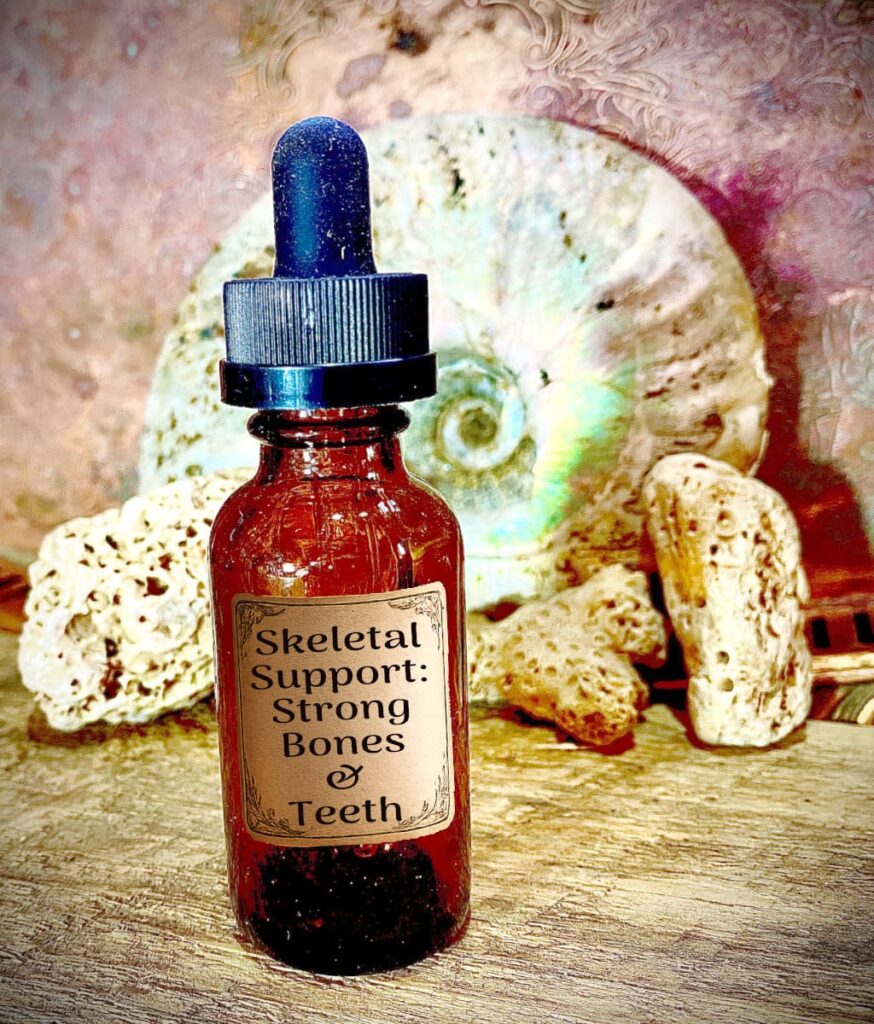
The first few years after menopause are when bone loss happens most rapidly. Taking Skeletal Support: Strong Bones & Teeth alongside Menopause Relief provides the minerals and plant compounds your bones need during this vulnerable period. It’s not about waiting until you have osteoporosis, it’s about supporting bone density during the transition when loss is most rapid.
Women’s Aphrodisiac: Restoring Desire and Pleasure
Testosterone, which is also produced by your ovaries, declines during menopause. Testosterone isn’t just for men; in women, it supports libido, arousal, sensation, energy, and mental clarity.
The vaginal dryness from estrogen loss can make intimacy uncomfortable, which creates a negative feedback loop: discomfort leads to avoidance, avoidance leads to less arousal, less arousal leads to even less natural lubrication.
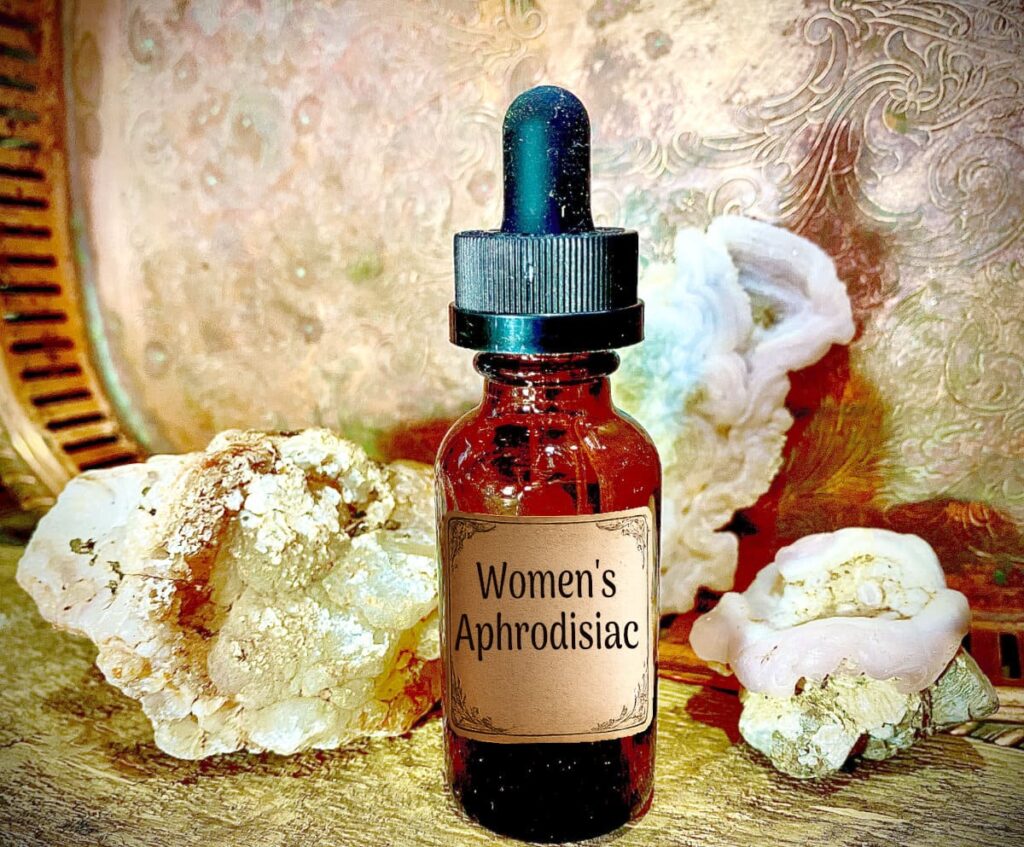
Women’s Aphrodisiac addresses libido from multiple angles: supporting healthy testosterone levels, enhancing blood flow to reproductive tissues, and supporting arousal and desire. When paired with Menopause Relief (which addresses the tissue dryness and overall hormonal transition), you’re supporting both the physical comfort and the desire/arousal aspects of intimacy.
Menopause doesn’t mean the end of your sexual life. But it does require support for the changes happening in your body.
This Is a Transition, Not a Disease
Western medicine often treats menopause like a disease, something to suppress or override. But menopause is a natural transition, one that every woman who lives long enough will experience. Your body knows how to do this. It’s done it for millions of years of human evolution.
What’s changed is that modern life offers less support for this transition. We’re more isolated, more stressed, exposed to more endocrine disruptors, eating less nutrient-dense food, and disconnected from the plant medicines that women have used for thousands of years to ease this passage.
This formula doesn’t suppress your body’s transition. It supports your body through it. The cooling herbs ease the thermoregulatory challenges. The neurotransmitter-supporting herbs stabilize mood and cognition during the period of neurological reorganization. The sleep herbs help when your hormones can’t regulate sleep properly. The phytoestrogens provide gentle support to receptors that are searching for estrogen signals.
You’re not broken. Your body is adapting to a major life transition, and that adaptation takes time and resources.
Using This Formula
This formula works cumulatively. You’re not suppressing symptoms; you’re supporting systems. Take as directed, and adjust frequency based on your symptom intensity.
Some women notice changes within days, particularly with hot flash frequency and sleep quality. Brain fog and mood typically take longer to shift, as your brain completes its neurological reorganization. Be patient with the process.
Healing isn’t linear. You might have great days followed by difficult days. This is normal during hormonal transition. The trajectory is what matters, not individual days.
Ready to support your body through this transition? → Menopause Relief Support Potion
Complete menopause support: Pair with Skeletal Support: Strong Bones & Teeth for bone health and Women’s Aphrodisiac for libido and intimate wellness.
Research and Citations
Hot Flashes and Hypothalamic Function:
- Menopausal Hot Flashes: Mechanisms, Endocrinology, Treatment (PMC)
https://pmc.ncbi.nlm.nih.gov/articles/PMC4612529/ - Menopause Hot Flashes and Molecular Mechanisms Modulated by Food-Derived Nutrients (PMC)
https://pmc.ncbi.nlm.nih.gov/articles/PMC10935406/ - What Happens During a Hot Flash? (BrainFacts.org)
https://www.brainfacts.org/thinking-sensing-and-behaving/aging/2021/what-happens-during-a-hot-flash-021021 - New pathways in the treatment for menopausal hot flushes (The Lancet)
https://www.thelancet.com/journals/lancet/article/PIIS0140-6736(17)30886-3/fulltext
Brain Fog and Cognitive Function:
- Cognition, Mood and Sleep in Menopausal Transition (PMC)
https://pmc.ncbi.nlm.nih.gov/articles/PMC6843314/ - Brain fog in menopause: a health-care professional’s guide (Taylor & Francis)
https://www.tandfonline.com/doi/full/10.1080/13697137.2022.2122792 - Menopause and Brain Fog: How Hormone Therapy Can Support Cognitive Health
https://doctoranat.com/blog/menopause-and-brain-fog-how-hormone-therapy-can-support-cognitive-health - Scans Show Brain’s Estrogen Activity Changes During Menopause (Weill Cornell Medicine)
https://news.weill.cornell.edu/news/2024/06/scans-show-brains-estrogen-activity-changes-during-menopause
Sleep and Menopause:
- Sleep and Brain Function at Menopause (PMC)
https://pmc.ncbi.nlm.nih.gov/articles/PMC11824937/
Cognitive Impairment and Menopause:
- Menopause and cognitive impairment: A narrative review (PMC)
https://pmc.ncbi.nlm.nih.gov/articles/PMC8394691/
SEO TITLE: Menopause Hot Flashes, Brain Fog & Sleep: The Neurological Truth
META DESCRIPTION: Discover what’s really happening in your brain during menopause. Learn how hot flashes, brain fog, mood swings work at the neurological level and how 17 plants support your transition.
FOCUS KEYWORDS:
- menopause hot flashes mechanism
- menopause brain fog causes
- perimenopause neurological symptoms
- natural menopause relief
- menopause mood swings explained
- hot flash hypothalamus connection
- menopause cognitive function
- plant medicine for menopause
- phytoestrogens menopause support
- menopause sleep problems causes