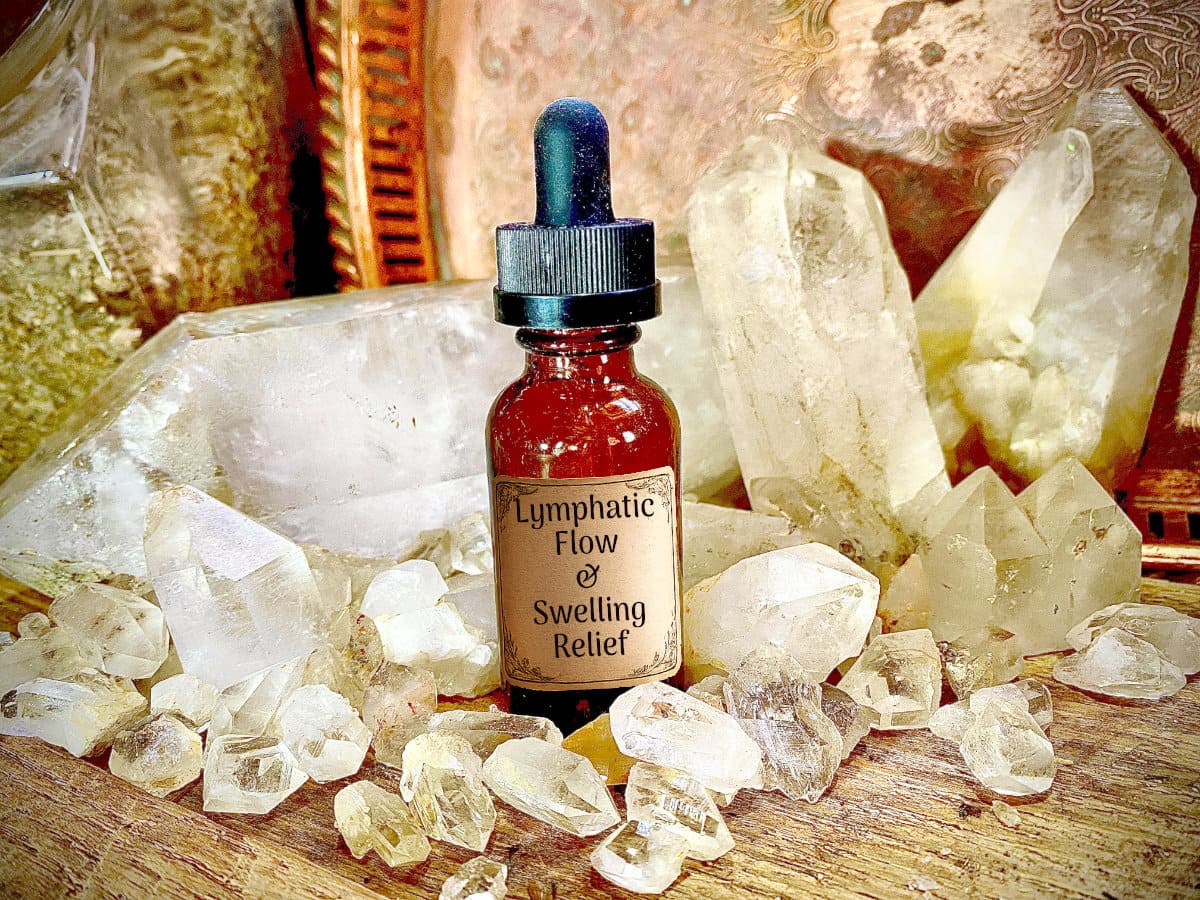
A Sacred Plant Potion for the Rivers Within
Place your hands on your throat, your underarms, the soft hollows of your inner elbows. Beneath your palms, an ancient, patient, without a pump to drive it, river flows. This is your lymphatic system: a sacred waterway woven through every tissue, every organ, and every cell of your being. It is older than any medicine we have invented to understand it.
We are, at our deepest nature, water animals. The human body is more fluid than solid, more river than stone. And yet the culture we are born into taught us to live as though we were machines. To push, produce, perform, and override every signal the body sends until illness forces us to stop. The lymphatic system pays the highest price for this forgetting. When we sit for hours, breathe shallowly, eat food our bodies cannot fully process, and carry grief with nowhere to go, the sacred waters stagnate. Swelling appears. Heaviness settles into limbs. The immune system clouds. The thyroid struggles to regulate what it cannot reach.
Lymphatic Flow & Swelling Relief was born from the wisdom of the plant kingdom. With allies that have always known how to move what is stuck, to soften what is rigid and to carry what has been held too long toward its rightful release. This potion speaks the language of your body’s rivers. It is an invitation back to flow.
Why Lymph Stagnates: The Modern Body in Crisis
Unlike the cardiovascular system, the lymphatic network has no central pump. It relies entirely on movement: the breath expanding and contracting the diaphragm, the muscles engaging with walking and stretching and reaching, the gentle peristalsis of digestion. When these natural rhythms are interrupted, lymph slows. It pools. It carries its burden of cellular debris, spent immune cells, metabolic waste, and unmetabolized emotion without a current to carry it home.
Lymphedema, chronic swelling, inflammatory conditions, seasonal allergies, sluggish detoxification, these are the body’s faithful attempt to cope with conditions it was never designed for. Such as chairs that compress the inguinal nodes for eight hours at a time, synthetic foods that create more inflammatory byproducts than any system can process gracefully, and chronic stress hormones that redirect the body’s resources away from the quiet work of lymphatic maintenance.
The thyroid, often at the center of metabolic imbalance, sits surrounded by cervical lymph nodes that, when congested, can impair its ability to communicate with the rest of the body. Immune function depends on the free movement of lymphocytes and macrophages through lymphatic channels. When flow is impaired, so is the body’s capacity to distinguish friend from threat, to resolve inflammation, to remember how health feels.
The Green Council: Plant Allies in This Potion
Every plant in this formula was chosen by relationship from thousands of years of human and plant learning each other’s languages. They arrive here as a council of green intelligence, each one offering a specific form of lymphatic wisdom.
| Ocotillo | Elephant Foot | Cleavers |
| Echinacea | Wood Sorrel | Violet |
| Petunia | Bittercress | Field Matter |
| Phlox | Day Lily | Women’s Tobacco |
| Dandelion | Ginseng | Self Heal |
| Chickweed | River Birch | Agave Alcohol |
| Quartz Crystal |
Cleavers
Cleavers (Galium aparine) is perhaps the most direct plant ally for the lymphatic system as this plant is all about connection with its trailing, branching stems covered in tiny hooked bristles that grab onto everything they touch. Often caught on clothing, animal fur, neighboring plants, and the hands of anyone who brushes through it. It moves by attachment, relationship, and the capacity to reach, hold, carry. This is the nature of the lymphatic system itself: it exists entirely at the interface between things, gathering what flows between, carrying what cannot travel alone, making connection where separation would mean stagnation.
Physiologically, Cleavers is a lymphagogue, which is a substance that specifically promotes lymphatic flow as it acts through several complementary mechanisms. Its iridoid glycosides and tannins have a toning effect on the walls of lymphatic vessels themselves, improving the elasticity and contractility of the lymphangion segments that rhythmically propel lymph forward through one-way valves. A lymphatic system whose vessels have lost tone is like a river whose banks have softened into mud: the current slows, the water spreads and pools, and the cleansing that should happen in concentrated, directed flow disperses into stagnant wetland. Cleavers restores the banks.
Cleavers is also a significant alterative and lymphatic decongestant for the nodes themselves. The lymph nodes that swell and harden under chronic immune activation, the cervical nodes that become pebbles beneath the jaw, the axillary nodes that make it uncomfortable to lower an arm, the inguinal nodes that press against the inner thigh, these respond to Cleavers through its combination of lymphagogue action and gentle anti-inflammatory chemistry. Traditional herbalists in Europe and North America used Cleavers specifically for “glandular swellings,” what we would now identify as chronically activated lymph nodes and for conditions they called “scrofulous,” recognizing the pattern of lymphatic burden that underlies so many chronic skin and immune conditions.
As a diuretic, Cleavers also supports the kidneys as the downstream exit for the fluid that the lymphatics mobilize. This pairing of lymphagogue and diuretic in a single plant is part of what makes it so elegant for swelling and fluid retention: it not only moves the accumulated lymphatic fluid but ensures it has somewhere to go. Without supported kidney elimination, mobilizing lymphatic congestion can simply shift fluid burden from one tissue compartment to another. Cleavers holds both ends of the process, upstream and downstream, in the same green handful.
Ocotillo
Ocotillo (Fouquieria splendens) rises from the Sonoran and Chihuahuan desert floors in long, thorned wands that can reach fifteen feet, remaining dormant and leafless through months of drought and then erupting almost overnight into green when rain falls. This is a plant that has perfected the art of waiting until conditions are right, then moving all at once with spectacular efficiency. This is also a description of lymphatic healing in the lower body, where years of accumulated stagnation can begin to shift with remarkable speed once the right conditions are created. Ocotillo knows how to work with the desert body, the body that has been holding everything tightly against scarcity and then is asked to trust the flood.
Ocotillo’s primary lymphatic affinity is for the pelvis and lower extremities, the regions drained by the inguinal lymph nodes, where the lymphatics of the legs, genitals, lower abdomen, and gluteal tissues all converge. This is one of the most commonly congested lymphatic regions in modern bodies: hours of sitting compress the inguinal nodes directly, while the sedentary lifestyle that compresses them also eliminates the walking and movement that would otherwise propel lymph through the one-way valves of the lower lymphatic channels. The result is a particular heaviness and swelling in the legs and lower body that is familiar to anyone who has spent long hours at a desk.
The plant’s active constituents include isorhamnetin and kaempferol, flavonoids with anti-inflammatory and circulatory-supportive properties and a resinous fraction that supports mucosal tissue throughout the digestive and reproductive tracts. This mucosal affinity is significant because the lymphatic tissue lining the gut, called gut-associated lymphoid tissue, or GALT, is the largest concentration of immune tissue in the entire body, responsible for surveilling everything that passes through the intestinal mucosa and determining what is absorbed versus what needs to be defended against. When the mucosal lining is inflamed or compromised, the GALT is perpetually activated, contributing to systemic immune dysregulation and lymphatic burden throughout the body. Ocotillo’s support for mucosal integrity in the lower digestive and pelvic organs directly reduces this burden at its source.
At the emotional and somatic level, Ocotillo speaks to the hips and pelvis as the body’s basin of power, creative force, and sexual energy, as the place where unprocessed emotion is disproportionately stored. The dense connective tissue of the hips and thighs holds the body’s oldest tensions: the bracing that comes from chronic threat, the contraction that accompanies trauma, the frozen action patterns that were never completed. When the lymphatics of this region are congested, the tissue itself is both physically and emotionally dense. Ocotillo brings desert heat to this dense terrain, the kind of heat that loosens and opens, helping the pelvis recall its original capacity for movement, power, and ease.
Violet
Violet (Viola odorata and related wild species) grows low and close to the ground, preferring the edges of things, the places where cultivated land softens into wild. It simply appears, year after year, in the forgotten corners, offering its heart-shaped leaves and its small purple flowers with a constancy. This quality of patient, quiet presence in the margins is exactly the medicine it brings: it works in the body’s forgotten corners, the lymphatic territories so subtle and so intimate that Western medicine barely mapped them before declaring them merely functional.
Violet leaves and flowers are extraordinarily rich in mucilaginous polysaccharides, long-chain sugar molecules that absorb water and form a gel-like substance that coats, soothes, and protects inflamed mucous membranes. This mucilaginous action is the foundation of Violet’s physical medicine: it reduces the irritation and inflammatory signaling in tissues that border lymphatic vessels, creating the conditions for lymph to move more freely through less inflamed terrain. Inflammation around lymphatic vessels is a perpectuating cause of lymphatic stagnation. Inflamed tissue releases cytokines that increase vascular permeability, flooding the interstitial space with more fluid than the lymphatics can manage, which increases congestion, which increases inflammation, in a cycle that Violet interrupts with its cooling, softening chemistry.
Violet also contains rutin, the same capillary-strengthening bioflavonoid found in Wood Sorrel, along with salicylic acid derivatives that provide mild, sustained anti-inflammatory action without the gastric irritation of synthetic analgesics.
Violet’s emotional medicine becomes inseparable from its physical action. The research of Dr. Candace Pert and others in the field of psychoneuroimmunology established that emotions are not merely psychological experiences but molecular events where neuropeptides and their receptors distributed throughout every tissue of the body, including lymphatic tissue. Grief that has not moved through the body to its resolution remains as a molecular pattern in the tissues, particularly in the chest and throat. The act of swallowing words, of holding back tears, of compressing the chest against loss, all of these create chronic muscular tension around the very lymphatic vessels and nodes whose flow depends on movement and release. Violet softens both the physical tension and the emotional holding simultaneously, not by forcing either, but by creating the conditions of safety and ease in which both can let go.
Echinacea
Echinacea (primarily Echinacea purpurea and Echinacea angustifolia) is marketed and consumed primarily as a cold and flu remedy, something to take at the first sign of infection and stop as soon as the illness passes. This framing misses nearly everything important about what Echinacea actually does in the body, and specifically in the lymphatic system through which so much of its medicine works.
The alkylamides and polysaccharides in Echinacea interact directly with cannabinoid receptors (CB2) distributed throughout immune tissue, the same receptor system that helps regulate inflammation, immune cell activity, and pain signaling throughout the body. This CB2 interaction is part of why Echinacea produces its characteristic tingling sensation on the tongue and why it has such a rapid and noticeable effect on the lymphoid tissue of the throat and neck: it is activating a receptor system that the immune cells in lymphatic tissue are listening for. CB2 receptor activation modulates macrophage activity, NK cell function, and the production of inflammatory cytokines by refining its calibration, helping the immune system respond with the right intensity to the actual level of threat rather than overreacting to minor provocations or underreacting to genuine ones.
Echinacea’s polysaccharides also have a direct lymphagogue effect, they increase the flow of lymph through the vessels, and support the activity of hyaluronidase inhibitors, helping to maintain the integrity of the connective tissue matrix that surrounds and supports lymphatic vessels. Pathogens use hyaluronidase to break down this matrix and spread through tissue; Echinacea helps preserve the structural integrity that keeps lymphatic vessels properly anchored and functional even during active infection.
Echinacea is also a specific remedy for the kind of chronic low-grade lymphatic congestion that follows incompletely resolved infections, the lingering swollen nodes and immune fatigue that can persist for months or years after viral illness, Lyme disease, or recurrent bacterial infections. In these states, the lymph nodes are holding an immune memory that was never fully processed to resolution: the battle did not properly end, and the lymphatic tissue remains partially mobilized indefinitely, draining resources without completing its work. Echinacea supports the completion of these incomplete immune responses, helping the lymph nodes move from their state of chronic vigilance into the resting discernment that is the mark of a truly healthy immune system which is present, responsive, and unafraid.
Dandelion
Dandelion (Taraxacum officinale) grows everywhere, costs nothing, is available to everyone, and carries medicine of such depth and breadth that entire books have been written about this single plant. It is also the most eloquent example of a plant whose medicine operates at the intersection of multiple body systems simultaneously, making it impossible to discuss its role in lymphatic health without also discussing the liver, kidneys, digestive system, and the endocrine system because Dandelion does not recognize the divisions we have drawn between these organs. It sees and works with the whole body as a single drainage ecology.
The liver and the lymphatic system share one of the most intimate relationships in the body. Approximately half of all lymph in the body originates in the liver, a fact that most discussions of lymphatic health entirely overlook. The liver produces enormous quantities of protein-rich fluid that drains through hepatic lymphatics and contributes substantially to the flow in the thoracic duct. When the liver is burdened by dietary excess, alcohol, environmental toxins, pharmaceutical processing, viral hepatitis, or the accumulated demands of processing the inflammatory chemistry of chronic stress. Its lymphatic drainage becomes congested, and this congestion propagates backward through the thoracic duct into the systemic lymphatic circulation. You cannot effectively address lymphatic stagnation in a body with a burdened liver.
Dandelion root acts on the liver through several pathways: it stimulates bile production and bile flow, supporting the emulsification and elimination of fat-soluble toxins; it increases the production of superoxide dismutase and other endogenous antioxidants that protect liver cells from oxidative damage; and it supports the activity of cytochrome P450 enzymes involved in Phase I detoxification. Dandelion leaf, meanwhile, is one of the most effective botanical diuretics known, providing potassium-sparing diuresis that supports kidney elimination without depleting electrolytes. This dual action of liver support via the root, kidney support via the leaf means that Dandelion simultaneously opens the two primary processing organs that lymph must ultimately drain through.
Dandelion also contains taraxacin and taraxacerin which are bitter sesquiterpene lactones that activate the entire bitter receptor cascade throughout the digestive system, along with inulin, a prebiotic fiber that feeds the beneficial bacteria of the gut microbiome. The gut microbiome has been found to have direct bidirectional communication with the GALT and with lymphatic tissue throughout the body. A healthy microbiome supports immune regulation and reduces the inflammatory signaling that burdens lymphatic vessels, while a gut that lacks a healthy microbiome generates chronic immune activation that perpetuates lymphatic congestion. Dandelion works at this root level, restoring the digestive foundation upon which all systemic health, including lymphatic health.
Self Heal
Self Heal (Prunella vulgaris) grows in lawns, meadows, and roadsides on every inhabited continent, finding its way into the most ordinary places. Herbalists across traditions, Chinese, European, North American indigenous, have used Self Heal for thousands of years for conditions involving immune dysregulation, lymphatic swelling, fevers that will not resolve, and wounds that will not heal.
The rosmarinic acid in Self Heal is one of its most studied constituents, with documented anti-inflammatory, antioxidant, antiviral, and immunomodulatory properties. Rosmarinic acid inhibits the complement system which is a cascade of immune proteins that, when chronically activated, contributes significantly to the inflammatory burden that lymphatic vessels must constantly navigate. Complement activation is part of normal acute immune response, but in chronic inflammatory states it becomes a driver of the very conditions it was meant to resolve. Self Heal’s regulation of this cascade is part of how it creates the conditions in which healing becomes possible not by suppressing immunity, but by returning it to proportionate response.
Self Heal also contains ursolic acid, a triterpenoid with significant anti-tumor and lymphoprotective properties, and hyperoside, a flavonoid with particular affinity for the thyroid gland making it specifically relevant to the thyroid-lymphatic relationship that underlies so many cases of chronic lymphatic congestion. The thyroid gland sits surrounded by cervical lymph nodes and depends on functional lymphatic drainage for its own healthy metabolism; when these nodes are chronically congested, thyroid function is directly impaired. Self Heal’s affinity for both lymphatic tissue and thyroid tissue makes it one of the formula’s most important bridges between these two systems.
In the Chinese medical tradition, Prunella vulgaris (Xia Ku Cao, meaning “summer dry grass”) is classified as a plant that clears liver fire and dissipates nodules, a description that maps precisely onto its Western herbal uses for swollen lymph nodes, thyroid nodules, and the conditions of chronic low-grade inflammation that leave the body simultaneously hot and depleted. The liver fire that Chinese medicine describes is the same phenomenon that Western physiology identifies as chronic oxidative stress and inflammatory signaling in the liver-lymphatic axis. Self Heal speaks to it in the same language from both sides of the world.
Ginseng
Ginseng (Panax ginseng, or in North American formulations, Panax quinquefolius) has been at the center of East Asian medicine for over two thousand years, and its inclusion in this lymphatic formula speaks to a dimension of lymphatic burden that most lymphatic support protocols fail to address: the depletion of the vital force that drives the whole system. The lymphatic system is not passive. It requires energy, the energy of breathing, of moving, of the rhythmic contractions of the lymphangion smooth muscle, of the cellular activity of millions of immune cells constantly patrolling, processing, and communicating. When the body has been carrying lymphatic burden for a long time, this energy is exhausted along with the structural congestion, and no amount of drainage support will restore flow if the fundamental vitality needed to sustain it has been depleted.
Ginseng’s primary active constituents are the ginsenosides which are a family of triterpenoid saponins that interact with steroid hormone receptors, the HPA axis, mitochondrial function, and immune signaling in ways that are collectively described as adaptogenic: they help the body’s regulatory systems maintain or restore homeostasis under conditions of stress that would otherwise push them into dysregulation. For the lymphatic system specifically, ginsenosides Rg1 and Rb1 have been shown to directly support lymphocyte proliferation and NK cell activity, to reduce the chronic inflammatory cytokine production that burdens lymphatic vessels, and to protect lymphatic endothelial cells from the oxidative damage that impairs their function in chronic illness states.
Ginseng also has a profound relationship with the adrenal glands and the stress response system, a relationship directly relevant to lymphatic health. Chronic activation of the HPA axis, the hypothalamic-pituitary-adrenal stress response, produces sustained cortisol elevation that suppresses lymphocyte activity, impairs lymph node function, and reduces the lymphatic system’s capacity to mount effective immune responses. The same chronic stress that stagnates lymphatic flow through behavioral means (sedentary posture, shallow breathing, disrupted sleep) also stagnates it through hormonal means. Ginseng works on both sides of this equation: it supports the adrenal response to stress while simultaneously protecting the immune-lymphatic system from cortisol’s suppressive effects, threading the needle between exhaustion and hyperactivation.
In Chinese medicine, Ginseng tonifies the Yuan Qi, the original essence, the constitutional vitality that was given to us at birth and that we spend across the arc of our lives. It is a plant given when someone has used themselves up, when the reserves that should sustain a lifetime have been drawn down by extraordinary demand: by years of chronic illness, by caregiving that never stopped, by carrying the weight of more than any one body should carry. For those whose lymphatic stagnation is rooted in this kind of deep depletion, Ginseng does not simply stimulate; it restores.
Wood Sorrel
Wood Sorrel (Oxalis stricta and related species) is a small plant of extraordinary complexity, found in disturbed soils and garden edges, easy to overlook and impossible to underestimate. Its bright lemony flavor comes from oxalic acid, and it is this chemistry that points toward one of its primary gifts: it is a powerful alkalizing and acid-clearing medicine. The lymphatic system is intimately bound up with pH balance in the body. When tissues become too acidic, as they often do under chronic stress, poor elimination, inflammatory diet, or cellular debris accumulation. The lymph thickens, flow slows, and the interstitial fluid surrounding every cell becomes a less hospitable medium for nutrient exchange and waste removal.
Wood Sorrel also contains rutin, a bioflavonoid that strengthens capillary walls and reduces their permeability, which directly addresses one of the root mechanisms of lymphedema and chronic swelling. When capillaries are weakened or overly permeable, excess fluid leaks into the interstitial space faster than the lymphatic capillaries can gather and return it. Rutin essentially repairs the vessels at their walls, reducing the flood that the lymphatics must manage. It also carries antioxidant and mild anti-inflammatory action, making it particularly useful in conditions where oxidative burden is contributing to lymphatic congestion.
Traditional use of Wood Sorrel spans many cultures and continents, consistently pointing toward its role in cooling excess heat, clearing toxins from the blood and liver, and supporting kidney function as a filtration and elimination pathway. The kidneys and lymphatics are deeply interdependent, such as when the kidneys filter efficiently, the pressure on lymphatic drainage decreases. When the kidneys are burdened, the lymphatics compensate, and both systems ultimately suffer. Wood Sorrel supports the whole filtration ecology of the body, not just a single organ.
Chickweed
Chickweed (Stellaria media) is one of the most abundant and most underestimated of all herbal allies. It grows wherever humans disturb soil, returning again and again with a patience that borders on devotion, offering its cooling, moistening medicine to any body willing to receive it. It is a deeply nutritive plant, rich in vitamins C and B vitamins, iron, calcium, and saponins. It carries a quality of action that herbalists describe as resolving as it softens, disperses, and clears accumulations that have hardened through time and heat.
For the lymphatic system, Chickweed is particularly indicated when there is inflammation in the lymph nodes themselves. When hot, tender swellings that accompany immune activation, infection, or chronic inflammatory states. Its saponins support the emulsification of fats within the lymph, which is significant because the lymphatic system is the primary route through which dietary fats are transported from the gut into the bloodstream. When lymphatic flow in the abdomen, in the lacteals and the cisterna chyli, are sluggish, fats accumulate in ways that further burden the system. Chickweed’s saponin content helps break down and move these fat-soluble burdens, easing the work of the deeper abdominal lymphatics.
Chickweed also has a specific affinity for skin and the superficial lymphatic vessels that run just beneath it. Skin conditions that reflect lymphatic burden include chronic eczema, psoriasis, boils, cysts. Psoraisis and Eczema Relief or Psoriasis and Eczema Topical Relief. Each of these respond to Chickweed both topically and internally, because the plant addresses the underlying lymphatic stagnation that allows these conditions to persist. Energetically, traditional herbalists associate Chickweed with the capacity to move and release what the body has been holding too tightly, emotional as well as physical accumulation.
Bittercress
Bittercress (Cardamine hirsuta and related species) is a cruciferous plant of early spring and late winter, appearing in gardens and pathways with its tiny white flowers before most other plants have stirred. Its name tells the whole story: it is bitter, and bitterness is medicine that the modern palate has almost entirely eliminated from its experience, to our profound physiological detriment. Bitter taste receptors, activated in the mouth and throughout the digestive tract, stimulate a cascade of digestive secretions: bile from the gallbladder, digestive enzymes from the pancreas, hydrochloric acid from the stomach. This cascade is the beginning of lymphatic health, because efficient digestion means less unprocessed material reaching the lymphatic vessels of the gut.
The lacteals, specialized lymphatic vessels within the intestinal villi, absorb dietary fats and fat-soluble nutrients from the digestive tract and carry them via the mesenteric lymphatics through the cisterna chyli and up the thoracic duct into systemic circulation. When digestion is poor and food is only partially broken down, the lacteals must process a more complex and burdened fluid. Over time this contributes to mesenteric lymphatic congestion, which in turn affects the liver, the spleen, and the immune tissue densely concentrated around the gut. Bittercress, by stimulating thorough digestion at its source, reduces the burden placed on this entire downstream system.
Bittercress also contains glucosinolates, the sulfur-containing compounds found throughout the cruciferous family that have been extensively studied for their role in supporting liver detoxification pathways, particularly Phase II liver detox, where fat-soluble toxins are conjugated and made water-soluble for excretion. This is critical for lymphatic health because many of the toxins carried by lymph are fat-soluble, including environmental pollutants, excess hormones, and metabolic byproducts. Without efficient liver processing, these compounds recirculate. Bittercress helps the liver complete its work, so that the lymph is not perpetually re-carrying what should have been excreted.
River Birch
River Birch (Betula nigra) grows at the margins of moving water. Birch bark and leaves contain betulin and betulinic acid, triterpenoid compounds with significant anti-inflammatory, antiviral, and lymphagogue properties. Betulin has been shown to inhibit NF-kB, one of the primary transcription factors driving chronic inflammatory signaling. When chronic inflammation is the context for lymphatic stagnation, as in autoimmune conditions, long COVID, chronic Lyme, and environmental illness, addressing the inflammatory signaling itself is essential rather than simply trying to push fluid through a system that remains chemically inflamed, which River Birch does beautifully.
Birch is also a significant diuretic and kidney tonic supporting the urinary tract as a fluid elimination pathway that works in partnership with lymphatic drainage. When excess fluid is being moved through the lymphatics, it must ultimately exit the body through the kidneys, bowel, skin, or lungs. A well-supported kidney system means that as lymphatic drainage improves, there is an efficient exit route for the fluid being mobilized. Without this, moving lymph without supporting elimination can simply redistribute congestion. Birch addresses this intelligently, opening the downstream pathways simultaneously with upstream lymphatic support.
River Birch also brings structural intelligence as it supports connective tissue integrity, which has direct implications for the lymphatic vessels themselves. Lymphatic capillaries are anchored to surrounding connective tissue by filaments that literally pull the vessel walls open in response to tissue swelling, creating the suction that draws interstitial fluid in. When connective tissue is degraded, as it can be in conditions involving chronic inflammation, collagen disorders, or post-viral syndromes, these anchoring filaments lose their capacity to open the lymphatic capillaries appropriately. Birch’s support for connective tissue health is support for the mechanical architecture of lymphatic function itself.
Elephant Foot
Elephant Foot (Elephantopus species) is a plant used across traditional medicine systems in Africa, South and Central America, and Southeast Asia with remarkable consistency for conditions involving lymphatic congestion, spleen enlargement, and compromised immune function. Its widespread traditional use across entirely separate healing traditions, traditions that developed independently and without cross-pollination, is itself a form of evidence, pointing toward an efficacy real enough that healers in many different contexts arrived at the same relationship with this plant.
The spleen is the largest lymphatic organ in the body, and its role is often underappreciated in discussions of lymphatic health. It is simultaneously a blood filter, an immune organ, an emergency blood reservoir, and a recycling center for old red blood cells. The spleen is densely populated with lymphocytes and macrophages, and it is one of the primary sites where the immune system mounts its surveillance of blood-borne pathogens and damaged cells. When the spleen is congested or enlarged, as it can be in chronic infection, autoimmunity, mononucleosis, or immune exhaustion, the entire lymphatic-immune axis is affected. Elephant Foot has been used specifically to address splenomegaly and to restore normal spleen function in traditional medicine, making it a uniquely valuable ally for conditions where lymphatic and immune dysfunction are rooted in splenic overload.
Contemporary research on Elephant Foot species has identified sesquiterpene lactones and triterpenoids with anti-inflammatory, antitumor, and immunomodulating properties: compounds that may help explain the plant’s observed capacity to reduce abnormal immune activation while supporting appropriate immune function.
Petunia
Wild Petunia (Ruellia species, distinct from ornamental garden petunias) represents a thread of traditional plant medicine that remains less documented in formal herbal literature but is deeply embedded in folk healing practice across the Americas. Wild Ruellia species have been used in Brazilian traditional medicine for anti-inflammatory and lymphatic supportive effects, and in North American folk herbalism for their action on congested lymphatic tissue, particularly in the head, neck, and respiratory tract where lymphatic drainage intersects with immune surveillance of inhaled environmental material.
The lymphatics of the head and neck, the cervical, submandibular, and parotid nodes, are often the first to become palpably swollen during immune activation, because they drain the tissues most directly exposed to environmental challenge: the sinuses, ears, throat, and scalp. Chronic upper respiratory congestion, seasonal allergies, and recurrent sinus infections often reflect chronic lymphatic congestion in this region, where immune tissue is perpetually managing an overwhelming load of environmental antigens. Petunia’s traditional use in supporting drainage in these tissues makes it particularly relevant for the allergy and congestion dimensions of lymphatic burden that so many people carry year-round.
There is also a dimension of Petunia’s medicine that traditional healers associate with the opening of perception, the capacity of the body to receive information from its environment more clearly when the channels of drainage are open. This speaks to a truth that physiology is only beginning to quantify: the glymphatic system of the brain, which drains waste from neural tissue primarily during sleep, is part of the same broader lymphatic intelligence of the body. When lymphatic burden is high throughout the system, this neural drainage is also impaired, contributing to brain fog, difficulty concentrating, disturbed sleep, and the feeling of being clouded that so many with chronic lymphatic congestion describe. Petunia, by supporting drainage in the head and neck tissues, contributes to this clearing of the channels of perception, the reopening of clarity that feels, to those who experience it, like finally being able to think again.
Field Madder
Field Madder, Field Cleavers, or Blue Fieldmadder (Sherardia arvensis) is a small, sprawling annual of the Rubiaceae family, the same botanical family that includes Cleavers (Galium aparine), Coffee (Coffea arabica), and Bedstraw (Galium verum). This family kinship is not incidental: the Rubiaceae are a family whose members share a notable pattern of action on the lymphatic and circulatory systems, on the kidneys as elimination pathways, and on the body’s capacity to process and clear what has accumulated. Sherardia is the humble, field-dwelling expression of this family intelligence, found growing low across grain fields, disturbed meadows, and roadsides throughout Europe, North Africa, and western Asia, and naturalized across much of North America where European settlers carried its seeds inadvertently in grain stocks and animal fodder.
Like its cousin Cleavers, Sherardia arvensis possesses tiny hooked hairs along its stems and leaf whorls that catch and cling, a structural characteristic shared by plants in this family that are indicated for lymphatic work. Its small, four-petaled flowers range from pale lilac to soft pink, appearing from late spring through autumn. Traditional European herbalists, particularly in British and Irish folk medicine, used Sherardia as a substitute for or complement to Cleavers when the latter was not available, applying it to similar conditions: swollen glands, skin eruptions reflecting internal lymphatic burden, urinary gravel, and the sluggish states of constitution that traditional medicine called cachexia or “bad blood.”
The phytochemistry of Sherardia arvensis reveals iridoid glycosides, notably asperuloside and related compounds, which are characteristic of the Rubiaceae family and carry the biochemical signature of that family’s lymphatic and diuretic action. Asperuloside has demonstrated anti-inflammatory activity through inhibition of prostaglandin synthesis, reduction of COX-2 expression, and modulation of NF-kB signaling, the same inflammatory transcription factor that River Birch’s betulin addresses through a different molecular pathway. Where Birch works on the architecture of connective tissue in which lymphatic vessels are embedded, Sherardia works on the chemical signaling environment that governs whether those vessels operate in a state of inflammatory activation or calm, efficient drainage.
Sherardia also contains tannins, flavonoids, and a red dye compound in its roots, the latter giving it the “madder” name shared with its relative Rubia tinctorum, the true madder used historically as a textile dye and recognized in folk medicine for its action on the blood and lymph. This dye chemistry is associated in the Rubiaceae family with compounds that support circulatory tone and lymphatic vessel wall integrity, the same structural intelligence that makes the whole family relevant to lymphatic health. In Sherardia, these compounds are present in gentler concentration than in Rubia, making it suited to long-term tonic use rather than acute treatment, a plant for the patient, sustained restoration of a system that has been congested not for days but for months or years.
In the context of this formula, Sherardia arvensis carries the alterative principle, the class of medicine that works not by dramatic intervention but by the slow improvement of the internal conditions that health requires. Alteratives were the backbone of traditional medicine for the chronic conditions we now recognize as long-term lymphatic burden: persistent skin eruptions, chronically swollen glands, joint inflammation that shifts and wanders, low immune resilience, the constitutions that in older medical language were called “scrofulous” or “lymphatic.” They were understood to work on the quality of the blood and lymph itself, improving the medium through which all cellular nutrition and cellular waste removal happens, so that the tissues could gradually return to a more vital baseline.
Phlox
Phlox (Phlox divaricata) flowers across meadows and open woods in shades from white to deep magenta. Wild Phlox species carry anti-inflammatory flavonoids and phenolic compounds that support microcirculation, the movement of blood and fluid through the finest capillaries, which directly affects the efficiency of lymphatic uptake at the tissue level.
The relationship between capillary health and lymphatic function is intimate and bidirectional. Blood capillaries deliver nutrients, oxygen to cells and collect waste, but they also continuously leak fluid into the interstitial space, this is normal and by design. The lymphatic capillaries are responsible for collecting this leaked fluid along with the proteins and cellular debris it carries, and returning it to the bloodstream. When microcirculation is sluggish or when capillary walls are fragile and over-permeable, the volume of leaked fluid increases and lymphatic capacity is overwhelmed. Plants that support healthy capillary tone and microvascular perfusion reduce the volume of work the lymphatics must manage, allowing them to function more efficiently within their natural capacity.
There is also a quality of Phlox medicine that speaks to the solar plexus, to the place in the body where clarity of will and the capacity for forward movement live. Lymphatic stagnation is often accompanied by a loss of vitality and direction, a dimming of the internal light that knows where it is going and why. Phlox, with its radiant flowering, brings something of that quality back as the lived experience of a body whose tissues are better able to circulate, whose cells are receiving what they need and releasing what they do not, whose immune intelligence is operating in a cleaner, more luminous internal environment.
Day Lily
Day Lily (Hemerocallis fulva) has a long history of use in Chinese medicine, where both the flowers and roots are considered medicinal, with particular affinity for the liver and the clearing of heat and dampness from the body, conditions that would be recognized as inflammatory lymphatic congestion. In Traditional Chinese Medicine, the concept of dampness describes a condition in which fluids have lost their normal movement and have begun to accumulate in tissues, creating heaviness, sluggishness, swelling, and clouded thinking. The lymphatic system is, in many ways, the organ of dampness resolution in the body, and Day Lily’s classical indication for this pattern makes it a natural ally in a lymphatic formula.
The roots of Day Lily contain steroidal saponins and polysaccharides with documented anti-inflammatory and immunomodulatory properties. The polysaccharides in particular support macrophage activity, the first-responder immune cells that patrol lymphatic and connective tissue, consuming debris and initiating appropriate immune responses. Healthy macrophage function is essential for lymphatic cleansing: these cells are literal participants in the work of clearing the lymph nodes, and their activity is what transforms a lymph node from a site of immune activation back into a resting, draining tissue when the immune challenge has passed. When macrophage activity is sluggish, as it becomes under chronic inflammation, nutritional depletion, or immune exhaustion, lymph nodes remain chronically activated and swollen even when no acute infection is present.
Day Lily also carries a quality of deep nourishment, it is not primarily a mover or a drainer, but a rebuilder. For bodies that have been carrying lymphatic burden for a long time, where depletion has set in alongside stagnation, Day Lily offers the nutritive intelligence that supports the system’s capacity to restore itself rather than simply being pushed through another drainage cycle. In herbal medicine traditions across both East and West, there is a foundational understanding that drainage must be matched with nourishment, that the rivers cannot simply be emptied without also being fed. Day Lily is part of the feeding: the medicine that ensures the lymphatic system is rebuilding its capacity even as it releases its accumulated burden.
Women’s Tobacco
Plantain-leaved Pussytoes (Antennaria plantaginifolia), known across Appalachian and Ozark tradition as Women’s Tobacco, is a small, mat-forming perennial of the Asteraceae family that grows in dry, open woods and rocky meadows, spreading quietly across the ground in silvery-green rosettes that hug the earth and hold their territory with a gentle, persistent rootedness. Its common name Women’s Tobacco comes from its traditional ceremonial and medicinal use among indigenous peoples of eastern North America, where the dried leaves were sometimes smoked or burned for their calming, boundary-clarifying medicine, distinct entirely from commercial tobacco in both chemistry and intention.
The plant’s phytochemistry includes flavonoids, particularly luteolin and quercetin, along with tannins, resinous compounds, and triterpenes characteristic of the Asteraceae. Luteolin is one of the most extensively studied anti-inflammatory flavonoids in botanical medicine, with documented inhibition of pro-inflammatory cytokines including IL-6, IL-1β, and TNF-α. The same cytokine cascade that perpetuates chronic lymphatic congestion by keeping vessel walls in a state of low-grade inflammatory activation. Quercetin brings its own anti-inflammatory and antihistamine action, making Antennaria particularly relevant to the allergy dimension of lymphatic burden: the chronic immune activation of the upper respiratory lymphatics in people who move through the world with histamine responses perpetually triggered. Together these flavonoids help lower the baseline inflammatory tone in lymphatic tissue without suppressing immune function, calming the noise so the signal can be heard.
The tannins in Antennaria plantaginifolia have an astringent action on mucous membranes and lymphatic tissue, supporting the toning of vessel walls and the resolution of the boggy, waterlogged tissue quality that characterizes lymphedema and chronic inflammatory swelling. Where Violet softens and moistens inflamed lymphatic tissue, Pussytoes tones and firms tissue that has lost its structural integrity through prolonged edema, making these the two plants working complementary sides of the same restoration. Traditional use of Antennaria in women’s medicine specifically addressed conditions of heaviness, fluid retention, and the kind of diffuse, hard-to-locate discomfort that often accompanies hormonal lymphatic burden in the premenstrual phase or during perimenopause, when fluctuating estrogen directly affects lymphatic vessel permeability and fluid balance throughout the body.
Agave Alcohol & Quartz Crystal
The potion is prepared in agave alcohol, a plant-derived carrier that preserves the full spectrum of each plant’s medicine while allowing it to be absorbed rapidly through the tissues under the tongue. Quartz crystal is included in the preparation process as an amplifier, a mineral that, in many healing traditions, is understood to clarify and intensify intention and energy.
How to Receive This Medicine
| Suggested Use Take 5–10 drops directly under the tongue. Hold for at least 30 seconds before swallowing. Use 2–3 times daily. Follow a cycle of 5 days on, 2 days off. Repeat as needed. The pause helps the body continue to only need a micro dose, rather than creating dependency on the medicine. |
The sublingual pathway, under the tongue, or can be inserted into he belly button, allows the plant medicine to move directly into the bloodstream without the first pass through digestive organs. For lymphatic support, this means the plants arrive quickly into systemic circulation, able to support lymphatic drainage throughout the body rather than just in the gut.
The 5-days-on, 2-days-off rhythm honors the bodies need for space to integrate, respond, and allow changes initiated by the medicine to complete their arc without constant stimulation. The off days are are part of the healing. Allowing the body to maintain a micro dose rather than having to use more and more of the medicine to receive the same benefits.
The Sacred Embodied Human Animal
Somewhere along the arc of becoming civilized, we forgot something essential: we are animals. Gloriously, improbably, beautifully embodied animals. Creatures of skin, breath, fluid and bone, held together by intelligence so vast it operates entirely without our conscious participation.
The lymphatic system is one of the most eloquent expressions of this animal intelligence. It simply flows, when we let it. It simply clears, when we stop obstructing it. It simply heals, when we create the conditions that healing requires.
To work with a potion like Lymphatic Flow & Swelling Relief is not to outsource your healing to a bottle. It is to enter into relationship with the plant kingdom. With a simply statement of: I remember that I need you, that we are kin, that the same water that moves through your roots and stems also moves through my vessels. Teach me again how to flow.
The Sacred Embodied Human Animal framework holds that health is not a destination but a practice of returning, over and over, day after day, to the truth of what we are beneath the layers of productivity, performance and chronic disconnection from our own sensing, feeling, knowing bodies. It holds that the body is not a problem to be solved but a mystery to be inhabited. That symptoms are not failures but messages. That healing happens not through the elimination of difficulty but through the cultivation of relationship with our bodies, with the plant world, and with the water that moves through all living things.
Every time you place this medicine under your tongue, you are participating in an act of remembering. Remembering that your lymph is sacred water. That your swelling is not a malfunction but a signal. That your immune system is not at war with the world but learning to navigate it with ever-greater wisdom. That somewhere in the web of green intelligence that covers this earth, allies have always existed who know how to help you find your way back to flow.
Practices That Amplify This Medicine
No potion works in isolation. The plant allies in this formula are most effective when supported by the movement and breath that your lymphatic system was designed to require. These practices are are invitations.
Breathe Into the Belly
The diaphragm, when it moves with full, deep breath, massages the thoracic duct, the central channel through which the majority of the body’s lymph drains back into the bloodstream. Even five minutes of intentional belly breathing morning and evening creates a significant increase in lymphatic flow. Breathe in through the nose, let the belly expand fully. Breathe out slowly through the mouth. Feel the river begin to move.
Move Like You Were Meant To
Walk, bounce gently on a trampoline or the balls of your feet, swim, dance, stretch in spiraling patterns rather than straight lines. The lymphatic system has one-way valves that require the rhythmic compression of surrounding muscles to function. Any movement is lymphatic medicine and the more it resembles the movements humans evolved to make, the better.
Dry Brush With Presence
Using a natural bristle brush, brush toward the heart in long, gentle strokes before bathing. Start from the feet and move upward; start from the hands and move toward the shoulders. This awakens the superficial lymphatic vessels just beneath the skin. Do it slowly enough to feel what you are touching. The presence you bring to the practice is part of the medicine.
Hydrate As a Sacred Act
Lymph is largely water. A dehydrated body is a sluggish lymphatic body. Drink clean water as an act of reciprocity with the fluid nature that you are. The rivers within you need the rivers from outside to keep flowing.
Grieve What Needs Grieving
The lymphatic system carries emotional residue as surely as it carries cellular debris. Unexpressed grief, suppressed rage, the accumulated weight of witnessing what has been lost, all of this finds its way into the lymphatic burden. This potion can help create movement in the emotional body as well as the physical one. Be gentle with yourself if feelings arise as the rivers begin to flow again. This too is part of the cleansing.
A Word From the Green World
The plants that gave themselves to this formula did not come from laboratories or from supply chains designed to scale medicine into commodity. They come from relationship between myself as a Sacred Embodied Human Animal and the specific intelligence of each Sacred Embodied Plant, between the ecology that produced these plants and the bodies that need them.
When you use this medicine, you are participating in a lineage of relationship between humans and the plant world that stretches back further than history. You are remembering that healing is something you participate in, with your body, with the Earth, and with the intelligence that flows through all living systems toward wholeness.
May your rivers run clear. May your immune wisdom deepen. May the sacred waters within you carry whatever no longer serves toward its release, and bring forward what has always been trying to emerge.
You are the river. You are the flow. You are the return.
This sacred plant potion can be purchased: Lymphatic Flow & Swelling Relief Potion
A Note on This Medicine
Lymphatic Flow & Swelling Relief is a handcrafted plant extract intended to support the body’s natural processes. It is not a substitute for medical care. If you are pregnant, nursing, taking medications, or managing a medical condition, please consult with a qualified practitioner before use. Statements about this product have not been evaluated by the FDA. This product is not intended to diagnose, treat, cure, or prevent any disease.