A deep formula for the mind that is ready to remember itself
Wildcrafted Apothecary · Brain & Nervous System
Brain & Nervous System · Nootropic · Detoxification
Brain HealthHeavy Metal DetoxNootropic HerbsCognitive ClarityWildcrafted TinctureNervous SystemNeuroplasticity
The brain is not a machine that needs optimizing. It is living tissue. It is memory stored in the body. It is the place where the seen world and the unseen world touch. When we talk about brain health, we are talking about something far older than any supplement trend. We are talking about the ancient relationship between the human nervous system and the plants that have always grown alongside it.
This formula was built from that place. Not from a nootropic (cognitive enhancer) checklist, but from a deep listening to what the brain needs when it has been overburdened, underserved, and cut off from the wild intelligence it was designed to run on.
Twenty-three ingredients. Each one chosen with purpose. This is what they do.
Take 3–7 drops under the tongue. Hold for 20 seconds before swallowing.
First 28 days: 3 times daily.
Ongoing: 5 days on, 2 days off. Repeat as needed.
The sublingual method bypasses first-pass liver metabolism, allowing plant compounds direct access to the bloodstream and across the blood-brain barrier more rapidly than oral ingestion.
✦
The Ingredients
Turmeric
Curcuma longa
Curcumin, turmeric’s primary active compound, crosses the blood-brain barrier, something many anti-inflammatory compounds cannot do. Once there, it inhibits NF-κB, one of the central drivers of neuroinflammation, which underlies cognitive decline, brain fog, and neurodegenerative disease. Turmeric has also demonstrated the ability to bind to and chelate heavy metals including mercury and lead, supporting their mobilization out of brain tissue. It upregulates BDNF (brain-derived neurotrophic factor), which governs the formation of new neural connections. This is doing foundational structural work.
Ginseng
Panax ginseng
Ginseng’s ginsenosides act on the hypothalamic-pituitary-adrenal axis, modulating the cortisol cascade that, when chronic, literally shrinks the hippocampus, the brain’s primary memory and learning center. Ginseng protects against this. It also stimulates acetylcholine synthesis, the neurotransmitter most associated with memory consolidation and cognitive speed. Research consistently shows improvement in working memory, reaction time, and mental fatigue with regular use. As an adaptogen, it teaches the nervous system to hold more stress without fragmenting, which is a form of cognitive expansion in itself.
Lobelia
Lobelia inflata
Lobelia’s primary active compound, lobeline, is a natural alkaloid that binds to the same nicotinic acetylcholine receptors (nAChRs) that nicotine acts upon, without the addictive profile, the cardiovascular burden, or the dependency cycle. This is the nootropic mechanism that puts lobelia in a class nearly alone in the plant kingdom. Nicotinic acetylcholine receptors are distributed throughout the brain and are directly involved in attention, learning speed, working memory, and the kind of sustained cognitive focus that is not anxiety-driven alertness but genuine, grounded mental engagement. When these receptors are activated, the brain releases dopamine, norepinephrine, and serotonin simultaneously, a neurochemical state that sharpens perception and deepens the availability of information held in short-term memory.
Lobeline does this with nuance. Rather than flooding the receptor and producing the tolerance cascade that nicotine creates, it modulates receptor activity, activating, then stepping back, leaving the system more sensitized rather than more dependent. This is the difference between a plant that works with the nervous system’s intelligence and a drug that overrides it.
Lobelia also carries significant respiratory action, it is one of the most potent bronchodilators in the herbal pharmacopoeia, expanding the airways and increasing oxygen uptake. In a formula aimed at brain optimization, this matters directly: oxygenation of brain tissue is a primary determinant of cognitive performance, and lobelia addresses it at the source. It relaxes bronchial smooth muscle, deepens the breath, and in doing so, feeds the brain more of what it needs to think clearly.
Traditional use of lobelia as a nervine and antispasmodic also contributes here, it releases physical tension held in the chest, throat, and diaphragm that restricts breathing and, by extension, the nervous system’s capacity to settle into focused states. A body that cannot breathe fully is a body that cannot think fully. Lobelia removes that particular obstruction at its root.
Note on dosage: Lobelia is a powerful herb and one that asks for respect. The microdose delivery method of this formula, 3 to 7 drops sublingually, is appropriate and intentional. At these amounts, lobelia’s nootropic and respiratory actions are accessible without the emetic or overstimulating effects that come with higher doses.
Piñon Pine Resin
Pinus edulis
Pine resins have been used medicinally across cultures for thousands of years, and piñon specifically carries a distinct aromatic compound profile that is both antimicrobial and deeply nervine. The volatile terpenes in pine resin, alpha-pinene in particular, have shown neuroprotective effects, including acetylcholinesterase inhibition, which means they slow the breakdown of acetylcholine and keep more of it available in the synaptic cleft. Alpha-pinene also crosses the blood-brain barrier directly and has demonstrated anxiolytic (reduce anxiety) effects. In the context of heavy metal detoxification, the resins act as mild but persistent binders, helping to escort mobilized metals out of tissue. There is something ancient about resin and the brain. The trees know something about longevity that we are only beginning to measure.
Mugwort
Artemisia vulgaris
Mugwort works on a different kind of cognition than the herbs focused on memory and processing speed. It tends to the dreaming brain. Its thujone content stimulates the limbic system and has long been associated with vivid dreaming, memory retrieval during sleep, and increased activity in the right hemisphere, the associative, pattern-sensing, intuitive side of cognition. In traditional practice across multiple cultures, mugwort was the herb of the seer, the traveler between states. Modern sleep research confirms that dreaming is not rest, it is critical memory consolidation and emotional processing. Mugwort supports that work. It also carries artemisinin compounds with antiparasitic properties, relevant when addressing the root causes of neurological burden.
Reindeer Moss
Cladonia rangiferina
Reindeer moss is not a moss at all but a lichen, a symbiotic organism of fungi and algae, and it brings a genuinely unusual chemistry to this formula. Its usnic acid has demonstrated neuroprotective activity, including protection against amyloid-beta aggregation, which is central to Alzheimer’s pathology. Usnic acid also carries potent antimicrobial activity against biofilm-forming pathogens that are increasingly understood to contribute to neurological inflammation. Lichen compounds are among the most bioactive in the plant kingdom precisely because lichen evolved to survive in extreme conditions, this same resilience chemistry translates into robust antioxidant protection for neural tissue. Reindeer moss also contains atranorin, which has shown anti-neuroinflammatory properties in early research.
Ginkgo Biloba
Ginkgo biloba
Ginkgo is one of the most studied herbs in the world for cognitive function, and it earns that attention. Its primary mechanism is cerebrovascular, it dilates blood vessels in the brain, increases microcirculation to the smallest capillaries, and reduces blood viscosity (thickness). More oxygen, more glucose, more nutrient delivery to every neuron. It also inhibits platelet-activating factor, reducing the inflammatory signaling that compromises neural function. Ginkgo’s flavonoids and terpenoids act as direct free-radical scavengers in brain tissue. Studies show consistent improvement in memory recall, processing speed, and attention span with regular use. In the context of heavy metal toxicity specifically, improved circulation matters enormously: metal-loaded neurons need blood flow to be cleared and restored.
Rosemary
Salvia rosmarinus
Rosemary’s reputation as the herb of remembrance is in its mechanism. Its primary compound, 1,8-cineole, inhibits acetylcholinesterase (the thing that stops the excitation of a nerve after it has been sent) in the brain, preserving acetylcholine availability. Even aromatherapy studies have documented improved cognitive performance from rosemary’s volatile compounds, which tells us something important: this plant communicates with the brain through multiple entry points simultaneously. Rosemary is also one of the most potent antioxidants in the plant kingdom by ORAC value. Its carnosic acid crosses the blood-brain barrier and activates Nrf2 pathways, the master cellular antioxidant switch, providing systemic neural protection. For a brain carrying heavy metal burden, this antioxidant capacity is directly restorative.
Sage
Salvia officinalis
Sage is one of the few herbs with published human clinical trial data for memory improvement. Its rosmarinic acid and luteolin compounds inhibit both acetylcholinesterase (that thing that stops the excited neurons) and butyrylcholinesterase, two enzymes that break down acetylcholine, making it one of the strongest natural cholinergic agents available. Clinical studies show significant improvements in immediate word recall and attention in both younger and older adults. Sage also carries direct anti-neuroinflammatory compounds and has demonstrated protective activity against aluminum accumulation in brain tissue, one of the most common neurotoxic metals in our food and water supply. The dual action of neuroprotection and cholinergic support makes sage irreplaceable in this formula.
Matcha
Camellia sinensis
Matcha brings a pairing that does something no other ingredient in this formula does: L-theanine and caffeine together. L-theanine promotes alpha brain wave activity, the state associated with relaxed alertness, creative insight, and calm focus, while caffeine sharpens executive function and working memory. Together they produce what researchers describe as a uniquely stable cognitive state: energized without jitteriness, focused without tunnel vision. Matcha’s EGCG (epigallocatechin gallate) is also one of the most studied compounds for neuroprotection, with documented activity against amyloid plaque formation and protection of dopaminergic neurons. For a formula aimed at optimization, matcha is the compound that shifts the brain into the state in which all the other work becomes most accessible.
Mulberry
Morus nigra / Morus alba
Mulberry is one of the underestimated gifts in this formula. Its anthocyanins and resveratrol cross the blood-brain barrier and exert direct antioxidant activity on neural tissue. Its compound deoxynojirimycin slows glucose absorption, which helps maintain stable blood sugar, and stable blood sugar is foundational to cognitive consistency. A brain spiking and crashing on glucose is a brain that cannot sustain depth. Mulberry also carries calystegines and iminosugars that show activity against neuronal damage from oxidative stress. Studies on mulberry fruit and leaf extracts have documented improvements in learning and memory in multiple models of cognitive impairment. It is quiet medicine, but it works at the cellular level continuously.
Sumac
Rhus coriaria / Rhus glabra
Sumac is among the highest antioxidant-density foods on the planet. Its tannins, anthocyanins, and gallic acid derivatives provide direct neuroprotection against oxidative damage, the central mechanism by which heavy metals destroy neural tissue. Mercury, lead, and aluminum generate reactive oxygen species that overwhelm the brain’s natural antioxidant defenses. Sumac replenishes those defenses. Its anti-inflammatory compounds have also shown specific activity in models of neuroinflammation, reducing the cytokine storm patterns that accompany metal toxicity and chronic stress. Gallic acid in particular has demonstrated the ability to chelate iron and copper when these metals are present in excess, relevant to brain health because excess free iron in the brain is a significant driver of cognitive aging.
Wood Sorrel
Oxalis acetosella
Wood sorrel’s oxalic acid and flavonoid content make it relevant in two ways here. Oxalates have a natural affinity for heavy metals, participating in the chelation process that pulls metals out of tissue and into forms the body can eliminate. Wood sorrel is also rich in Vitamin C compounds and plant acids that support the liver’s Phase I and Phase II detoxification pathways, the biochemical machinery that processes mobilized toxins for elimination. Without adequate detox support, mobilizing heavy metals without clearing them leads to redistribution rather than removal. Wood sorrel helps ensure the pathway out is open. It also contributes gentle digestive support that improves the absorption of every other compound in this formula.
Ginger
Zingiber officinale
Ginger is the circulator and the amplifier. Its gingerols and shogaols increase peripheral and cerebral blood flow, ensuring that the active compounds in this formula reach the brain efficiently. Ginger also carries direct neuroprotective activity, its 6-shogaol has shown specific protection of neurons against oxidative stress and demonstrated activity in reducing neuroinflammation through COX-2 inhibition. It supports hepatic (liver) function, which is critical during any detoxification protocol, the liver must be supported, not burdened, when metals are being mobilized. Ginger keeps the system moving, warm, and open. It is the reason this formula does not stagnate in the periphery.
Pomegranate
Punica granatum
Pomegranate’s ellagitannins metabolize in the gut to produce urolithins, compounds that cross the blood-brain barrier with potent neuroprotective activity. Pomegranate has been studied specifically for its ability to reduce amyloid plaque formation and protect hippocampal neurons from oxidative damage. Its unique antioxidant profile includes punicalagin, which has demonstrated activity three times greater than red wine or green tea in certain models of oxidative stress. Pomegranate also supports the microbiome-gut-brain axis. A disrupted gut flora, which accompanies heavy metal burden, directly impairs neurotransmitter production, particularly serotonin. By supporting gut ecology, pomegranate participates in brain optimization from the ground up.
Carrot Flower
Daucus carota
The flower of wild carrot works differently than its root. Carrot flower extracts have demonstrated sedative and anxiolytic properties in research models, helping to quiet the overactivated nervous system that accompanies cognitive overload. The wild carrot flower also contains falcarinol and other polyacetylenes with documented neuroprotective activity. Traditionally, wild carrot seed and flower were used as womb medicine, regulators of the generative force, and in this formula, that regulatory intelligence extends to the nervous system, helping to balance the stimulating herbs in the blend with a grounding, quieting counterweight. Where the formula lifts and sharpens, carrot flower settles and integrates.
Cuscuta
Cuscuta chinensis / Cuscuta epithymum
Cuscuta is a parasitic vine in the wild but an ally in the body. Its primary application in this formula is kidney-brain axis support. Traditional Chinese medicine has long understood the kidney-brain meridian connection, that the deepest vitality reserves held in kidney essence (jing) feed directly into cognitive longevity and mental stamina. Modern research has validated this relationship: cuscuta’s flavonoids and hyperoside compounds show specific neuroprotective activity, improving learning and memory in multiple research models. Cuscuta also supports the liver, which is the primary organ of heavy metal processing. In a formula aimed at both optimization and detoxification, cuscuta provides the foundational organ support that makes everything else sustainable.
Goat’s Rue
Galega officinalis
Goat’s rue is the source compound from which metformin, one of the most studied glucose-regulating pharmaceuticals, was derived. Guanidine, its active constituent, supports insulin sensitivity and glucose uptake in cells, including neurons. The brain consumes roughly 20% of the body’s glucose, and neurons that cannot efficiently take up glucose begin to malfunction. Goat’s rue also supports pancreatic function and lymphatic flow. In the context of heavy metal toxicity, improved glucose metabolism means neurons are better resourced to carry out repair processes. Goat’s rue ensures that the brain’s cellular fuel supply is clean and steady, foundational work that amplifies the action of every nootropic herb in this blend.
Yarrow
Achillea millefolium
Yarrow is a blood mover and a boundary herb, it works on surfaces, passages, and thresholds. In this formula, it supports cerebrovascular tone and microcirculation, ensuring blood reaches the finest capillary networks in brain tissue. Its sesquiterpene lactones carry direct anti-inflammatory activity, and its isovaleric acid compounds have mild sedative-nervine effects that balance the formula’s stimulating elements. Yarrow also works on the liver and bile, supporting the excretory pathway for mobilized toxins. Across multiple traditional systems, yarrow is understood as an herb that defines and strengthens what moves through channels, which is exactly what a brain in repair needs. It defines what stays and what is released.
Violet
Viola odorata / Viola sororia
Violet is soft and easy to underestimate. It should not be. Its high mucilage content soothes and protects neural-adjacent tissue, the mucous membranes of the sinuses and respiratory system, which directly interface with olfactory neural pathways. Its rutin content strengthens capillary walls throughout the body, including the cerebrovasculature, reducing the microvascular fragility that allows toxins to accumulate in brain tissue. Violet’s salicylates carry anti-inflammatory activity. And violet has been traditionally used as a lymphatic herb, gently moving congestion in the lymphatic vessels of the head and neck that drain waste from the brain via the newly confirmed glymphatic system. A clean glymphatic pathway is how the brain removes its own metabolic waste during sleep. Violet keeps that channel open.
Cayenne
Capsicum annuum
Cayenne is the delivery system. Its capsaicin activates TRPV1 receptors throughout the body, producing a systemic vasodilatory response that increases blood flow to peripheral tissue and to the brain simultaneously. In a tincture context, cayenne enhances the bioavailability of every other compound in the formula, it is the reason herbs that would otherwise be absorbed slowly and incompletely move fast and deep. Capsaicin also has direct neuroprotective properties, including documented activity against neuroinflammation and protection of dopaminergic neurons. It stimulates the release of substance P, a neuropeptide involved in pain signaling but also in neuroplasticity and neural circuit maintenance. Cayenne makes the formula alive in a way that is immediately felt.
Skullcap
Scutellaria lateriflora
Skullcap is one of the most important nervines in North American herbalism, and it belongs in any serious brain formula. Its primary compounds, baicalin and baicalein, cross the blood-brain barrier and bind to GABA receptors, producing calm alertness rather than sedation. Baicalin has demonstrated specific neuroprotective activity against heavy metal-induced neurotoxicity, including protection against mercury and lead damage at the cellular level. It is also one of the most potent antioxidants in the flavone class, with direct free-radical scavenging activity in neural tissue. Skullcap nourishes the overstimulated nervous system without dulling it. It creates the internal quiet in which the brain can actually do its deeper work: integration, consolidation, and repair.
Lemon Balm
Melissa officinalis
Lemon balm inhibits acetylcholinesterase, keeping acetylcholine available in the brain for memory and cognitive processing. Its rosmarinic acid and flavonoid content carry direct antioxidant activity in brain tissue. But lemon balm’s particular genius is its action on the amygdala, the brain’s threat-detection center. Chronic amygdala activation, the baseline state of many people living under chronic stress and toxic burden, impairs prefrontal cortex function, which is where executive reasoning, working memory, and creative cognition live. Lemon balm quiets the amygdala’s alarm. It does not suppress or sedate, it recalibrates. It restores the nervous system’s capacity to exist in a state where the higher functions of the brain can actually operate. For optimization to be real, the threat response must first be turned down.
Agave Alcohol
Agave tequilana / Agave americana
The menstruum is not neutral, it is part of the medicine. Agave alcohol is chosen deliberately over grain alcohol for its prebiotic fructan compounds that survive the distillation process and support the gut microbiome. As noted above, the gut-brain axis is a primary pathway for neurotransmitter production, and a menstruum that supports rather than disrupts gut ecology is meaningful in a brain formula. Alcohol as an extraction medium also pulls a broader spectrum of plant compounds, both water-soluble and fat-soluble, than water alone, producing a complete and bioavailable extraction of each herb’s full profile. The sublingual delivery leverages the alcohol’s ability to cross mucosal membranes rapidly, bringing plant medicine into the bloodstream within minutes.
Quartz Crystal
Silicon dioxide — vibrational infusion
Clear quartz is infused into the menstruum as a vibrational preparation. Silicon is the second most abundant element in the earth’s crust and is present in trace amounts throughout biological tissue, including the brain. Biogenic silica plays a role in the structure of connective tissue and is being studied in relationship to aluminum detoxification, silica binds aluminum in the gut and brain, facilitating its removal. Beyond the biochemical, quartz crystal in tincture work operates at the level of coherence, the quality of organized signal within a biological system. The brain, as a bioelectric organ, responds to the field of what surrounds it. Quartz brings clarity to that field. This is not metaphor in isolation from matter. It is the oldest layer of this medicine.
✦
The brain is not broken. It is burdened. These plants are not fixing a malfunction. They are removing what was never meant to be there, and restoring what was always supposed to run.
On Heavy Metal Detoxification
Heavy metals, mercury, lead, aluminum, arsenic, cadmium, accumulate in brain tissue over a lifetime of exposure through water, food, fillings, vaccines, cookware, air, and soil. They displace mineral cofactors in enzyme systems, generate reactive oxygen species that damage neural DNA, disrupt the blood-brain barrier, and trigger chronic neuroinflammation that underlies everything from brain fog and depression to neurodegenerative disease.
This formula approaches metal detoxification through several simultaneous mechanisms. Turmeric, sage, and skullcap provide direct chelation and neural protection against metal-induced oxidative damage. Wood sorrel, sumac, and pomegranate support the antioxidant capacity required to neutralize the free radicals that mobilized metals release. Ginger, yarrow, and cayenne ensure blood flow and lymphatic movement so that what is released can actually exit. Violet works the glymphatic system, the brain’s own waste-clearance pathway. Rosemary’s Nrf2 activation turns on the cell’s internal antioxidant machinery. Quartz brings silica’s documented aluminum-chelating properties.
Detoxification done well is not an extraction event. It is a sustained, supported process of layers. This formula is designed to be taken across months for exactly that reason.
On Brain Optimization
Optimization is not about more. It is about clarity, removing the interference so that the signal that was always there can be heard. Every herb in this formula that improves acetylcholine availability, increases cerebral circulation, reduces neuroinflammation, or supports neural repair is not adding something foreign. It is removing the noise.
Ginkgo, rosemary, sage, lemon balm, matcha, and ginseng work directly on neurotransmitter systems and cerebrovascular flow. Skullcap and lemon balm recalibrate the threat response so that higher cognitive function can come online. Mugwort tends the dreaming brain and the integrative cognition that happens during sleep. Matcha’s L-theanine creates the alpha-wave state in which insight becomes available. Reindeer moss and mulberry protect the structural integrity of neural tissue. Cuscuta and goat’s rue ensure the organ systems (kidney, liver, and pancreas) that power and service the brain are resourced.
The brain that is well-fed, well-circulated, detoxified, and operating from a regulated nervous system is not an optimized machine. It is a living intelligence doing what it was designed to do.
The Brain Boost Potion is available now in the Magical Mothering Apothecary. Each bottle is wildcrafted by hand, extracted in agave alcohol, and infused with clear quartz. Take it as medicine. Take it as a practice.
Disclaimer: The information in this post is educational in nature and is not intended to diagnose, treat, cure, or prevent any disease or medical condition. These statements have not been evaluated by the Food and Drug Administration. Please consult a qualified healthcare provider before beginning any herbal protocol, particularly if you are pregnant, nursing, taking pharmaceutical medications, or managing a chronic health condition. Herbal medicine works best as part of a holistic relationship with your body, your land, and your life.
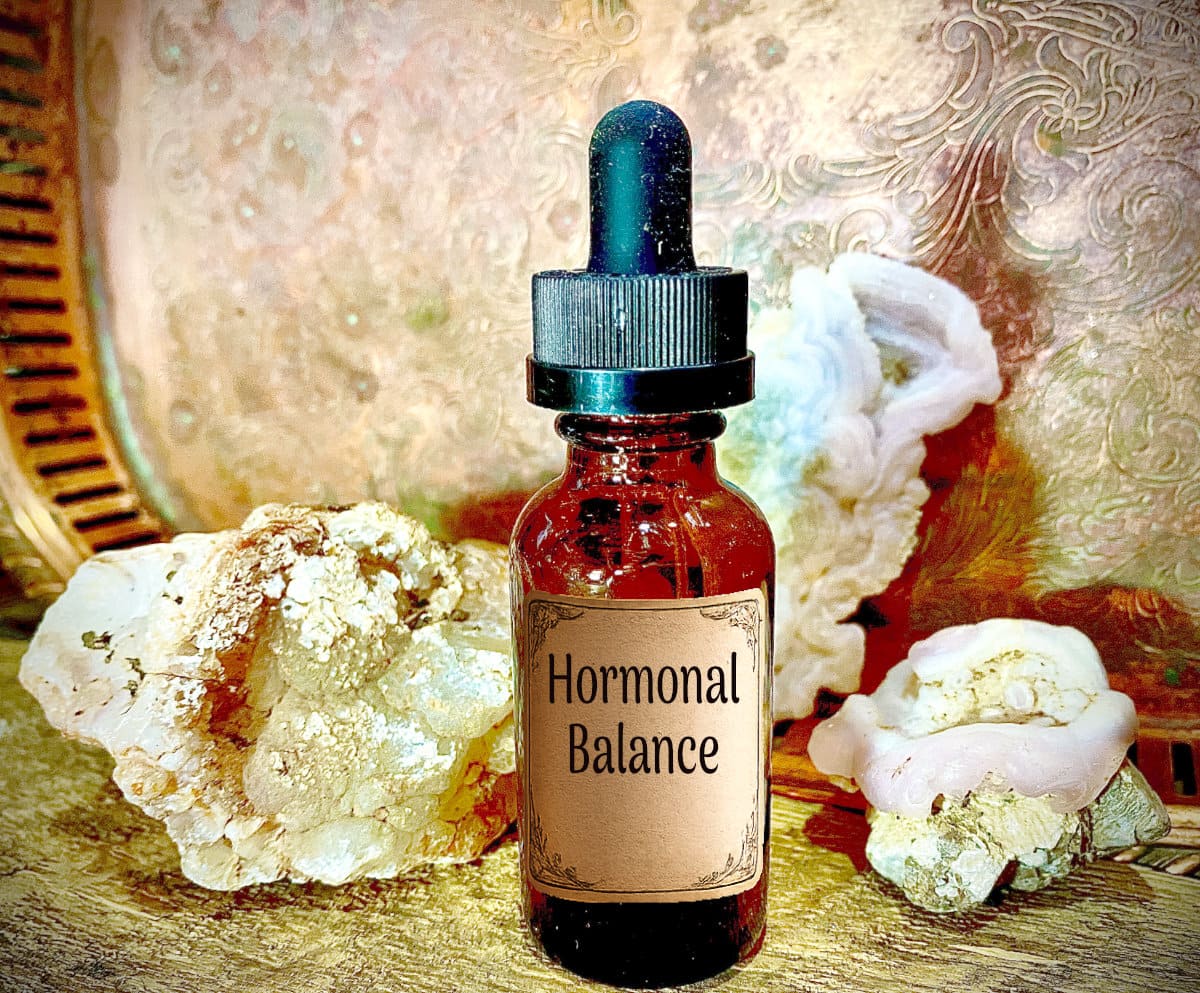
Hormonal Balance Potion | Wildcrafted Herbal Tincture for Women | Magical MotheringMagical Mothering Apothecary · Wildcrafted Herbal Medicine
Hormonal Balance Potion The Body Coming Back to Herself
For the woman who does not recognize herself in the week before her bleed. For the one whose pain has been called normal for so long she stopped questioning it. For the body that has been cycling through chaos and calling it just the way things are. This potion was made for you.
The hormonal system is not a malfunction waiting to happen. It is one of the most intricate and intelligent regulatory systems in the human body, a cascade of chemical messengers that govern not only reproduction but mood, metabolism, sleep, cognition, immune function, and the quality of a woman’s felt experience of being alive. When it falls out of alignment, the effects are total. Not just physical. Not just emotional. The entire interior landscape shifts.
Painful menses. Cramps that flatten you for days. The mood that descends without warning and lifts without explanation. The anxiety that arrives with ovulation and refuses to leave. The depression that settles in the week before your bleed like weather moving in. Irregular cycles. Cycles that disappear. The sense of being at the mercy of your own chemistry, pulled in and out of yourself by forces you cannot predict or control.
This is not what the female body was designed for. The Sacred Embodied Human Animal woman moved through her cycle in relationship with a living world that supported her at every phase. Wild plants rich in plant estrogens, mineral-dense greens, bitters that supported the liver in clearing spent hormones, nervines that held her through the emotional intensity of the premenstrual window. Her hormonal system did not operate in isolation from the ecosystem. It was calibrated by it.
That calibration has been severed. The liver which is the primary organ of hormone metabolism, responsible for breaking down and clearing estrogen and other spent hormones so they do not recirculate and compound, is overburdened by modern chemical exposure and nutritionally under supported. The nervous system, which communicates directly with the endocrine system through the hypothalamic-pituitary axis, is chronically disregulated. The gut microbiome, which plays a direct role in estrogen metabolism through what researchers now call the estrobolome, has been disrupted by antibiotics, processed food, and chronic stress. The result is a hormonal system trying to maintain its own coherence with the scaffolding knocked out from under it.
Your hormones are not your enemy. They are a system in need of what it lost. Give it back what it lost and watch the chaos resolve.
Through these wildcrafted and ethically sourced plants, each chosen for specific action in the female body. Plants that support the liver. Plants that tone and nourish the uterus. Plants that modulate estrogen and progesterone. Plants that hold the nervous system through the emotional intensity of the cycle. Plants that reduce inflammation, ease spasm, restore circulation to the pelvic bowl, and give the body the raw materials it needs to run its own chemistry correctly.
Microdosing Protocol
Initial period: Take 3–7 drops under the tongue, hold 20 seconds, up to 3 times daily for 28 days. Then take 3 days off. This first cycle allows the formula to begin its deeper regulatory work: rebuilding, restoring, and laying a new foundation.
Ongoing cycle support: After the initial 28-day period, take for 14 days on, beginning with the first day of menstruation. Then 14 days off. This rhythm mirrors the body’s own cyclical intelligence, supporting the body through the bleed and follicular phase, then stepping back through ovulation and the luteal phase, allowing the body to integrate and run its own signaling.
Note: Hormonal work is slow, deep work. The body does not recalibrate in a week. Give it the full 28-day initial period before drawing conclusions. Many women notice the most significant shifts beginning in the second and third cycle. Yet, for cramping, taking 7 drops every 15 minutes, will prove to ease cramps within just a couple of doses!
The Hormonal Cycle: What Is Actually Happening
The menstrual cycle is not simply a monthly preparation for potential pregnancy. It is a full-body rhythmic process governed by a precise hormonal conversation between the brain and the ovaries, and it touches every system in the body. Understanding it changes the relationship a woman has with her own experience.
The cycle is orchestrated by the hypothalamic-pituitary-ovarian (HPO) axis. The hypothalamus releases gonadotropin-releasing hormone (GnRH), which signals the pituitary to release follicle-stimulating hormone (FSH) and luteinizing hormone (LH). These hormones communicate with the ovaries, which produce estrogen and progesterone in response. Those hormones then feed back to the brain to modulate further signaling. It is a loop — elegant, self-regulating, and exquisitely sensitive to disruption.
In the first half of the cycle, which is the follicular phase, estrogen rises as a follicle matures. Estrogen is building, brightening, clarifying. It supports serotonin production, sharpens cognition, and opens the body toward the world. Ovulation is the peak, the moment of greatest vitality and presence. In the second half, which is the luteal phase, progesterone rises to prepare the uterine lining. Progesterone is quieting, inward, and reflective. It supports GABA, the same neurotransmitter the Anxiety Relief Formula addresses, which is why its drop before menstruation can trigger anxiety, irritability, and the emotional intensity of PMS.
When this conversation is disrupted, by excess estrogen that the liver cannot clear, by insufficient progesterone, by a disregulated nervous system that interferes with hypothalamic signaling, by nutritional deficiency that leaves the body unable to synthesize hormones correctly, then the cycle becomes a source of suffering rather than a source of rhythm. This formula supports every point in that conversation.
The Plants & What They Do in the Female Body
OcotilloFouquieria splendens
Ocotillo is a lymphatic and pelvic circulatory plant, and in women’s medicine its action on the pelvic basin is foundational. Stagnant circulation in the pelvic bowl is both a driver and a consequence of hormonal imbalance, it contributes to painful, clotty menses, to the heaviness and dragging ache that precedes and accompanies the bleed, and to the sluggish lymphatic clearance that leaves hormonal metabolites recirculating longer than they should. Ocotillo moves that stagnation. It improves blood and lymph flow to the uterus, ovaries, and surrounding tissue, supporting the body’s capacity to complete a clean menstrual cycle, release the uterine lining fully, and clear what needs to be cleared. It is the opener, the plant that ensures everything downstream has the circulation it needs to function.
FleabaneErigeron canadensis
Fleabane is a hemostatic and uterine tonic with a specific affinity for heavy, flooding menstrual bleeding. When estrogen dominance or uterine atony results in excessive blood loss during menses, the kind of bleeding that is exhausting and destabilizing, that leaves a woman depleted for days afterward. Fleabane tones the uterine tissue and reduces the excessive flow. It also carries anti-inflammatory properties and has been used in traditional medicine for its action on the digestive and urinary systems, which are frequently affected by the same pelvic congestion that disrupts menstrual health. Fleabane is a plant of the disturbed edge: roadsides, fields, cracked soil, and it brings that same quality of resilience and adaptation to the body it serves.
SpiderwortTradescantia virginiana
Spiderwort has been used in Native American medicine specifically for women’s conditions, including menstrual irregularity and the discomfort of the premenstrual and menstrual phases. It carries anti-inflammatory properties and supports the body’s own regulatory capacity without imposing a directional hormonal effect. It works with the body’s existing signaling rather than substituting for it. Its mucilaginous quality soothes inflamed tissue, and its mineral content contributes to the nutritive foundation that healthy hormonal function requires. Spiderwort is also a lymphatic plant, supporting the clearance work that runs throughout this formula, ensuring that what is being released, both physically and hormonally, has a clear path out.
VervainVerbena officinalis
Vervain’s role in the hormonal formula mirrors its role in the Anxiety Relief Formula but takes on additional specificity in the context of the cycle. The luteal phase, the two weeks between ovulation and menstruation, is governed by progesterone, and when progesterone is insufficient or drops too sharply, the nervous system loses its primary endogenous anxiolytic signal. The result is the tension, irritability, emotional volatility, and relentless mental drive of PMS. Vervain is directly indicated for this state. It reduces nervous system hyperexcitability, supports the liver in clearing excess estrogen that can suppress progesterone production, and brings the body out of the braced, over-driven state that the premenstrual window so often produces. It is the plant for the woman who cannot stop pushing, even when her body is asking her to soften.
YarrowAchillea millefolium
Yarrow is both hemostatic and emmenagogue, which means it can reduce excessive bleeding and it can stimulate a delayed or suppressed cycle, depending on what the body needs. This apparent paradox is the nature of many plant medicines: they are regulatory rather than directional, supporting the body toward its own appropriate function rather than driving a predetermined outcome. In this formula, Yarrow brings its bitter liver-supportive action, critical for estrogen clearance, alongside its antispasmodic properties that ease uterine cramping, and its anti-inflammatory compounds that reduce the prostaglandin activity responsible for much of the pain of difficult menses. Yarrow also supports the boundaries of the body energetically and physiologically, helping the woman who feels completely overwhelmed by her own hormonal experience to find the edges of herself again.
RosemarySalvia rosmarinus
Rosemary is a circulatory stimulant and liver ally of the first order. Its action in this formula is primarily through its support of hepatic function, the liver’s capacity to metabolize and clear estrogen, which is the central driver of the estrogen dominance that underlies so many menstrual disorders. Rosemary increases blood flow to the liver, stimulates bile production, and supports the phase-two liver detoxification pathways that conjugate estrogen metabolites for elimination. It also improves circulation throughout the pelvic region, reducing the stagnation that contributes to painful menses, and its anti-inflammatory rosmarinic acid contributes to the formula’s broader anti-inflammatory action. Rosemary is also cognitively clarifying, it supports the mental clarity that estrogen dominance and progesterone deficiency so often cloud.
MulberryMorus spp.
Mulberry’s contribution to hormonal health runs through its exceptional antioxidant content and its capacity to support blood sugar stability, a connection to hormonal balance that is frequently overlooked. Insulin resistance and blood sugar dysregulation directly disrupt ovarian function, contributing to irregular cycles, elevated androgens, and the suppression of ovulation. Mulberry’s compounds help buffer blood sugar response, reducing the insulin spikes that interfere with the HPO axis conversation. Its anthocyanins also protect the ovarian tissue and uterine lining from oxidative damage, supporting the structural integrity of the very organs this formula serves. In the context of the emotional and cognitive disruptions of hormonal imbalance, Mulberry’s neuroprotective properties contribute to steadiness and clarity.
Red CloverTrifolium pratense
Red Clover is one of the richest plant sources of isoflavones, phytoestrogens that bind to estrogen receptors in the body with a fraction of the potency of endogenous estrogen. This binding activity is modulating rather than estrogenic: when estrogen is deficient, phytoestrogens provide mild estrogenic support; when estrogen is excessive, they competitively occupy receptor sites, reducing the effect of the stronger endogenous estrogen. Red Clover is therefore useful across the full spectrum of estrogen-related imbalance. It supports healthy bone density, cardiovascular function, and skin integrity. All of which are influenced by estrogen, and contributes to the stabilization of the hormonal environment that erratic cycles and perimenopausal transition disrupt. Red Clover is also a lymphatic alterative, supporting the clearance and detoxification work that runs throughout this formula.
MotherwortLeonurus cardiaca
Motherwort belongs in every women’s formula. Its name, its history, and its chemistry are all oriented toward the female body in cycle. It is a uterine tonic, meaning it tones and nourishes the uterine muscle over time, improving the quality of uterine contractions during menses and reducing the cramping and spasm that arise when those contractions are disordered. It is an emmenagogue, supporting the onset of delayed or suppressed menstruation when the body needs encouragement to complete its cycle. It is a cardiac nervine, calming the racing heart and palpitations that hormonal fluctuation can produce. And it holds the emotional experience of the cycle from the grief, intensity, and fear; with the steadiness of something that has been present at the threshold of the female body for as long as women have known plants.
Prickly AshZanthoxylum americanum
Prickly Ash is a powerful circulatory stimulant with particular affinity for peripheral and pelvic circulation. In the context of menstrual health, its action is to drive blood and energy into the pelvic basin, break up stagnation, and stimulate the uterine circulation that painful, scanty, or clotty menses indicate has been compromised. Its alkaloids stimulate the lymphatic system and support digestive function, contributing to the broad clearance and detoxification capacity that healthy hormonal cycling requires. Prickly Ash is also analgesic, it numbs the nerve endings it contacts and carries that anodyne quality systemically, contributing to the formula’s pain-relieving action on menstrual cramps. It is one of the most warming and moving plants in this formula, and it does not allow stagnation to persist.
Purple LoosestrifeLythrum salicaria
Purple Loosestrife is an astringent and anti-inflammatory plant with specific affinity for mucous membrane tissue, including the endometrial lining of the uterus. Its tannins tone and tighten inflamed or atonic tissue, making it particularly relevant for heavy, prolonged bleeding and the uterine laxity that contributes to flooding menses. It carries antimicrobial and antifungal properties, supporting the vaginal microbiome that is so often disrupted by hormonal imbalance, the same estrogen dysregulation that disrupts the cycle can shift the vaginal environment toward dysbiosis and recurring infection. Purple Loosestrife supports the integrity of that environment alongside its direct uterine action.
RaspberryRubus idaeus
Raspberry leaf is the foundational women’s tonic of the Western herbal tradition, and its presence in this formula is non-negotiable. Its mineral density: magnesium, calcium, iron, potassium, and phosphorus all feed the uterine muscle the nutrients it requires for healthy, coordinated contractions. Fragrine, an alkaloid specific to Raspberry leaf, tones the uterine and pelvic muscles, reducing the disordered cramping of dysmenorrhea and supporting the uterus in completing its monthly work efficiently and completely. Raspberry leaf also supports iron replenishment during the bleed, addressing the depletion that heavy menses produces. Red Raspberry Leaf is simply the most reliable, deeply nourishing ally the uterus has in the plant world.
Trumpet VineCampsis radicans
Trumpet Vine, dried before tincturing to reduce the toxic affects of the fresh plant, brings anti-inflammatory and diuretic action to this formula. The fluid retention and bloating of the premenstrual phase, driven by the aldosterone response to the progesterone drop, and by the prostaglandin activity that precedes menstruation, is one of the most physically uncomfortable aspects of the luteal phase for many women. Trumpet Vine supports the kidneys in clearing that retained fluid, easing the physical heaviness and discomfort of premenstrual bloating. Its anti-inflammatory properties contribute to the formula’s overall action on the prostaglandin-driven inflammation that is the primary mechanism of menstrual pain, and it supports the connective tissue of the pelvic organs through its toning and strengthening action.
Field BindweedConvolvulus arvensis
Field Bindweed is an anti-inflammatory and antispasmodic plant with traditional use in supporting the digestive and reproductive systems. Its compounds relax smooth muscle, the same muscle type that makes up the uterine wall and whose disordered spasm produces cramping. In the context of this formula, Field Bindweed contributes antispasmodic support to the formula’s broad action on uterine cramping, working alongside Cramp Bark and Motherwort to address the muscular component of menstrual pain from multiple angles. It also carries mild bitter properties that support liver function and digestive motility, the gut slowdown that progesterone produces in the luteal phase is a common source of bloating and discomfort that bitters help to resolve.
Cramp BarkViburnum opulus
Cramp Bark is one of the most specific and effective plants in the Western herbal tradition for menstrual cramping. Its active compounds: viopudial, scopoletin, and isovalerianic acid. Act directly on the smooth muscle of the uterus as antispasmodics, reducing the excessive, disordered contractions that produce the gripping, doubling-over pain of dysmenorrhea. It does not suppress contractions entirely, the uterus needs to contract to complete the bleed, it regulates them, replacing the violent, inefficient spasm of a dysmenorrheic uterus with the coordinated, purposeful movement of a uterus working as it should. Cramp Bark is also effective for the pain that radiates down the thighs and into the lower back, addressing the referred spasm that originates in the uterus and travels through the surrounding musculature.
Evening PrimroseOenothera biennis
Evening Primrose’s gamma-linolenic acid (GLA) content makes it one of the most important plants in this formula for the underlying inflammatory mechanisms of hormonal imbalance. Prostaglandins, the signaling molecules that govern uterine contractions, inflammation, and the vascular changes of menstruation; are synthesized from essential fatty acids. The ratio of pro-inflammatory to anti-inflammatory prostaglandins is a primary determinant of how painful and how heavy a period is. GLA shifts the prostaglandin balance toward the anti-inflammatory series, reducing the cramping, heaviness, and inflammation that the pro-inflammatory prostaglandins drive. Evening Primrose also supports breast tenderness, the hormonal skin changes of the premenstrual phase, and the mood disruptions associated with PMS through its broad hormonal and anti-inflammatory action.
Cressleaf GroundselPackera glabella
Cressleaf Groundsel carries alkaloids with traditional use as an emmenagogue and uterine stimulant, supporting the onset of delayed menses and toning the uterine muscle. It contributes to the formula’s capacity to regulate cycle timing, encouraging the body toward its own natural rhythm when stress, nutritional depletion, or hormonal disruption has delayed or suppressed menstruation. As with all alkaloid-containing uterine stimulants, it is present in this formula in measured amounts within a complex formula that moderates and contextualizes its action. It is not used in isolation but as part of a synergistic whole where the other plants provide the toning, nourishing, and anti-inflammatory context that allows its stimulating action to be beneficial rather than excessive.
HopsHumulus lupulus
Hops is one of the most potent phytoestrogen-containing plants, rich in the prenylflavonoid 8-prenylnaringenin, which has demonstrated significant estrogenic activity at estrogen receptors. In this formula, Hops contributes its estrogenic modulating activity, supporting the follicular phase when estrogen should be rising, addressing the symptoms of estrogen deficiency including vaginal dryness, disrupted sleep, mood instability, and bone loss. Hops is also a powerful sedative nervine, acting on GABA receptors to promote deep sleep, and deep sleep is not a luxury in hormonal health; it is the primary window during which the body synthesizes hormones, clears cortisol, and completes the regulatory work that cannot happen in waking hours. The woman whose sleep is disrupted by her cycle is a woman whose hormonal health will continue to deteriorate.
SmartweedPersicaria hydropiper
Smartweed is a traditional emmenagogue and hemostatic, a plant of paradox that has long been used to both stimulate sluggish menses and arrest excessive bleeding, depending on context and formulation. Its rutin content strengthens capillary walls and reduces the vascular fragility that contributes to heavy menstrual flooding. Its anti-inflammatory compounds address the pelvic inflammation that accompanies painful cycles. Smartweed also carries significant iron content, contributing to the mineral replenishment that heavy menses depletes, iron deficiency is one of the most common consequences of menorrhagia, and it compounds the fatigue, cognitive fog, and emotional fragility of the premenstrual and menstrual phases in ways that simply replacing the iron can dramatically reverse.
CinquefoilPotentilla spp.
Cinquefoil is an astringent and antispasmodic plant from the Rose family, with traditional use for painful and excessive menstruation. Its tannins tone the uterine and pelvic mucous membranes, reducing inflammation and excessive secretion, while its antispasmodic compounds contribute to the formula’s action on menstrual cramping. Cinquefoil also supports the liver and digestive system through its bitter tonic properties, the same liver support that runs as a thread through this entire formula, recognizing that the liver’s capacity to metabolize and clear spent hormones is foundational to the hormonal balance the rest of the plants are working to restore. It is a quiet plant. Unassuming at the field edge. Its consistency is its medicine.
Lemon BalmMelissa officinalis
Lemon Balm is where the nervous system and the endocrine system meet in this formula. It is a gentle but effective thyroid modulator, specifically, it inhibits the binding of TSH (thyroid-stimulating hormone) to thyroid receptors, which is relevant for women with thyroid conditions that intersect with hormonal imbalance. More broadly, Lemon Balm is a nervine and anxiolytic that specifically addresses the anxiety, irritability, and emotional volatility of the premenstrual phase, working through GABA pathways to reduce the nervous system hypersensitivity that progesterone’s premenstrual drop exposes. It lifts mood, reduces the cognitive rumination that PMS amplifies, eases digestive spasm, and carries an antivirally active compound, rosmarinic acid, that supports the immune system during the immunologically vulnerable premenstrual window.
Field MatterSherardia arvensis
Field Madder, field matter, is a small plant of cultivated ground, historically used in traditional European medicine as a diuretic, anti-inflammatory, and tonic for the reproductive system. It supports the kidneys in clearing excess fluid and metabolic waste, including spent hormonal metabolites, and brings mild anti-inflammatory action to the formula’s broad anti-inflammatory foundation. It is a plant of the threshold between the cultivated and the wild, growing at the edges of fields and gardens where the tended ground meets the untended, and it carries that quality of existing in the in-between, supporting the body’s own transitions, its own thresholds, its own movement from one phase of the cycle into the next.
Canadian LousewortPedicularis canadensis
Canadian Lousewort is a deeply relaxing nervine and musculoskeletal antispasmodic with particular affinity for releasing held tension in the deep pelvic muscles: the iliopsoas, the piriformis, and the pelvic floor. Where so much of the pain and holding of difficult menstruation is stored. When the body has been cramping, bracing, and contracting through months or years of painful cycles, the musculature around the pelvis develops a chronic holding pattern that persists even between bleeds. Lousewort releases that pattern. It is sedating in larger doses but at the microdose levels of this formula it brings its muscle-releasing, nervous-system-quieting action without overwhelming the system. It is the plant that allows the pelvis to finally let go.
Agave Alcohol & Programmed Quartz Crystal
The menstruum for this formula is Agave alcohol, a full-spectrum solvent that extracts the complete medicinal intelligence of each plant, preserving it in bioavailable form. At microdose quantities, the alcohol content is negligible. What it carries is the whole plant.
Each batch is prepared with Programmed Quartz Crystal, set with intention specific to this formula: release, regulation, return, rhythm. The female body is itself cyclical, it has always known how to track the moon, the season, the spiral of returning. The crystal in this formula is programmed to support that knowing. To remind the body of the rhythm it was built for. Whether you receive that as ceremony, as quantum coherence, or simply as the care with which this medicine was made, the body knows the difference between something made with attention and something made without it.
The woman who has been told her pain is normal has been told a lie. Painful, debilitating menses is not the baseline of the female body. It is the signature of a body running without what it needs, without the mineral density to support healthy uterine muscle, without the liver capacity to clear spent estrogen, without the nervous system regulation to move through the emotional intensity of the premenstrual window, without the plant allies that co-evolved with the female body over hundreds of thousands of years of shared life.
This formula is a return to that shared life. It does not override the body’s own intelligence. It feeds it. It supports it. It creates the conditions under which the body can remember how to do what it has always known how to do, move through the cycle with power rather than suffering, with rhythm rather than chaos, with the full experience of being a woman in a body that works.
You were not built to dread your own cycle. You were built to move with it.
These statements have not been evaluated by the Food and Drug Administration. This product is not intended to diagnose, treat, cure, or prevent any disease. This information is for educational purposes only. Not recommended during pregnancy. Consult a qualified healthcare provider before use if you are nursing, taking medications, or have a medical condition. Keep out of reach of children.
RA 15h 35m 31s Dec −14° 47′ 22″ ~163 light-years Magnitude 3.91 Spectral Type G8.5 III
Graffias · Beta Scorpii
RA 16h 05m 26s Dec −19° 48′ 19″ ~400 light-years Magnitude 2.62 Spectral Type B1 V
Two stars in the same slice of sky. One is ancient, expanded, nearly still, presenting as a yellow giant that has been radiating warmth for 4.3 billion years, grown to eleven times the Sun’s diameter, slowed almost to a stop, and is now orbited by two planets it accumulated over that span of time. The other is barely born. Six to eleven million years old. Burning at 26,000 Kelvin. Not two stars but five or six, what looks like a pair through a small telescope is a hierarchy of orbiting components, the innermost pair so close they complete an orbit every 6.8 days, closer together than Mercury is to our Sun. Both are headed toward supernova, a violent explosion. Both are on the road near the ecliptic, where the Moon passes over them.
Gamma Librae has nearly stopped spinning. Its rotational velocity is 1.60 km/s, which is a whisper. It expanded as it aged, used what it had, grew enormous and luminous, and now moves with the unhurried authority of something that has been here a very long time. It hosts two confirmed gas giant planets, discovered in 2018, orbiting a star that was already ancient when Earth’s first complex life appeared.
Graffias is the opposite. Six million years old in a universe 13.8 billion years old is not even a breath. The most massive component burns with the luminosity of 19,500 Suns. The whole system is in motion, multiple, hierarchical, structured in pairs within pairs, yet seen as simple from a distance, reveals layered and complex, the closer you look. It will not live long. Stars that burn this fast and this hot do not last. They end in explosion.
One ancient and still. One young and violently multiple. Both in the same sky, this same two weeks, asking to be looked at directly.
Four Thousand Years of Observation
The Arabic, Indian, and Chinese lunar mansion systems each divide the sky into 28 sanctuaries, with independent systems developed across separate cultures over thousands of years. They do not share origin. They arrived at their frameworks through their own accumulated observation of how the sky moves and what it correlates with on Earth.
In every one of these systems, certain lunar mansions carry grave warnings about romantic relationships. Specific temples marked as difficult, inauspicious, clarifying, particularly for marriage and partnership. These warnings were not decorative. They were recorded because enough people, across enough generations, saw the pattern repeat.
What Is Arriving This Week
Every woman I talk to in this sanctuary has shared of their relationships being in the fire this week. Not all of them newly, some have been carrying this for years. But the clarity is new. The seeing is new. Something in this sky is pulling the mask off and leaving it on the floor.
There is a particular kind of grief that arrives when you realize you have been eating scraps and calling it a full meal. When you understand, with a completeness you cannot unfeel, that despite being a mother, a lover, a best friend, a source of unconditional love, it was never fully reciprocated. That the love moved mostly in one direction. That your care was received as a given rather than a gift.
The horror of that lands. And then, strangely, it passes into something quieter. Not rage. Not collapse. A neutrality. The mask comes off the masculine and what arrives in us is not a wail but a clear, level gaze.
We just see it. All of it. With the kind of clarity that does not require emotion to hold.
What the Clarity Shows
We see so clearly why men are in a loneliness epidemic. We see so clearly why women are leaving marriages at rates that continue to accelerate. We see so clearly why women are choosing not to have children. We see why the masculine has been raging for ten thousand years: the temper tantrums, the lack of emotional regulation, the juvenile demand to be managed and soothed , and why we have been accommodating it, and why we are done.
There are millions of women in this right now. Not just the women in my circle. Not just women in this country. Globally, women are waking up to the same recognition: that their marriages were structured for the benefit of the man. That the energy of their male partners has been more draining than sustaining. That the focus of the home was placed on the comfort and emotional whims of the adult male rather than on the emotional development of the children.
And the women who redirected that, who chose their children’s emotional intelligence over adult male tantrums, who built matriarchy in their homes by making emotional health the organizing principle, are seeing this magnified right now. What they built is visible. What it produces is visible.
The divine feminine is not in distress this week. It is in clarity. That is a different thing entirely.
The Mirror in the Sky
Gamma Librae has been giving out warmth for 4.3 billion years. It expanded. It slowed. It is enormous and still and luminous and it has two planets in orbit around it. It has been sustaining long enough that worlds formed in its gravity. It does not need to burn fast to matter. It does not need to explode to be significant.
Graffias burns at 26,000 Kelvin. It is multiple beyond what the naked eye can see. A complexity hidden inside what looks, from a distance, like simplicity. And it will end in supernova. Stars that consume themselves at that rate, that refuse to regulate the burn, do not last. They are spectacular. They are also brief.
This sanctuary holds both. The ancient steady warmth that accumulated worlds, and the violent brightness that cannot sustain itself. The sky is not subtle this week about what it is showing us.
We can use this. The clarity this sanctuary delivers is not punishment. It is information. It is the same information that Arabic and Indian and Chinese sky-watchers were writing down four thousand years ago. It is the same pattern. It is available right now, in this two-week window, to do something with.
Build what you desire. Let this sanctuary be what it is, not something to endure, but a tool. The Earth will move out of this slice of sky on May 27. What you do with what you see before then is yours.
The Potential Energy of This Sanctuary
A supernova is the most energetic event in the observable universe. It is not simply destruction. It is the mechanism by which everything locked inside a star, every heavy element forged over millions of years of burning, gets released and dispersed through space. The iron in your blood came from a star that exploded. The calcium in your bones. The oxygen you are breathing. None of it exists without the violence of stellar death.
Difficult and destructive are not the same as without power. The four thousand years of sky-watchers who marked this sanctuary with warnings were noting something real. They were not wrong. But they were describing the force of it.
What has been burning in you, quietly, for years, sustaining, giving, absorbing, holding, has been forging something. The clarity that arrives in this sanctuary is not the end of that. It is the release of it. What was locked inside one system becomes available to everything around it. That is what a supernova does. That is what this moment is doing.
The warnings across Arabic, Indian, and Chinese systems were written by people who understood that this slice of sky carries enormous charge. They were right. The charge is real. What you do with it, whether you collapse under the weight of what you now see, or whether you let the explosion scatter what you have been forging into the world around you, that is the work of this sanctuary.
We can use this. The clarity is not punishment. It is potential energy made visible. It is available right now, in this two-week window. What you build with what you see before then?
What aspects of your relationships do you notice? What have you been seeing with crystal clarity that you are now ready to name?
Zubenelgenubi is a quadruple star system, four stars bound in two pairs, moving together through space as one body. From Earth it appears as a single point of blue-white light. It sits 0.33 degrees from the ecliptic, which is as close to on the road as a star can be. The Moon passes over it. Planets pass over it. Everything traveling through this part of the sky crosses near it. In early May it rises at sunset and sets at sunrise, available the full span of darkness, crossing the entire night sky. It is hotter than our sun, shining at magnitude 2.75, naked-eye visible from anywhere on Earth with dark skies. What appears to be one is four. What appears singular is deeply, structurally multiple, bonded pairs within pairs, only revealed when you look closer than the eye alone can reach.
WHAT THIS SANCTUARY HOLDS
I am re-reading Women Who Run With Wolves by Clarissa Pinkola Estés. In the story of Manawee, a small dog keeps getting distracted from his task. A bone. A pie. A stranger. He is sent to learn the two names of the woman his human is trying to marry — the two names all women carry. The task requires going beneath the surface. The distraction is always food, always something that smells good, always something easier than the actual work.
Something in me jolted awake reading it.
Estés asks two questions to reach the dualistic nature of woman, the two names every woman holds. The questions are simple. The answers are not.
First QuestionWhat do you want?
Second QuestionWhat does your deeper self desire?
I was carrying a fifty-pound bag of rabbit feed across the lawn when those questions hit me. Walking it to the garbage cans, to keep the rodents out of it. Then another bag across the yard to the bus, where six kittens, three weeks old, are living with my daughter.
I could have asked for help. I could have gotten it. I didn’t ask. I just did it.
That is what Sanctuary 18 asked me to look at directly.
THE RE-EVALUATION
For a decade, Travis and I have been building toward sustainable living on this land. All this time I felt responsible for doing it all myself. And I can. I can grow the garden, raise the chickens, tend the rabbits, forage twice a day for them, walk the goats, prepare winter forage in advance. I am capable of managing all of it.
I also justify my overwhelm. I tell myself it is necessary. I frame exhaustion as evidence of commitment.
This sanctuary asked me to ask the harder question: if I lived alone, what would I be doing with my days? Would I still have meat rabbits? Would I still be scaling to thirteen does to sell meat?
The no’s arrived clearly. I was raising rabbits because it is a genuinely excellent meat choice for Zion’s kidneys. That is love. That is not distraction. But thirteen does to start going to farmers markets? I go big. I get overwhelmed. I go big and then I give up. I do not do incremental. I have never done incremental. And I am watching that pattern cost me.
But I could do this, but I have the land I have always wanted. I have the ability to build the retreat space. I know women would come. I have been consistently distracted away from it, by feeding schedules, by scale I invented, by busyness that feels like responsibility but is actually avoidance.
Manawee’s dog kept getting distracted by food. I have been getting distracted by food. By the logistics of food production as a full-time occupation. And by the way that occupation gives me something to point to, look at all I am doing, look at how necessary I am — while my actual desires wait.
THE STAR’S TEACHING
Zubenelgenubi sits on the ecliptic and refuses to be renamed. For thousands of years humans have tried to reorganize this part of the sky, the Babylonians, the Greeks, the Arabs, the IAU in 1930 making it permanent, and the star kept its claw name. But this is not just a claw, not just a scale. This slice of sky is a unique section of the sky, in energy and structure. When we see this slice as an entire piece in and of itself, we can feel directly into it. We can allow for it to help us see our own need to see past a singular aspect. To ask the deeper questions. To make sure we are living our our deepest desires.
The star is also quadruple. It looks singular. It is not. You contain more than what is visible. The question is not whether your desire exists. The question is whether you are distracted before you reach it.
Early May is when Zubenelgenubi crosses the sky all night — rising at sunset, setting at sunrise, available the full span of darkness. This is its season of maximum visibility. It asks to be seen. It is on the road that everything travels. Nothing moves through this part of the sky without passing it.
You cannot cross this threshold without meeting the question: what are you doing with your time, and is it what you desire?
What have you been distracted by? What are you filling your time with that depletes, exhausts, or overwhelms: without the return of pleasure and joy?
I thought at first that Sanctuary 18 was a space of depletion. I was wrong. This is a sanctuary that lets you see what has been distracting you from your desires. It shows you where you are spending your life. That is not a punishment. That is a gift.
Nervous System Recalibration | Anxiety Relief Formula | Wildcrafted Herbal Tincture for the Nervous System | Magical MotheringMagical Mothering Apothecary · Wildcrafted Herbal Medicine
Nervous System Recalibration Returning the Body Home
A wildcrafted tincture for the everyday person living inside a nervous system on fire. The mom. The employee. The one who opened their phone this morning and cannot stop scrolling. This formula does not mask what you are feeling. It gives your body back what it has always needed.
You are not broken. Your nervous system is not failing. It is doing exactly what a mammal’s nervous system does when it is chronically undernourished and chronically overstimulated. Iit keeps the alert signal running. It cannot find the off switch. Every notification, every headline, every interaction that requires something from you while you are already at capacity becomes another log on a fire that never goes out.
The Sacred Embodied Human Animal lived for hundreds of thousands of years with wild plants as daily food and medicine. Not supplements. Not pharmaceuticals. Not wellness products. Food. The body co-evolved with these plants. The nervous system learned its own calibration in relationship with them. Motherwort growing at the edge of the field. Purslane underfoot. Wild lettuce going to seed at the fence line. California poppy spreading gold across the hillside. These were not exotic interventions. They were the ordinary landscape of a human life.
When those plants disappeared from the daily body, something went with them. The mental health crisis is not simply a crisis of modern stress. It is a crisis of severance. The body is running ancient software on a nutrient substrate it was never designed to run on. The threshold drops. The fight-or-flight response, which was built for acute danger and meant to resolve, becomes the chronic baseline instead.
The racing thoughts stop. You can feel your body. You can breathe deeply. You are safe. You are home.
This formula is a return. Sixteen wildcrafted and ethically sourced plants, chosen for their specific action on the central nervous system and the physiological pathways of the stress response. A few drops under the tongue and the body begins to remember what it feels like to not be under threat.
The Fight-or-Flight Response: What Is Actually Happening in Your Body
The fight-or-flight response is a survival mechanism seated in the autonomic nervous system. Specifically the sympathetic branch. When the brain perceives danger, real or anticipated, the hypothalamus sends a signal that cascades through the body in seconds. Adrenaline floods the bloodstream. Heart rate accelerates. Breathing shallows. Blood moves away from the digestive organs and into the large muscle groups. Cortisol begins releasing from the adrenal glands to sustain the alert state. The thinking mind narrows its focus to threat assessment. No longer giving the required attention to non-essential functions such as the digestion system, immune response, deep sleep, libido, and creative thought. They simply are ignored in a way that the body can do while in danger.
This system saved lives. A predator at the water’s edge. A fire. A flood. The Sacred Embodied Human Animal activated this response, moved through the danger, and then discharged the stress through the body. Through running, fighting, trembling, crying, and resting. The system reset. Cortisol cleared. The parasympathetic nervous system, the rest-and-digest branch, came back online.
The problem is not that you have a fight-or-flight system. The problem is that your nervous system cannot distinguish between a predator and a push notification. Between a flood and a news cycle. Between a fire and a comment thread. The threat signals arrive constantly, the discharge never comes, and the cortisol never fully clears. The threshold, the amount of stimulus required to trigger a full stress response, drops lower and lower until you are screaming at your child over a dropped cup, lying awake replaying a conversation from three days ago, or unable to take a full breath.
This formula addresses that threshold directly. These plants work on the hypothalamic-pituitary-adrenal axis, on the GABA receptors in the brain that signal safety, on the vagus nerve that carries the parasympathetic signal from the brainstem to the organs, and on the adrenal glands themselves. They do not sedate you. They restore you. There is a difference.
Microdosing Protocol
Acute symptoms & oncoming panic attacks: Take 7-10 drops under the tongue. Hold 20 seconds. Repeat every 15 minutes until calm.
Daily nervous system rewiring: Take 3–7 drops under the tongue, holding for 20 seconds, 2–3 times per day.
Cycle: 5 days on, 2 days off. This rest period allows the body to integrate rather than become dependent, honoring the rhythm of the body’s own adaptogenic intelligence.
The Plants & What They Do
OcotilloFouquieria splendens
Ocotillo is a desert plant with deep lymphatic and circulatory intelligence. In the context of chronic stress, the body holds tension in the pelvic and abdominal regions, where lymphatic stagnation compounds the adrenal burden. Ocotillo moves that stagnation. It improves blood and lymph circulation to the pelvic basin, supports the adrenal glands that sit just above the kidneys, and addresses the physical heaviness that settles in the body when chronic cortisol has been running too long. When the fight-or-flight system keeps blood moving away from the core and toward the extremities, Ocotillo helps the body redistribute, restoring circulatory coherence so the nervous system has the physiological foundation it needs to downregulate.
California PoppyEschscholzia californica
California Poppy is not opium poppy. It carries no opiates and no addictive compounds. What it does carry is a profound nervine action, that binds to GABA receptors in the brain, the same receptors that signal safety, that allow the body to release held tension and move out of sympathetic dominance. GABA is the primary inhibitory neurotransmitter, the neurochemical message that tells the nervous system it can stop bracing. California Poppy supports GABA activity gently and effectively, reducing anxiety, easing racing thoughts, and promoting the kind of restful sleep that is the nervous system’s primary repair window. It is particularly indicated for people who cannot quiet the mind. Who lie awake cycling through worry and whose thoughts run ahead of every present moment. It brings the attention back into the body and back into now.
MotherwortLeonurus cardiaca
Motherwort’s Latin name tells the whole story, it is the lion-hearted mother, and it acts directly on the heart as an organ of the stress response. When anxiety peaks, the heart races, palpitations begin, and the chest tightens. Motherwort is a cardiac nervine, meaning it calms the nervous system through its action on the heart specifically. It slows a racing heart rate, reduces palpitations, and eases the chest constriction that panic and anxiety produce. It contains leonurine, which has demonstrated uterine-relaxing and antispasmodic effects, and acts broadly as a nervine tonic. Thereby nourishing the nervous system over time rather than simply suppressing symptoms in the moment. Motherwort is the plant that holds you. It does not remove the reality of what you are navigating. It steadies you inside it.
Wild LettuceLactuca virosa
Wild Lettuce has been used since antiquity as a sedative and anodyne, a pain reliever, a thought-quieter, a mild euphoriant with no addictive properties. The milky latex of Wild Lettuce contains lactucin and lactucopicrin, sesquiterpene lactones that act on the central nervous system to reduce pain perception, calm hyperstimulated nerve pathways, and ease the anxious restlessness that makes it impossible to simply be still. For people whose anxiety lives in the body as physical tension, twitching, restless legs, or the inability to find a comfortable position, Wild Lettuce addresses that physical component directly. It is the plant for the nervous system that has been running at a frequency too high for too long and needs to be turned down, not off.
MulberryMorus spp.
Mulberry contributes to this formula through its rich antioxidant content. Specifically its flavonoids, anthocyanins, and resveratrol, and its direct neuroprotective properties. Chronic stress produces oxidative damage in neural tissue. Cortisol, when chronically elevated, is literally neurotoxic; it shrinks the hippocampus, the brain region involved in memory, emotional regulation, and the suppression of the stress response itself. Mulberry’s compounds protect neural tissue from that oxidative burden. It also supports blood sugar stability, which is a frequently overlooked driver of anxiety. Blood sugar crashes trigger adrenaline release and cortisol spikes that mimic or amplify panic. Mulberry’s compounds help buffer that response, contributing to a more stable physiological baseline.
YarrowAchillea millefolium
Yarrow is one of the most ancient healing plants in the human record, found buried with Neanderthals. In this formula, it functions as a nervous system tonic and boundary plant. Yarrow tightens and tones. It addresses the energetic and physiological porousness that chronic anxiety produces. The inability to filter incoming stimulation, the way the overwhelmed nervous system takes everything in without the capacity to differentiate signal from noise. Yarrow’s bitter compounds support liver function, which is the organ responsible for clearing excess cortisol and adrenaline from the bloodstream. When the liver is burdened, stress hormones clear more slowly, extending the duration of each stress response. Yarrow addresses the entire cycle.
Red RaspberryRubus idaeus
Red Raspberry leaf is one of the most nutritively dense plants available. Its mineral profile includes magnesium, calcium, iron, and potassium which directly addresses the physiological substrate of anxiety. Magnesium is required for over three hundred enzymatic processes in the body, including the regulation of the HPA axis and the synthesis of GABA. The majority of people living on a modern Western diet are chronically magnesium deficient. That deficiency alone raises the baseline anxiety threshold. Calcium and potassium support proper nerve conduction, the electrical signaling that allows neurons to fire and rest appropriately. Red Raspberry feeds the nervous system the minerals it needs to perform its own regulatory functions.
JacarandaJacaranda mimosifolia
Jacaranda contributes antimicrobial and anti-inflammatory properties to the formula, and inflammation is central to the anxiety-nervous system relationship in ways that conventional medicine is only beginning to fully acknowledge. The gut-brain axis, the bidirectional communication between the enteric nervous system of the digestive tract and the central nervous system, is profoundly disrupted by both chronic stress and chronic inflammation. Jacaranda supports the inflammatory response, reduces the gut-brain inflammatory signaling that can manifest as mood disruption, cognitive fog, and anxiety, and contributes to the overall anti-inflammatory foundation the nervous system needs in order to come off high alert.
Black CurrantRibes nigrum
Black Currant is extraordinarily rich in anthocyanins and gamma-linolenic acid (GLA), an omega-6 fatty acid with powerful anti-inflammatory and adrenal-supportive properties. The adrenal glands are the organs that produce cortisol and adrenaline, the primary drivers of the fight-or-flight response. They take enormous physiological punishment during periods of chronic stress. Black Currant supports adrenal gland health directly. Its anthocyanins protect the brain and nervous tissue from oxidative stress, support healthy neurotransmitter function, and reduce the neuroinflammation that keeps the alarm system firing even when no acute threat is present. It also supports healthy cortisol rhythms, contributing to the restoration of a more natural diurnal pattern rather than the flattened, chronically elevated cortisol curve of the chronically stressed body.
CatnipNepeta cataria
Catnip is widely dismissed because of its association with euphoric feline behavior, but its action in humans is the inverse. Which is a gentle, reliable nervine and antispasmodic. Nepetalactone, its primary active compound, acts on GABA receptors similarly to California Poppy, reducing nervous excitability and promoting relaxation without sedation. Catnip is particularly effective for the physical manifestations of anxiety: digestive upset, cramping, nausea, and a stomach that will not settle. When the fight-or-flight response shunts blood away from the digestive system, digestion becomes disordered. Catnip restores motility, eases spasm, and simultaneously calms the central nervous system, addressing the gut-brain loop from both directions. It is a plant of profound gentleness and underestimated depth.
PurslanePortulaca oleracea
Purslane is one of the most nutritionally concentrated wild edibles on the planet. It contains more omega-3 fatty acids than any other plant source, specifically alpha-linolenic acid, which is the precursor to the long-chain omega-3s that compose a significant portion of neuronal membranes. The brain is approximately sixty percent fat. The myelin sheath that insulates nerve fibers and allows rapid, accurate signal transmission is fat. A nervous system chronically deprived of essential fatty acids is a nervous system running on degraded infrastructure. Purslane also contains magnesium, calcium, potassium, and melatonin. It is not a medicine in the pharmaceutical sense. It is food, the kind of food the Sacred Embodied Human Animal ate underfoot, daily, without ceremony, and without understanding that this ordinary act of grazing was maintaining the very neurological coherence that allowed them to live fully present in their lives.
VervainVerbena officinalis
Vervain is the plant for the person who cannot let it go. Who is so convinced of what is right, what must be done, what is wrong with the world, that their entire nervous system is permanently braced for the argument. The person whose passion has become their prison. Vervain acts as a nervine tonic and relaxant, specifically indicated for nervous exhaustion that comes from overthinking, overworking, and the relentless mental drive that refuses to allow the body to rest. It reduces the nervous system’s hypersensitivity to external stimulation and supports the liver in clearing excess heat and tension from the system. It is a plant for people who are genuinely trying to do too much from a place of genuine care, and whose bodies are paying the price for that relentlessness.
LobeliaLobelia inflata
Lobelia is one of the most powerful plants in this formula. It acts directly on the autonomic nervous system as an antispasmodic and relaxant, with particular affinity for the respiratory system. Shallow, restricted breathing is both a symptom and a driver of the fight-or-flight response. The body under threat breathes from the chest rather than the diaphragm, which maintains the sympathetic activation signal. Lobelia opens the airways, deepens the breath, and acts as a direct antagonist to the sympathetic nervous system’s hypertonic grip. It is indicated for panic attacks specifically, which include the feeling that you cannot breathe, that something is closing, and that you cannot get enough air. Its action in those moments is rapid and profound. The breath is the bridge between the voluntary and involuntary nervous system. Lobelia uses that bridge deliberately.
MyrrhCommiphora myrrha
Myrrh has been revered across cultures and millennia, and its chemistry supports that reverence. In this formula, Myrrh contributes powerful anti-inflammatory action, specifically targeting the inflammatory cytokines that dysregulate the HPA axis and keep the cortisol response running in excess. Chronic inflammation and chronic stress exist in a reinforcing loop: stress drives inflammation, and inflammation drives the stress response. Myrrh disrupts that loop. It also carries significant antimicrobial and vulnerary properties, supporting the mucosal membranes of the digestive tract, where so much of the inflammatory load of chronic stress accumulates. It is a grounding resin, that brings the energetic and physiological quality of rootedness that the hyperactivated nervous system most lacks.
Evening PrimroseOenothera biennis
Evening Primrose is one of the richest plant sources of gamma-linolenic acid (GLA), the essential fatty acid that plays a critical role in prostaglandin synthesis, the regulatory molecules that govern inflammation, nerve function, and hormonal signaling. The nervous system under chronic stress has elevated prostaglandin activity in inflammatory pathways. GLA supports the synthesis of anti-inflammatory prostaglandins instead, shifting the prostaglandin balance toward resolution rather than sustained alarm. Evening Primrose also supports the nervous system through its action on hormonal pathways, the adrenal stress hormones and the sex hormones share biosynthetic precursors, and chronic stress chronically disrupts reproductive hormonal function. Evening Primrose supports the body’s capacity to maintain hormonal coherence under load.
Pineapple WeedMatricaria discoidea
Pineapple Weed is wild chamomile, growing in disturbed soil, cracking pavement, at the edges of paths where foot traffic has compacted the ground. It smells of pineapple and chamomile both. Its chemistry reflects its chamomile kinship: apigenin, the flavonoid that binds to benzodiazepine receptors in the brain and produces anxiolytic effects without the sedation or dependency of pharmaceutical benzodiazepines. Apigenin reduces anxiety, promotes calm wakefulness, and supports sleep onset without disrupting the architecture of sleep. Pineapple Weed is also antispasmodic and carminative, addressing the stomach upset and gut tension that anxiety produces. It is the plant that grows where it is needed most, at the edge of human passage, underfoot, asking nothing, offering everything.
Agave AlcoholAgave spp.
The menstruum, the extracting medium, for this formula is Agave alcohol. Alcohol is the most effective solvent for extracting the full spectrum of medicinal compounds from plant material: alkaloids, glycosides, resins, essential oils, and water-soluble constituents that water alone cannot capture. Agave alcohol carries the additional quality of being derived from a plant that is itself deeply connected to desert ecology and indigenous medicine traditions. At the microdose quantities used in this tincture, the alcohol content is negligible, far less than is found in a ripe banana. What it delivers is the complete medicinal intelligence of each plant, preserved and bioavailable.
Programmed Quartz Crystal
Each batch of this formula is prepared with Programmed Quartz Crystal. Quartz is piezoelectric, it generates an electrical charge under mechanical pressure and responds to electromagnetic fields. Water and alcohol-water solutions are responsive to energetic imprinting in ways that the materialist framework of Western medicine has no adequate language for, but that every tradition of plant medicine in human history has understood intuitively. The crystal in this formula is programmed with specific intention: safety, return, presence, homecoming. Whether you understand this as quantum coherence, as ceremonial practice, or as something older than either framework, the body receives it. The body knows what it is being offered.
The Sacred Embodied Human Animal is not designed for the world that has been built around them. That is not a diagnosis. That is an observation about a species that evolved in direct, daily relationship with the living world, with soil underfoot, with wild food in hand, with a nervous system calibrated by the ordinary presence of medicinal plants, and has been severed from all of that faster than evolution can respond.
This formula does not pretend to be a complete answer. The answer is land. The answer is community. The answer is slowness and embodiment and the restoration of relationship with the living world. But the body in crisis needs support now, not after the revolution. This formula meets the body where it is. It gives back, in concentrated and preserved form, a fraction of what was lost. And for many people, that fraction is enough to feel the difference between drowning and standing on ground.
You are not broken. You are a mammal whose body has been running without what it needs. Give it what it needs and watch what happens.
These statements have not been evaluated by the Food and Drug Administration. This product is not intended to diagnose, treat, cure, or prevent any disease. This information is for educational purposes only. Consult a qualified healthcare provider before use if you are pregnant, nursing, taking medications, or have a medical condition. Keep out of reach of children.
Nervous System Recalibration is available in the Magical Mothering Apothecary.
Tick Bite Defense: Wildcrafted Herbal Formula for Tick-Borne Illness Support | Magical MotheringMagical Mothering Apothecary · Wildcrafted Medicine
Tick Bite Defense
Over 200 viruses and bacteria can enter the body through a single tick bite. This formula was built to meet that reality, with the plants that have been doing exactly this work long before we had words for it.
Tick-borne illness is not a single thing. It is a cascade. A tick carries pathogens on a spectrum that includes Lyme disease, Rocky Mountain spotted fever, ehrlichia, anaplasmosis, babesiosis, Powassan virus, and dozens more. Many of which modern medicine cannot reliably test for or treat. The body absorbs that complexity in a single encounter, and the window for response matters.
Tick Bite Defense was formulated to address that complexity directly. Every plant in this formula was chosen for a specific action: antiviral, antibacterial, lymphatic, blood-purifying, anti-inflammatory, or nervine. Together they form a holistic response that works on the infection, the blood, the immune system, and the nervous system simultaneously. This formula can be applied directly to the bite site or taken internally, giving you immediate options no matter what the moment requires.
People have also reported this formula reversing alpha-gal syndrome, the red meat allergy that develops after a bite from the Lone Star tick, after consistent use. We share that as community knowledge, not as a medical claim. The body has a profound capacity to recalibrate when it is given the right support.
Usage Protocol
Application Guide
Severe SymptomsTake every hour for the first 2 days immediately after bite. Apply directly to bite site to address topical swelling or pain.
After Any BiteTake 2x daily for 21 days to purify the body and blood. Repeat this full 21-day protocol with each additional tick bite.
Topical UseApply directly to the bite site. Supports reduction of swelling, redness, and localized pain.
Internal UseTake by mouth or diluted in water. Works systemically through blood, lymph, and immune pathways.
This product has not been evaluated by the Food and Drug Administration. This product is not intended to diagnose, treat, cure, or prevent any disease. The information shared here is for educational purposes and reflects traditional and community herbal knowledge. Consult a qualified healthcare provider regarding any tick bite concern or medical condition.
The Formula
Every ingredient is wildcrafted or intentionally grown. The base is agave alcohol, which preserves the full spectrum of plant constituents and delivers them efficiently into the bloodstream. A quartz crystal is included in each batch, working with the plant allies to strengthen the coherence and intelligence of the medicine as a whole.
Teasel is one of the most respected plant allies in tick-borne illness work, particularly in the context of Lyme disease and Borrelia spirochetes. The spirochete organism that causes Lyme burrows deep into connective tissue, joints, and neurological tissue, places that are difficult for the immune system and most medicines to reach. Teasel root, and newer research on its leaves, which is why the whole plant is used, has a particular affinity for these deep layers. Herbalists have long observed that teasel draws out pathogens from connective tissue and drives them back into the bloodstream where the immune system can address them. This makes teasel foundational to this formula, it opens access to what the tick left behind. Teasel also supports structural repair of tissues degraded by infection, and its action on the musculoskeletal system makes it especially valuable when joint pain or deep aching develops after a bite.
Black walnut hull is a heavy hitter in any pathogen-clearing formula. Its primary active constituent, juglone, is toxic to a wide range of organisms including parasites, bacteria, and fungi. In tick-borne illness, this matters because ticks frequently carry co-infections, not just Lyme bacteria but parasitic and fungal organisms that enter simultaneously. Black walnut works systemically through the blood, making it an effective blood purifier that clears both the primary pathogens and their opportunistic companions. It also addresses the candida and dysbiosis that often develop after any major infection or immune challenge. Black walnut’s astringent properties tone inflamed tissues while its antimicrobial action continues working. This is a plant that moves broadly through the body, clearing what does not belong.
Day Lily
Hemerocallis fulvaAnti-inflammatory · Detoxifying · Topical Soother · Liver Support
Day lily brings strong anti-inflammatory action to the formula, particularly valuable in the acute phase immediately following a bite, when the body’s local inflammatory response can be intense and the systemic inflammatory cascade is beginning. Applied topically to the bite site, day lily helps reduce swelling, redness, and pain. Taken internally, it supports the liver’s detoxification process as the body begins managing the pathogen load the tick introduced. In traditional use, day lily has been applied to draw infection from tissue and reduce heat. It works alongside the more aggressive antimicrobials in this formula by cooling and supporting, a crucial counterbalance when the immune system is under acute stress.
Mugwort
Artemisia vulgarisAntiviral · Antiparasitic · Nervous System Support · Lymphatic
Mugwort carries a long lineage in medicine that spans cultures and continents. Its artemisinin-related compounds give it strong antiparasitic and antiviral properties, closely related to the artemisia compounds now used in pharmaceutical treatment of malaria and studied extensively against viral pathogens. For tick-borne illness, this is directly relevant: many tick co-infections including babesiosis are parasitic in nature. Mugwort supports the nervous system through this process, addressing the neurological irritation and sleep disturbance that can accompany tick-borne illness. It moves the lymphatic system and supports digestion under stress. Mugwort brings the biochemical work of an antiviral plant that has been used to clear organisms from the body for thousands of years.
Boneset was named for exactly the symptom it addresses: the deep, aching bone pain that accompanies certain viral infections. That bone-deep ache, the kind that makes a person feel as though their skeleton itself is sick, is a hallmark symptom of several tick-borne viral illnesses, including Powassan virus. Boneset directly addresses that specific suffering. It is a significant immune stimulant, shown to increase white blood cell production and activate macrophage activity. It reduces fever through diaphoretic action, encouraging the body to sweat and process heat, without suppressing the fever entirely, which honors the body’s own intelligence. Boneset also carries direct antiviral properties. In this formula it serves both the acute phase and the ongoing immune rebuilding work of the 21-day protocol.
Blue Phlox
Phlox divaricataAnti-inflammatory · Cooling · Nervous System · Land-Specific Medicine
Blue phlox is a native woodland plant with a quieter reputation than some of its formula companions, but its presence here is deliberate. It brings cooling, anti-inflammatory action that supports the nervous system and eases the agitated, inflamed state the body enters following a serious pathogenic challenge. Blue phlox soothes inflammation of the mucous membranes and supports the body’s regulatory processes during immune activation. As a locally wildcrafted plant from Missouri woodland ecology, it carries the specific resonance of the land where this formula is made. In indigenous plant medicine traditions, the plant that grows from the same land as the threat is part of the original defense system. That intelligence is folded into this medicine.
Cleavers is one of the most important lymphatic herbs in the Western herbal tradition, and it is indispensable in any formula addressing systemic infection. The lymphatic system is the body’s primary filtration and immune transport network. When pathogens enter the bloodstream, the lymph nodes coordinate the immune response and accumulate debris. If the lymphatic system becomes congested under the burden of a tick-borne pathogen load, the entire clearing process stalls. Cleavers moves lymphatic fluid, reduces lymph node swelling, and supports continuous filtration of dead pathogens and cellular debris. It also has a tonic action on the kidneys and urinary system, supporting elimination through that channel simultaneously. Cleavers is the formula’s drainage plant, the one that keeps the exit doors open throughout the entire 21-day protocol.
Bluets
Houstonia caeruleaNervine · Cooling · Topical Skin Support
Bluets is a small, delicate native wildflower that carries a specific cooling and nervine quality rarely discussed in mainstream herbalism. In folk traditions of the eastern woodlands, it has been used for headaches, nervous agitation, and skin conditions, all of which can be symptoms of tick-borne illness. Its cooling action is particularly relevant in the acute inflammatory phase following a bite. Bluets brings a calming quality to the nervous system that is meaningful when the body is under the particular stress of a pathogenic exposure, that combination of fear, pain, fever, and immune activation that can destabilize the nervous system significantly. Topically, it soothes irritated skin at the bite site. Its presence in this formula reflects the wildcrafted approach: the small, easily overlooked plant that offers exactly what is needed in a specific moment.
Bee balm is among the most potent broad-spectrum antimicrobials in the North American plant world. Its high thymol and carvacrol content, the same compounds that give oregano and thyme their antimicrobial power, make it effective against a wide range of bacterial, viral, and fungal organisms. Indigenous peoples of North America used bee balm extensively for infections, fevers, and respiratory illness long before European contact. In the context of tick-borne illness, bee balm works directly against multiple pathogen types simultaneously, making it ideal for a formula designed to address the full spectrum of organisms a tick might carry. It is also diaphoretic, supporting the body in processing fever, and has particular action in the respiratory system, which can become involved in certain tick-borne viral presentations. Bee balm is one of this formula’s primary antimicrobial workhorses.
Fleabane was historically used to repel insects and treat insect bites, which makes its presence in a tick bite formula entirely fitting. Applied topically, fleabane has astringent and anti-inflammatory properties that reduce swelling and help close the wound site after a tick has been removed. It has documented antimicrobial activity and has been used in folk medicine for intestinal infections and urinary tract irritation. As an astringent, it tones and tightens inflamed tissue. Fleabane also has a mild diuretic action that supports kidney clearance of pathogens and their metabolic byproducts. This is a plant that speaks directly to the event of a bite, working at the entry point and through the elimination systems simultaneously.
Rosemary
Salvia rosmarinusAntiviral · Antioxidant · Circulatory Stimulant · Neuroprotective
Rosemary is one of the most extensively studied medicinal plants in the world, and its biochemistry is directly relevant to tick-borne illness support. Its rosmarinic acid and carnosic acid are potent antioxidants that protect cells from oxidative damage caused by infection and immune activation, the kind of cellular stress that persists and causes harm long after the initial infection is addressed. Rosemary is also a significant antiviral with demonstrated activity against multiple viral strains. Its circulatory stimulant action increases blood flow to the brain and periphery, which matters when certain tick-borne pathogens cause neurological symptoms and cognitive impairment. Rosemary is neuroprotective, helping maintain and restore clear cognition. It also drives the other herbs more effectively through the circulatory system, acting as a catalyst for the formula’s broader delivery.
Mock strawberry is often dismissed as a weed, which means its medicine goes largely unclaimed. In traditional Chinese medicine, it is used specifically as an antiviral and antibacterial plant with particular value in treating snake and insect bites, both topically and systemically. Its “blood cooling” action maps directly onto what Western herbalism would call anti-inflammatory, antipyretic support. Mock strawberry applied to a bite site draws infection, reduces swelling, and supports wound closure. Taken internally, it works against bacterial and viral pathogens in the bloodstream. Its presence in this formula is both a recognition of the wisdom held in commonly overlooked plants and a direct response to the specific nature of tick bite pathogen entry.
Chickweed is one of the most versatile cooling and drawing plants in the herbal world. Applied topically, it has a pronounced ability to draw inflammation out of tissue, reducing heat, redness, and swelling rapidly. This action is directly valuable at the site of a tick bite, particularly in the first hours after removal. Internally, chickweed has a gentle lymphatic action and is deeply anti-inflammatory, cooling the systemic inflammatory response that follows any significant infection. It is also highly nutritive, carrying concentrated minerals and vitamins that support the body’s recovery and cellular repair. Chickweed brings a softness to this formula, a yielding, cooling, nourishing quality that works alongside the more aggressive antimicrobials to ensure the body is being supported rather than simply driven hard. Healing requires both force and sustenance. Chickweed is the sustenance.
Elephant’s foot is a native woodland plant of the American South and Midwest with a deep root in folk medicine that mainstream herbalism has largely overlooked. Its actions center on the lymphatic system and liver, two of the primary systems responsible for clearing pathogens and their byproducts from the body. It decongests the lymphatic system, particularly the deep abdominal lymphatic channels that become burdened during systemic infection. Elephant’s foot has documented antimicrobial and anti-inflammatory sesquiterpene lactones that work against pathogens directly while supporting the liver’s detoxification processes. This combination makes it uniquely suited for tick-borne illness: it addresses both the pathogen and the burden the pathogen places on the body’s clearing systems. It is a plant that trusts the body’s own intelligence while giving it what it needs to act on that intelligence fully.
Self-heal is not named casually. This plant has demonstrated antiviral activity in research against herpes viruses, HIV, and other viral pathogens. Rosmarinic acid and triterpenoids are the primary active constituents responsible. In the context of tick-borne illness, where viral co-infections are real and where the immune system can become dysregulated in response to chronic infection, self-heal’s immune-modulating action is critical. It does not simply stimulate the immune system, it helps regulate and restore balance to immune function, which matters when the immune system is both overwhelmed and potentially misdirected by the complex organisms ticks introduce. Self-heal also promotes direct wound healing at the bite site through topical application, closing and restoring the skin barrier. Its name reflects what herbalists have always known: this plant teaches the body to do what it already has the capacity to do.
Dandelion
Taraxacum officinaleLiver Detox · Kidney Support · Prebiotic · Nutritive · Elimination Support
Dandelion is the body’s great eliminator, and in any formula asking the body to process a significant pathogen load over 21 days, it is essential. The liver is the primary organ responsible for breaking down and packaging toxins, including the dead cellular material and metabolic byproducts of pathogens the immune system is clearing. If the liver becomes overwhelmed under this load, the entire detoxification process stalls and the person feels worse despite the clearing that is happening. Dandelion root is one of the most reliable liver tonics available, stimulating bile production and supporting both phase-one and phase-two liver detoxification. Dandelion leaf adds kidney support, increasing urine output to move toxins through that elimination channel simultaneously. The whole plant is deeply nutritive, providing minerals and the prebiotic inulin that supports gut health and microbial balance during a period when the gut flora is under stress. Dandelion is the formula’s foundation of intelligent elimination.
The choice of agave alcohol as the tincture base is intentional. Alcohol is the most effective solvent for extracting and preserving the full spectrum of plant constituents, resins, alkaloids, volatile oils, and water-soluble compounds alike. Agave alcohol is chosen specifically because it is grain-free, making this formula accessible to those with gluten sensitivity or grain-based alcohol reactions. Tequila is also the only wild harvested commercial alcohol available. Alcohol-based tinctures are absorbed rapidly through the mucous membranes of the mouth and digestive tract, delivering plant constituents into the bloodstream quickly, which matters significantly in the acute phase of tick bite response when speed of action is part of the protocol. The alcohol base also makes topical application effective, carrying the antimicrobial and anti-inflammatory constituents directly into the skin at the bite site.
Quartz Crystal
Silicon dioxide — clear quartz, infused with each batchAmplifier · Coherence · Energetic Carrier
Every batch of Tick Bite Defense is made with quartz crystal. Quartz is a coherent crystalline structure used in medicine, ceremony, and technology across human cultures for thousands of years. Its piezoelectric properties are measurable. In the context of plant medicine, quartz amplifies and organizes the energetic field of the formula, supporting the coherence of the plant constituents and the delivery of their intelligence to the body. This is the oldest layer of what happens in this work, the understanding that medicine is not only chemistry but information, and that how information is held and transmitted matters. The crystal does not replace the plants. It works with them, as it always has.
The Holistic Picture
What this formula does, taken as a whole, is create a complete defense architecture. Teasel and mugwort reach into the deep tissue and connective layers where pathogens hide. Bee balm and black walnut work as broad-spectrum antimicrobials through the blood. Boneset and self-heal address the viral load and the immune system’s capacity to respond. Cleavers and elephant’s foot keep the lymphatic and elimination systems open and moving throughout. Dandelion and rosemary protect and support the liver and kidneys across the full 21 days. Chickweed, day lily, and fleabane cool the acute inflammatory response and support the bite site directly. Bluets and mugwort hold the nervous system through the process. And quartz crystal ensures the coherence of the whole.
This is not a formula that fights the infection for the body. It is a formula that gives the body everything it needs to fight for itself, which is exactly how plant medicine has always worked.
Tick Bite Defense is available in the Magical Mothering Apothecary.
As I continue to travel through the Celestial Sanctuaries from the Earth’s perspective, I had spent 4 years connecting and traveling through these sanctuaries with the moon, before I realized that the Earth goes through these as well. Not just the sun from a zodiacal perspective. I can feel distinctly the shift as each one happens.
Keep an eye on your energy as we come toward CELESTIAL SANCTUARY 16 · 192.858°–205.714° · Apr 5–Apr 18 Star- Spica
I am building a Celestial Sanctuary portal on my website, and have several of the sanctuaries now listed, if you feel like going to main page you can click on the sanctuary as well.
February 22 – March 6, 2026154.287° – 167.143°The Star
Zosma sits at 154.287° and is the first star you encounter as Earth enters this slice of sky. The name derives from the Greek for hip or girdle, describing its physical position in the stellar body long associated with the lion constellation. But stripped of that mythological frame, what Zosma actually is: a white A-type main sequence star, about 2.2 times the mass of our Sun, burning roughly 15 times brighter, sitting 58 light years away. It is young by stellar standards, perhaps 750 million years old, still in the bright prime of hydrogen fusion.
Zosma is also notable for what it is becoming. It sits in the mass range where stars end not as quiet white dwarfs but as supernovae, incurring a violent, explosive death that seeds the surrounding space with heavy elements. Zosma has not reached that threshold yet, but it is heading there. It carries within it the physics of eventual catastrophic release.
There is something in that, a star in its productive, generative phase, still burning bright, already carrying the seeds of what it will eventually become. Holding, in its very physics, the trajectory of its own transformation.
2026
Lived in This Slice
This is the sky Earth sits in from late February into early March. What Earth moves through here is a region of clarity.
I submitted my doctorate dissertation in this sanctuary. Years of accumulation, research, embodied knowing distilled into the form required by the institution and most people. There is something worth naming about the timing of entering a slice of sky governed by a star in its productive prime, doing the work of sustained fusion, and submitting the document that represents the most sustained intellectual work of my formal academic life. I will have to wait another 6–8 weeks for it to be reviewed and accepted, but that feels like a short amount of time, with the years of knowledge and experiences that went into creating the thesis.
In this same sanctuary I wrote the article examining women, narcissism, and Trump and the article tracing the Bible as the structural root of the Epstein network, rather than the supernatural devil figure that does not even appear in the text people claim to derive him from.
What surfaced in this writing was the clarity of seeing how religious indoctrination functions as a control system. The devil is not in the Bible the way people have been told. The original Hebrew texts contain a ha-satan, the adversary, the accuser, a role, not a being. The supernatural evil figure who runs a counter-kingdom, who inhabits people, who is responsible for the suffering the powerful cause, that figure was constructed. Built deliberately. Because if the devil did it, the institution did not. If evil is supernatural, power is not accountable.
This is what Epstein’s network reveals at its structural root: not supernatural evil, but organized institutional evil protected by the same patriarchal theology that teaches women to submit, teaches children to obey, teaches the abused to question their own perception. The Epstein files were released in Sanctuary 11. The clarity about what built the conditions for Epstein arrived here, in Sanctuary 13, in the white-blue light of a star burning steady and clear.
There is something about A-type stellar energy, it is clear, unfiltered, no obscuring gas or dust nearby, just the direct light. That feels resonant with this kind of seeing. Just here is what is actually there. Look at it directly.
The Farm Auction
On February 28, deep in this sanctuary, Travis and I went to a farm auction. We went back every day for a week. We needed materials: for the greenhouse, for the two-story cob house we are building that will hold not just our family but community, friends, the gathering of people who are choosing to live differently.
The auction itself was discouraging. We kept getting outbid on the things we came for. We found out later we had been outbid by someone scrapping the metal, not using it, not building with it, pulling it apart for cash weight. The thing we needed, going to be destroyed.
And then, the owners found us the next day while we were loading what we had won. They had heard we were building off-grid, actually using the materials, not scrapping them. They told us to take anything left behind. Whatever remained unclaimed was now ours.
Then the scrapper himself found out all we had wanted from his haul was the windows from the screen doors he was tearing apart. He gave us over a hundred windows. We gave him $10 for some wooden ones he didn’t want. Over a hundred windows, for $10, because we told him what we were building.
We bid and won: OSB plywood. Thin wood for finish work. Four cast iron bathtubs, for the hot spring dreams at the bottom of the property, the ones we have been imagining. Shelves. Hinges. Brackets. Beautiful glassware for the new house. Travis got a bus load, filled the skoolie literally to capacity, of vintage Christmas items to sell. We came home with more than we came for, through channels we could not have planned.
This is what I mean about the physics of this slice. Zosma is a star heading toward supernova, the destruction is already built into the productive phase. The scrapper was tearing apart what we needed. What looked like the path being closed turned out to be the material being freed up for us. The same energy, but something that appears to be ending or destroying redirects into something being given, found, and received.
We were outside every single day. The land was awakening. Greenery coming up everywhere, finally. The long grey of deep winter cracking open into the first green. My body knew it before I named it, that particular aliveness that comes from watching the land remember what it is.
Finishing, Before the New
This sanctuary was also the tying up of loose ends, the last threads before spring’s new beginning arrives. The dissertation submitted. The articles written. The auction completed. The materials home. A sense of accounts settled, of things that had been hanging now resolved.
This is the energy of finishing what you started so you can be ready for what comes next. Not winding down. Completing. There is a difference. Completion is its own kind of fullness.
If you’ve noticed your desire for intimacy declining and assumed it’s just hormones, age, or “the way things are now,” I want to show you something different. Your libido didn’t disappear because something is broken in you. It disappeared because your body is responding exactly as it should to what’s actually happening inside you: chronic stress, poor circulation to your pelvis, a nervous system stuck in survival mode, and stagnation in the very tissues that need to be alive and responsive for pleasure. When the Sacred Embodied Human Animal is in captivity and distanced from its natural way of being.
I am going to share with you what’s really happening in your body when desire fades, and how these wildcrafted plants address the root causes.
What Actually Creates Desire and Arousal
Women’s sexuality is not simple. It’s not a switch that flips on. It’s a complex interplay of nervous system state, blood flow, hormonal signals, emotional safety, and being present in your body instead of stuck in your head. When any of these systems are compromised, desire fades.
Before we go further, let’s acknowledge something important: women are the only humans whose sexuality exists completely independent of fertility. Men’s libido is tied to their capacity for reproduction throughout their lives. But women’s desire, women’s capacity for pleasure, continues and often intensifies after menopause when reproduction is no longer possible. This tells us something crucial: women’s libido is not about reproduction. It never was. It’s about pleasure, sensation, aliveness, connection to your own body.
This is why the conversation about women’s libido needs to move beyond hormones and reproduction. Your desire isn’t a biological trick to get you to reproduce. It’s an expression of vitality, of being alive in your body, of your capacity for pleasure as a fundamental aspect of being human.
Here’s what needs to be working for arousal and libido to be alive:
Your body demands adequate blood flow to genital tissues. Arousal requires blood. Your clitoris, labia, and vaginal walls need to engorge with blood for sensation, lubrication, and pleasure. This is no different from how male arousal works. If circulation to your pelvis is poor, if blood is stagnant, if vessels are constricted, arousal becomes difficult or impossible regardless of how you feel mentally or emotionally. This has nothing to do with fertility. This is about the physical capacity for sensation and pleasure.
Your body requires a calm nervous system. Your body cannot be in arousal and stress at the same time. When your sympathetic nervous system is activated (fight, flight, freeze), blood flow is directed away from your digestive organs and your pelvic region toward your muscles and brain. This is survival physiology. Your body is saying “this is not the time for pleasure or sensation, we need to survive.” For arousal to happen, you need to be in your parasympathetic nervous system, the rest and digest state where your body feels safe enough for pleasure.
Many women carry chronic tension in their pelvis from stress, trauma, sitting too much, or simply from living in a culture that teaches women to constrict and hold rather than relax and open. This tension creates stagnation. Blood flow and lymph flow slow down. Tissues become less responsive. Sensation decreases. Your pelvis needs to be alive, flowing, responsive.
Allowing for hormonal support without hormonal dominance. Yes, hormones matter. But libido isn’t just about estrogen or testosterone levels. It’s about the entire hormonal cascade working together: stress hormones being managed, insulin balanced, thyroid functioning, and sex hormones in proper ratios. And here’s what’s important: many women report their strongest, most embodied desire after menopause, when estrogen is lower but they’re finally free from the hormonal fluctuations of monthly cycles. This tells us that desire isn’t about high hormone levels. It’s about hormonal balance and the freedom to experience sexuality on your own terms.
Pleasure needs an embodied presence. You cannot be aroused when you’re dissociated from your body. If you’re in your head, analyzing, performing, worrying, judging, you’re not in your body feeling. Arousal requires being present in sensation, which requires a nervous system calm enough to allow presence.
This is why “just relax” doesn’t work. You can’t think your way into relaxation. You need to address the actual physiological states that prevent your body from accessing arousal.
Let’s talk about what stress actually does to your ability to feel desire.
When you’re stressed, chronically or acutely, your body releases cortisol and adrenaline. These hormones do several things that directly impact libido:
In stress response, blood moves away from your digestive system, your pelvic organs, and your skin, toward your large muscles and your brain. This is why your hands and feet get cold when you’re anxious. This is also why your pelvis gets less blood flow when you’re chronically stressed. Less blood flow means less capacity for arousal, less sensation, less lubrication.
From your body’s perspective, stress means threat. When there’s a threat, pleasure of any kind is not a priority. Your body is in survival mode. The capacity for pleasure, sensation, desire, all of these require a nervous system state that says “we are safe enough to feel good.” Stress actively suppresses this capacity. This happens even when the “danger” is just your overloaded schedule, your financial worries, or your emotional exhaustion.
Chronically elevated cortisol interferes with the production and function of estrogen, progesterone, and testosterone. Your body prioritizes making cortisol over making sex hormones because survival takes precedence over everything else.
When you’re in sympathetic activation most of the time, your body forgets how to drop into parasympathetic. You lose the ability to feel safe, to relax, to be present. And arousal requires all of those.
This is why women with demanding jobs, young children, financial stress, or chronic anxiety often have no libido regardless of their hormone levels. It’s not a hormone problem. It’s a nervous system and stress problem.
The Pelvic Congestion Problem No One Talks About
Many women have stagnant, congested pelvises without knowing it. This isn’t a medical diagnosis. It’s a functional reality.
Your pelvis has extensive networks of blood vessels and lymphatic vessels. When these flow well, tissues are nourished, waste is removed, and everything is responsive and alive. When flow slows down or stops, tissues become congested. This looks like:
Chronic pelvic tension or discomfort. Heavy, dragging sensations in the pelvis. Decreased sensation during sex. Difficulty with arousal even when you want to be aroused. Longer times to orgasm or inability to orgasm. Vaginal dryness even with adequate estrogen.
Pelvic congestion happens from sitting too much, from chronic stress and tension, from holding patterns in your pelvic floor, from scar tissue, from inflammation, from previous infections or surgeries. It creates a pelvis that is physically not capable of the blood flow changes needed for arousal.
Moving this stagnation is essential for restoring sensation and desire.
The Plants That Restore Blood Flow and Circulation
These plants don’t just “increase libido” through some vague mechanism. They physically increase blood flow to genital tissues, which is required for arousal.
Ginseng is one of the most researched plants for sexual function in both men and women. It works by increasing nitric oxide production. Nitric oxide is the molecule that signals blood vessels to dilate. More nitric oxide means more blood flow. Research consistently shows that Ginseng improves arousal, lubrication, and satisfaction in women. But Ginseng also works as an adaptogen, helping your body manage stress, which means it’s addressing the nervous system component at the same time it’s improving circulation.
Puncture Vine (Tribulus terrestris) has been used traditionally across multiple cultures for sexual vitality. Modern research shows it increases blood flow to genital tissues and may increase sensitivity to touch. The saponins in Puncture Vine appear to support nitric oxide pathways similar to Ginseng, creating vasodilation in pelvic tissues.
Goji Berry (Wolfberry) improves circulation throughout the body, including to reproductive organs. It’s been used in Traditional Chinese Medicine for centuries to support sexual vitality and “essence.” Modern research shows it increases antioxidant capacity and may improve hormonal signaling related to sexual function.
Rosemary is a powerful vasodilator. It improves circulation to extremities and to the pelvic region. The volatile oils in Rosemary stimulate blood flow while also providing antioxidant protection to vascular tissue. Better circulation means better capacity for engorgement and sensation.
Horse Nettle, a member of the Solanaceae family, acts as a circulatory stimulant. It increases blood flow particularly to areas that are stagnant or congested.
Moving Pelvic Stagnation
This is where this formula does something most aphrodisiacs don’t address.
Ocotillo is extraordinary for pelvic congestion. This desert plant moves stagnation like nothing else I’ve encountered. It’s traditionally used for stuck blood and lymph in the pelvis and abdomen. When you have stagnant tissues that aren’t responsive, that don’t engorge easily, that feel dull or numb, Ocotillo starts moving that fluid. It’s like opening a drain on a backed-up system. As flow restores, sensation returns.
Bindweed, from the Morning Glory family, supports circulation and has traditional use for moving stagnant conditions. It helps break up the congestion that prevents responsive tissue.
These plants aren’t stimulating arousal artificially. They’re removing the physical blockages that prevent your body from responding naturally.
Calming the Nervous System: Creating Safety for Desire
You cannot will yourself to feel safe. Safety is a physiological state, not a mental decision. These plants help your nervous system shift from sympathetic activation to parasympathetic receptivity.
California Poppy is a nervine that reduces anxiety without sedation. This is crucial. You don’t want to be sleepy. You want to be calm and present. California Poppy helps quiet the mental chatter, the performance anxiety, the hypervigilance that keeps you in your head instead of your body. It allows for embodied presence.
May Pop (Passionflower) works similarly. It calms anxiety and helps you drop into your body. Passionflower has been used traditionally to help people be present with sensation rather than caught in thought loops or worry.
Pineapple Weed gently calms the nervous system and digestive tract. It helps release the chronic tension that many women hold in their solar plexus and belly, tension that prevents full relaxation into pleasure.
Blue Phlox and Bluets are both gentle nervines that support nervous system regulation without causing drowsiness. They help create the calm, receptive state that allows arousal.
Maidenhair Fern is traditionally used as a calming plant that helps with presence and embodiment. It’s gentle, not forcing, allowing your system to soften.
Hormonal Support Without Hormonal Intervention
This formula isn’t about flooding your system with hormones or hormone precursors. It’s about supporting the hormonal signals that create desire while managing the stress hormones that suppress it.
And let’s be clear about something: the narrative that women’s sexuality declines with age because of declining hormones is incomplete at best. Many women experience their most powerful, most embodied sexuality after menopause. Why? Because women’s desire was never primarily about reproduction. When the hormonal fluctuations of monthly cycles stop, when the possibility of pregnancy ends, many women finally access their sexuality on their own terms, for their own pleasure, without the underlying biological agenda that reproduction creates.
This is uniquely human and uniquely female. Women are the only humans whose libido exists completely independent of fertility. Your desire after menopause, your capacity for pleasure when reproduction is impossible, reveals the truth: your sexuality is about you, about being alive in your body, about pleasure as a fundamental aspect of vitality.
Wild Yam contains diosgenin, a compound that supports progesterone production and balance. While Wild Yam doesn’t directly convert to progesterone in the body (that’s a myth), it does support your body’s own progesterone production. Progesterone is often overlooked in discussions of libido, but adequate progesterone is necessary for balancing estrogen and creating the hormonal environment where desire can flourish, at any age.
Goat’s Rue has traditional use for hormonal support. It’s known primarily as a galactagogue (promoting milk production), but its effects on hormonal signaling appear broader. It supports the complex hormonal communications that regulate reproductive function.
Ginseng works adaptogenically on your stress hormone cascade. By helping your body manage cortisol more efficiently, it indirectly supports sex hormone production and function. When cortisol is managed, your body has more resources to make estrogen, progesterone, and testosterone.
Arousal requires being in your body, in the present moment, in sensation rather than thought. The aromatic plants in this formula help create that state.
Desert Sage is intensely aromatic and grounding. Its scent and energetic properties help you drop into your body and into present moment awareness. There’s a reason Sage has been used in ceremony and ritual for millennia. It shifts consciousness, helping you move from ordinary awareness to embodied presence.
Rosemary is both circulatory and aromatic. Its scent is clarifying and enlivening. It helps clear mental fog and brings you into your senses.
These plants aren’t just working biochemically. They’re working on your consciousness, your presence, your ability to be here now in your body.
This formula is different from a hormonal balance potion. Hormonal balance support is about regulating menstrual cycles, easing menopause symptoms, stabilizing mood swings, and creating overall hormonal equilibrium. That’s addressing the foundation of how your endocrine system functions throughout different life phases.
This formula is about arousal and desire specifically. It’s working on the immediate physiological requirements for sexual function: blood flow, nervous system state, pelvic responsiveness, and embodied presence. These are supported by hormones but not dependent on reproductive hormones.
This is why this formula works across all ages and life phases. Whether you’re 25 or 65, whether you’re cycling or post-menopausal, whether you can get pregnant or not, your capacity for desire and pleasure exists. It requires circulation, nervous system calm, pelvic aliveness, and presence. That’s what these plants address.
Think of it this way: hormonal balance creates the foundation for health throughout your cycles and transitions. This formula creates the conditions for pleasure and desire that exist independent of where you are in your reproductive life. They work beautifully together, but they’re addressing different aspects of your experience.
For immediate effects before intimacy: Take 7 to 12 drops under the tongue, hold for 20 seconds to allow absorption through the mucous membranes, then swallow. Take this 20 to 30 minutes before you anticipate wanting to be intimate. You’re giving the plants time to increase circulation, calm your nervous system, and create the physiological state for arousal.
For longer-term restoration of libido: Take 7 to 12 drops under the tongue, two times daily, for five days, then take two days off. This cycling allows your body to restore its own capacity for desire. You’re not creating dependence on the plants. You’re supporting your body as it remembers how to access arousal naturally.
Many women notice immediate effects with acute dosing, particularly increased sensation and easier arousal. Long-term use tends to create more sustained improvements: more spontaneous desire, more responsiveness, more pleasure, more ease in becoming aroused.
Women’s sexuality has been suppressed, shamed, controlled, and misunderstood for centuries. We’ve been taught that desire is something that happens to us, not something we own. We’ve been taught to perform pleasure rather than experience it. We’ve been taught that our sexuality exists for someone else’s benefit.
This conditioning lives in your body. It shows up as tension, as dissociation, as the inability to relax into pleasure, as the constant mental chatter during intimacy. Healing libido isn’t just about blood flow and hormones. It’s also about reclaiming your body as your own, recognizing your pleasure as legitimate, and learning to be present in sensation without judgment or performance.
These plants can’t undo cultural conditioning. But they can create the physiological conditions where you’re capable of presence, sensation, and pleasure. They can give you the embodied experience of what arousal feels like when your nervous system is calm, your circulation is flowing, and your body is responsive. That experience itself can be healing.
Sacred Embodied Human Animals
We are, at our most essential, animals. Not broken animals waiting to be fixed by the right supplement or the right mindset shift or the right cultural permission. Whole animals, with bodies designed by millions of years of evolution to feel, to sense, to desire, to experience pleasure as a natural expression of being alive. The Sacred Embodied Human Animal knows that her sexuality isn’t a problem to be managed or a function to be optimized. It’s an aspect of her aliveness, as natural as hunger, as legitimate as thirst, as fundamental as breath. Somewhere in the long project of civilization, we were taught to live above our bodies, to distrust our animal nature, to treat pleasure as indulgence and desire as weakness. That teaching is the wound. Your body never forgot what it was made for. It never stopped being an animal body, responsive to the world, wired for sensation, capable of deep pleasure when the conditions of safety and flow are present. Reclaiming your desire is not about adding something that was missing. It’s about returning to what you already are.
Your body is designed for pleasure. Not as a luxury, not as a reward, but as a fundamental aspect of being a healthy, embodied human animal. Pleasure is how your body tells you that something is good, that you’re safe, that life is flowing through you.
When pleasure disappears, when desire fades, your body is telling you something. It’s telling you about stress, about stagnation, about disconnection. It’s not punishing you. It’s communicating.
These plants help restore the conditions where pleasure is possible again. Where your pelvis is alive and flowing. Where your nervous system can relax. Where you can be present in your body, in sensation, in the moment. Where desire isn’t something you have to chase or manufacture but something that arises naturally when the conditions are right.
You’re not broken. Your body is responding exactly as it should to the conditions it’s experiencing. Change the conditions, and your body’s response changes too.
Research and Traditional Use
Ginseng and Sexual Function: Multiple studies, including research published in the Journal of Sexual Medicine, show that Ginseng improves arousal, desire, and satisfaction in women. A 2015 study showed significant improvements in sexual function scores compared to placebo.
Tribulus terrestris (Puncture Vine): Research published in Phytotherapy Research demonstrates that Tribulus improves sexual desire and satisfaction in women, particularly in premenopausal women with low libido.
Nitric Oxide and Female Arousal: Studies published in The Journal of Sexual Medicine confirm that nitric oxide is essential for genital blood flow and arousal in women, just as it is in men.
Stress and Libido: Research published in Psychoneuroendocrinology details how chronic cortisol elevation suppresses sex hormone production and directly reduces sexual desire.
Passionflower for Anxiety: Clinical trials published in Phytotherapy Research show that Passionflower effectively reduces anxiety without causing sedation or cognitive impairment.
Traditional Use of Aphrodisiac Plants: Ethnobotanical research across cultures consistently identifies many of these plants (Ginseng, Tribulus, Goji Berry) as traditional remedies for sexual vitality, with uses spanning centuries or millennia.
Pelvic Congestion and Sexual Function: While research on herbal approaches is limited, medical literature confirms that pelvic congestion syndrome contributes to sexual dysfunction and decreased sensation.
Additional research on the relationship between nervous system state, circulation, and female sexual function can be found through medical databases including PubMed, botanical medicine journals, and sexual medicine research.
Place your hands on your throat, your underarms, the soft hollows of your inner elbows. Beneath your palms, an ancient, patient, without a pump to drive it, river flows. This is your lymphatic system: a sacred waterway woven through every tissue, every organ, and every cell of your being. It is older than any medicine we have invented to understand it.
We are, at our deepest nature, water animals. The human body is more fluid than solid, more river than stone. And yet the culture we are born into taught us to live as though we were machines. To push, produce, perform, and override every signal the body sends until illness forces us to stop. The lymphatic system pays the highest price for this forgetting. When we sit for hours, breathe shallowly, eat food our bodies cannot fully process, and carry grief with nowhere to go, the sacred waters stagnate. Swelling appears. Heaviness settles into limbs. The immune system clouds. The thyroid struggles to regulate what it cannot reach.
Lymphatic Flow & Swelling Relief was born from the wisdom of the plant kingdom. With allies that have always known how to move what is stuck, to soften what is rigid and to carry what has been held too long toward its rightful release. This potion speaks the language of your body’s rivers. It is an invitation back to flow.
Why Lymph Stagnates: The Modern Body in Crisis
Unlike the cardiovascular system, the lymphatic network has no central pump. It relies entirely on movement: the breath expanding and contracting the diaphragm, the muscles engaging with walking and stretching and reaching, the gentle peristalsis of digestion. When these natural rhythms are interrupted, lymph slows. It pools. It carries its burden of cellular debris, spent immune cells, metabolic waste, and unmetabolized emotion without a current to carry it home.
Lymphedema, chronic swelling, inflammatory conditions, seasonal allergies, sluggish detoxification, these are the body’s faithful attempt to cope with conditions it was never designed for. Such as chairs that compress the inguinal nodes for eight hours at a time, synthetic foods that create more inflammatory byproducts than any system can process gracefully, and chronic stress hormones that redirect the body’s resources away from the quiet work of lymphatic maintenance.
The thyroid, often at the center of metabolic imbalance, sits surrounded by cervical lymph nodes that, when congested, can impair its ability to communicate with the rest of the body. Immune function depends on the free movement of lymphocytes and macrophages through lymphatic channels. When flow is impaired, so is the body’s capacity to distinguish friend from threat, to resolve inflammation, to remember how health feels.
The Green Council: Plant Allies in This Potion
Every plant in this formula was chosen by relationship from thousands of years of human and plant learning each other’s languages. They arrive here as a council of green intelligence, each one offering a specific form of lymphatic wisdom.
Ocotillo
Elephant Foot
Cleavers
Echinacea
Wood Sorrel
Violet
Petunia
Bittercress
Field Matter
Phlox
Day Lily
Women’s Tobacco
Dandelion
Ginseng
Self Heal
Chickweed
River Birch
Agave Alcohol
Quartz Crystal
Cleavers
Cleavers (Galium aparine) is perhaps the most direct plant ally for the lymphatic system as this plant is all about connection with its trailing, branching stems covered in tiny hooked bristles that grab onto everything they touch. Often caught on clothing, animal fur, neighboring plants, and the hands of anyone who brushes through it. It moves by attachment, relationship, and the capacity to reach, hold, carry. This is the nature of the lymphatic system itself: it exists entirely at the interface between things, gathering what flows between, carrying what cannot travel alone, making connection where separation would mean stagnation.
Physiologically, Cleavers is a lymphagogue, which is a substance that specifically promotes lymphatic flow as it acts through several complementary mechanisms. Its iridoid glycosides and tannins have a toning effect on the walls of lymphatic vessels themselves, improving the elasticity and contractility of the lymphangion segments that rhythmically propel lymph forward through one-way valves. A lymphatic system whose vessels have lost tone is like a river whose banks have softened into mud: the current slows, the water spreads and pools, and the cleansing that should happen in concentrated, directed flow disperses into stagnant wetland. Cleavers restores the banks.
Cleavers is also a significant alterative and lymphatic decongestant for the nodes themselves. The lymph nodes that swell and harden under chronic immune activation, the cervical nodes that become pebbles beneath the jaw, the axillary nodes that make it uncomfortable to lower an arm, the inguinal nodes that press against the inner thigh, these respond to Cleavers through its combination of lymphagogue action and gentle anti-inflammatory chemistry. Traditional herbalists in Europe and North America used Cleavers specifically for “glandular swellings,” what we would now identify as chronically activated lymph nodes and for conditions they called “scrofulous,” recognizing the pattern of lymphatic burden that underlies so many chronic skin and immune conditions.
As a diuretic, Cleavers also supports the kidneys as the downstream exit for the fluid that the lymphatics mobilize. This pairing of lymphagogue and diuretic in a single plant is part of what makes it so elegant for swelling and fluid retention: it not only moves the accumulated lymphatic fluid but ensures it has somewhere to go. Without supported kidney elimination, mobilizing lymphatic congestion can simply shift fluid burden from one tissue compartment to another. Cleavers holds both ends of the process, upstream and downstream, in the same green handful.
Ocotillo
Ocotillo (Fouquieria splendens) rises from the Sonoran and Chihuahuan desert floors in long, thorned wands that can reach fifteen feet, remaining dormant and leafless through months of drought and then erupting almost overnight into green when rain falls. This is a plant that has perfected the art of waiting until conditions are right, then moving all at once with spectacular efficiency. This is also a description of lymphatic healing in the lower body, where years of accumulated stagnation can begin to shift with remarkable speed once the right conditions are created. Ocotillo knows how to work with the desert body, the body that has been holding everything tightly against scarcity and then is asked to trust the flood.
Ocotillo’s primary lymphatic affinity is for the pelvis and lower extremities, the regions drained by the inguinal lymph nodes, where the lymphatics of the legs, genitals, lower abdomen, and gluteal tissues all converge. This is one of the most commonly congested lymphatic regions in modern bodies: hours of sitting compress the inguinal nodes directly, while the sedentary lifestyle that compresses them also eliminates the walking and movement that would otherwise propel lymph through the one-way valves of the lower lymphatic channels. The result is a particular heaviness and swelling in the legs and lower body that is familiar to anyone who has spent long hours at a desk.
The plant’s active constituents include isorhamnetin and kaempferol, flavonoids with anti-inflammatory and circulatory-supportive properties and a resinous fraction that supports mucosal tissue throughout the digestive and reproductive tracts. This mucosal affinity is significant because the lymphatic tissue lining the gut, called gut-associated lymphoid tissue, or GALT, is the largest concentration of immune tissue in the entire body, responsible for surveilling everything that passes through the intestinal mucosa and determining what is absorbed versus what needs to be defended against. When the mucosal lining is inflamed or compromised, the GALT is perpetually activated, contributing to systemic immune dysregulation and lymphatic burden throughout the body. Ocotillo’s support for mucosal integrity in the lower digestive and pelvic organs directly reduces this burden at its source.
At the emotional and somatic level, Ocotillo speaks to the hips and pelvis as the body’s basin of power, creative force, and sexual energy, as the place where unprocessed emotion is disproportionately stored. The dense connective tissue of the hips and thighs holds the body’s oldest tensions: the bracing that comes from chronic threat, the contraction that accompanies trauma, the frozen action patterns that were never completed. When the lymphatics of this region are congested, the tissue itself is both physically and emotionally dense. Ocotillo brings desert heat to this dense terrain, the kind of heat that loosens and opens, helping the pelvis recall its original capacity for movement, power, and ease.
Violet
Violet (Viola odorata and related wild species) grows low and close to the ground, preferring the edges of things, the places where cultivated land softens into wild. It simply appears, year after year, in the forgotten corners, offering its heart-shaped leaves and its small purple flowers with a constancy. This quality of patient, quiet presence in the margins is exactly the medicine it brings: it works in the body’s forgotten corners, the lymphatic territories so subtle and so intimate that Western medicine barely mapped them before declaring them merely functional.
Violet leaves and flowers are extraordinarily rich in mucilaginous polysaccharides, long-chain sugar molecules that absorb water and form a gel-like substance that coats, soothes, and protects inflamed mucous membranes. This mucilaginous action is the foundation of Violet’s physical medicine: it reduces the irritation and inflammatory signaling in tissues that border lymphatic vessels, creating the conditions for lymph to move more freely through less inflamed terrain. Inflammation around lymphatic vessels is a perpectuating cause of lymphatic stagnation. Inflamed tissue releases cytokines that increase vascular permeability, flooding the interstitial space with more fluid than the lymphatics can manage, which increases congestion, which increases inflammation, in a cycle that Violet interrupts with its cooling, softening chemistry.
Violet also contains rutin, the same capillary-strengthening bioflavonoid found in Wood Sorrel, along with salicylic acid derivatives that provide mild, sustained anti-inflammatory action without the gastric irritation of synthetic analgesics.
Violet’s emotional medicine becomes inseparable from its physical action. The research of Dr. Candace Pert and others in the field of psychoneuroimmunology established that emotions are not merely psychological experiences but molecular events where neuropeptides and their receptors distributed throughout every tissue of the body, including lymphatic tissue. Grief that has not moved through the body to its resolution remains as a molecular pattern in the tissues, particularly in the chest and throat. The act of swallowing words, of holding back tears, of compressing the chest against loss, all of these create chronic muscular tension around the very lymphatic vessels and nodes whose flow depends on movement and release. Violet softens both the physical tension and the emotional holding simultaneously, not by forcing either, but by creating the conditions of safety and ease in which both can let go.
Echinacea
Echinacea (primarily Echinacea purpurea and Echinacea angustifolia) is marketed and consumed primarily as a cold and flu remedy, something to take at the first sign of infection and stop as soon as the illness passes. This framing misses nearly everything important about what Echinacea actually does in the body, and specifically in the lymphatic system through which so much of its medicine works.
The alkylamides and polysaccharides in Echinacea interact directly with cannabinoid receptors (CB2) distributed throughout immune tissue, the same receptor system that helps regulate inflammation, immune cell activity, and pain signaling throughout the body. This CB2 interaction is part of why Echinacea produces its characteristic tingling sensation on the tongue and why it has such a rapid and noticeable effect on the lymphoid tissue of the throat and neck: it is activating a receptor system that the immune cells in lymphatic tissue are listening for. CB2 receptor activation modulates macrophage activity, NK cell function, and the production of inflammatory cytokines by refining its calibration, helping the immune system respond with the right intensity to the actual level of threat rather than overreacting to minor provocations or underreacting to genuine ones.
Echinacea’s polysaccharides also have a direct lymphagogue effect, they increase the flow of lymph through the vessels, and support the activity of hyaluronidase inhibitors, helping to maintain the integrity of the connective tissue matrix that surrounds and supports lymphatic vessels. Pathogens use hyaluronidase to break down this matrix and spread through tissue; Echinacea helps preserve the structural integrity that keeps lymphatic vessels properly anchored and functional even during active infection.
Echinacea is also a specific remedy for the kind of chronic low-grade lymphatic congestion that follows incompletely resolved infections, the lingering swollen nodes and immune fatigue that can persist for months or years after viral illness, Lyme disease, or recurrent bacterial infections. In these states, the lymph nodes are holding an immune memory that was never fully processed to resolution: the battle did not properly end, and the lymphatic tissue remains partially mobilized indefinitely, draining resources without completing its work. Echinacea supports the completion of these incomplete immune responses, helping the lymph nodes move from their state of chronic vigilance into the resting discernment that is the mark of a truly healthy immune system which is present, responsive, and unafraid.
Dandelion
Dandelion (Taraxacum officinale) grows everywhere, costs nothing, is available to everyone, and carries medicine of such depth and breadth that entire books have been written about this single plant. It is also the most eloquent example of a plant whose medicine operates at the intersection of multiple body systems simultaneously, making it impossible to discuss its role in lymphatic health without also discussing the liver, kidneys, digestive system, and the endocrine system because Dandelion does not recognize the divisions we have drawn between these organs. It sees and works with the whole body as a single drainage ecology.
The liver and the lymphatic system share one of the most intimate relationships in the body. Approximately half of all lymph in the body originates in the liver, a fact that most discussions of lymphatic health entirely overlook. The liver produces enormous quantities of protein-rich fluid that drains through hepatic lymphatics and contributes substantially to the flow in the thoracic duct. When the liver is burdened by dietary excess, alcohol, environmental toxins, pharmaceutical processing, viral hepatitis, or the accumulated demands of processing the inflammatory chemistry of chronic stress. Its lymphatic drainage becomes congested, and this congestion propagates backward through the thoracic duct into the systemic lymphatic circulation. You cannot effectively address lymphatic stagnation in a body with a burdened liver.
Dandelion root acts on the liver through several pathways: it stimulates bile production and bile flow, supporting the emulsification and elimination of fat-soluble toxins; it increases the production of superoxide dismutase and other endogenous antioxidants that protect liver cells from oxidative damage; and it supports the activity of cytochrome P450 enzymes involved in Phase I detoxification. Dandelion leaf, meanwhile, is one of the most effective botanical diuretics known, providing potassium-sparing diuresis that supports kidney elimination without depleting electrolytes. This dual action of liver support via the root, kidney support via the leaf means that Dandelion simultaneously opens the two primary processing organs that lymph must ultimately drain through.
Dandelion also contains taraxacin and taraxacerin which are bitter sesquiterpene lactones that activate the entire bitter receptor cascade throughout the digestive system, along with inulin, a prebiotic fiber that feeds the beneficial bacteria of the gut microbiome. The gut microbiome has been found to have direct bidirectional communication with the GALT and with lymphatic tissue throughout the body. A healthy microbiome supports immune regulation and reduces the inflammatory signaling that burdens lymphatic vessels, while a gut that lacks a healthy microbiome generates chronic immune activation that perpetuates lymphatic congestion. Dandelion works at this root level, restoring the digestive foundation upon which all systemic health, including lymphatic health.
Self Heal
Self Heal (Prunella vulgaris) grows in lawns, meadows, and roadsides on every inhabited continent, finding its way into the most ordinary places. Herbalists across traditions, Chinese, European, North American indigenous, have used Self Heal for thousands of years for conditions involving immune dysregulation, lymphatic swelling, fevers that will not resolve, and wounds that will not heal.
The rosmarinic acid in Self Heal is one of its most studied constituents, with documented anti-inflammatory, antioxidant, antiviral, and immunomodulatory properties. Rosmarinic acid inhibits the complement system which is a cascade of immune proteins that, when chronically activated, contributes significantly to the inflammatory burden that lymphatic vessels must constantly navigate. Complement activation is part of normal acute immune response, but in chronic inflammatory states it becomes a driver of the very conditions it was meant to resolve. Self Heal’s regulation of this cascade is part of how it creates the conditions in which healing becomes possible not by suppressing immunity, but by returning it to proportionate response.
Self Heal also contains ursolic acid, a triterpenoid with significant anti-tumor and lymphoprotective properties, and hyperoside, a flavonoid with particular affinity for the thyroid gland making it specifically relevant to the thyroid-lymphatic relationship that underlies so many cases of chronic lymphatic congestion. The thyroid gland sits surrounded by cervical lymph nodes and depends on functional lymphatic drainage for its own healthy metabolism; when these nodes are chronically congested, thyroid function is directly impaired. Self Heal’s affinity for both lymphatic tissue and thyroid tissue makes it one of the formula’s most important bridges between these two systems.
In the Chinese medical tradition, Prunella vulgaris (Xia Ku Cao, meaning “summer dry grass”) is classified as a plant that clears liver fire and dissipates nodules, a description that maps precisely onto its Western herbal uses for swollen lymph nodes, thyroid nodules, and the conditions of chronic low-grade inflammation that leave the body simultaneously hot and depleted. The liver fire that Chinese medicine describes is the same phenomenon that Western physiology identifies as chronic oxidative stress and inflammatory signaling in the liver-lymphatic axis. Self Heal speaks to it in the same language from both sides of the world.
Ginseng
Ginseng (Panax ginseng, or in North American formulations, Panax quinquefolius) has been at the center of East Asian medicine for over two thousand years, and its inclusion in this lymphatic formula speaks to a dimension of lymphatic burden that most lymphatic support protocols fail to address: the depletion of the vital force that drives the whole system. The lymphatic system is not passive. It requires energy, the energy of breathing, of moving, of the rhythmic contractions of the lymphangion smooth muscle, of the cellular activity of millions of immune cells constantly patrolling, processing, and communicating. When the body has been carrying lymphatic burden for a long time, this energy is exhausted along with the structural congestion, and no amount of drainage support will restore flow if the fundamental vitality needed to sustain it has been depleted.
Ginseng’s primary active constituents are the ginsenosides which are a family of triterpenoid saponins that interact with steroid hormone receptors, the HPA axis, mitochondrial function, and immune signaling in ways that are collectively described as adaptogenic: they help the body’s regulatory systems maintain or restore homeostasis under conditions of stress that would otherwise push them into dysregulation. For the lymphatic system specifically, ginsenosides Rg1 and Rb1 have been shown to directly support lymphocyte proliferation and NK cell activity, to reduce the chronic inflammatory cytokine production that burdens lymphatic vessels, and to protect lymphatic endothelial cells from the oxidative damage that impairs their function in chronic illness states.
Ginseng also has a profound relationship with the adrenal glands and the stress response system, a relationship directly relevant to lymphatic health. Chronic activation of the HPA axis, the hypothalamic-pituitary-adrenal stress response, produces sustained cortisol elevation that suppresses lymphocyte activity, impairs lymph node function, and reduces the lymphatic system’s capacity to mount effective immune responses. The same chronic stress that stagnates lymphatic flow through behavioral means (sedentary posture, shallow breathing, disrupted sleep) also stagnates it through hormonal means. Ginseng works on both sides of this equation: it supports the adrenal response to stress while simultaneously protecting the immune-lymphatic system from cortisol’s suppressive effects, threading the needle between exhaustion and hyperactivation.
In Chinese medicine, Ginseng tonifies the Yuan Qi, the original essence, the constitutional vitality that was given to us at birth and that we spend across the arc of our lives. It is a plant given when someone has used themselves up, when the reserves that should sustain a lifetime have been drawn down by extraordinary demand: by years of chronic illness, by caregiving that never stopped, by carrying the weight of more than any one body should carry. For those whose lymphatic stagnation is rooted in this kind of deep depletion, Ginseng does not simply stimulate; it restores.
Wood Sorrel
Wood Sorrel (Oxalis stricta and related species) is a small plant of extraordinary complexity, found in disturbed soils and garden edges, easy to overlook and impossible to underestimate. Its bright lemony flavor comes from oxalic acid, and it is this chemistry that points toward one of its primary gifts: it is a powerful alkalizing and acid-clearing medicine. The lymphatic system is intimately bound up with pH balance in the body. When tissues become too acidic, as they often do under chronic stress, poor elimination, inflammatory diet, or cellular debris accumulation. The lymph thickens, flow slows, and the interstitial fluid surrounding every cell becomes a less hospitable medium for nutrient exchange and waste removal.
Wood Sorrel also contains rutin, a bioflavonoid that strengthens capillary walls and reduces their permeability, which directly addresses one of the root mechanisms of lymphedema and chronic swelling. When capillaries are weakened or overly permeable, excess fluid leaks into the interstitial space faster than the lymphatic capillaries can gather and return it. Rutin essentially repairs the vessels at their walls, reducing the flood that the lymphatics must manage. It also carries antioxidant and mild anti-inflammatory action, making it particularly useful in conditions where oxidative burden is contributing to lymphatic congestion.
Traditional use of Wood Sorrel spans many cultures and continents, consistently pointing toward its role in cooling excess heat, clearing toxins from the blood and liver, and supporting kidney function as a filtration and elimination pathway. The kidneys and lymphatics are deeply interdependent, such as when the kidneys filter efficiently, the pressure on lymphatic drainage decreases. When the kidneys are burdened, the lymphatics compensate, and both systems ultimately suffer. Wood Sorrel supports the whole filtration ecology of the body, not just a single organ.
Chickweed
Chickweed (Stellaria media) is one of the most abundant and most underestimated of all herbal allies. It grows wherever humans disturb soil, returning again and again with a patience that borders on devotion, offering its cooling, moistening medicine to any body willing to receive it. It is a deeply nutritive plant, rich in vitamins C and B vitamins, iron, calcium, and saponins. It carries a quality of action that herbalists describe as resolving as it softens, disperses, and clears accumulations that have hardened through time and heat.
For the lymphatic system, Chickweed is particularly indicated when there is inflammation in the lymph nodes themselves. When hot, tender swellings that accompany immune activation, infection, or chronic inflammatory states. Its saponins support the emulsification of fats within the lymph, which is significant because the lymphatic system is the primary route through which dietary fats are transported from the gut into the bloodstream. When lymphatic flow in the abdomen, in the lacteals and the cisterna chyli, are sluggish, fats accumulate in ways that further burden the system. Chickweed’s saponin content helps break down and move these fat-soluble burdens, easing the work of the deeper abdominal lymphatics.
Chickweed also has a specific affinity for skin and the superficial lymphatic vessels that run just beneath it. Skin conditions that reflect lymphatic burden include chronic eczema, psoriasis, boils, cysts. Psoraisis and Eczema Relief or Psoriasis and Eczema Topical Relief. Each of these respond to Chickweed both topically and internally, because the plant addresses the underlying lymphatic stagnation that allows these conditions to persist. Energetically, traditional herbalists associate Chickweed with the capacity to move and release what the body has been holding too tightly, emotional as well as physical accumulation.
Bittercress
Bittercress (Cardamine hirsuta and related species) is a cruciferous plant of early spring and late winter, appearing in gardens and pathways with its tiny white flowers before most other plants have stirred. Its name tells the whole story: it is bitter, and bitterness is medicine that the modern palate has almost entirely eliminated from its experience, to our profound physiological detriment. Bitter taste receptors, activated in the mouth and throughout the digestive tract, stimulate a cascade of digestive secretions: bile from the gallbladder, digestive enzymes from the pancreas, hydrochloric acid from the stomach. This cascade is the beginning of lymphatic health, because efficient digestion means less unprocessed material reaching the lymphatic vessels of the gut.
The lacteals, specialized lymphatic vessels within the intestinal villi, absorb dietary fats and fat-soluble nutrients from the digestive tract and carry them via the mesenteric lymphatics through the cisterna chyli and up the thoracic duct into systemic circulation. When digestion is poor and food is only partially broken down, the lacteals must process a more complex and burdened fluid. Over time this contributes to mesenteric lymphatic congestion, which in turn affects the liver, the spleen, and the immune tissue densely concentrated around the gut. Bittercress, by stimulating thorough digestion at its source, reduces the burden placed on this entire downstream system.
Bittercress also contains glucosinolates, the sulfur-containing compounds found throughout the cruciferous family that have been extensively studied for their role in supporting liver detoxification pathways, particularly Phase II liver detox, where fat-soluble toxins are conjugated and made water-soluble for excretion. This is critical for lymphatic health because many of the toxins carried by lymph are fat-soluble, including environmental pollutants, excess hormones, and metabolic byproducts. Without efficient liver processing, these compounds recirculate. Bittercress helps the liver complete its work, so that the lymph is not perpetually re-carrying what should have been excreted.
River Birch
River Birch (Betula nigra) grows at the margins of moving water. Birch bark and leaves contain betulin and betulinic acid, triterpenoid compounds with significant anti-inflammatory, antiviral, and lymphagogue properties. Betulin has been shown to inhibit NF-kB, one of the primary transcription factors driving chronic inflammatory signaling. When chronic inflammation is the context for lymphatic stagnation, as in autoimmune conditions, long COVID, chronic Lyme, and environmental illness, addressing the inflammatory signaling itself is essential rather than simply trying to push fluid through a system that remains chemically inflamed, which River Birch does beautifully.
Birch is also a significant diuretic and kidney tonic supporting the urinary tract as a fluid elimination pathway that works in partnership with lymphatic drainage. When excess fluid is being moved through the lymphatics, it must ultimately exit the body through the kidneys, bowel, skin, or lungs. A well-supported kidney system means that as lymphatic drainage improves, there is an efficient exit route for the fluid being mobilized. Without this, moving lymph without supporting elimination can simply redistribute congestion. Birch addresses this intelligently, opening the downstream pathways simultaneously with upstream lymphatic support.
River Birch also brings structural intelligence as it supports connective tissue integrity, which has direct implications for the lymphatic vessels themselves. Lymphatic capillaries are anchored to surrounding connective tissue by filaments that literally pull the vessel walls open in response to tissue swelling, creating the suction that draws interstitial fluid in. When connective tissue is degraded, as it can be in conditions involving chronic inflammation, collagen disorders, or post-viral syndromes, these anchoring filaments lose their capacity to open the lymphatic capillaries appropriately. Birch’s support for connective tissue health is support for the mechanical architecture of lymphatic function itself.
Elephant Foot
Elephant Foot (Elephantopus species) is a plant used across traditional medicine systems in Africa, South and Central America, and Southeast Asia with remarkable consistency for conditions involving lymphatic congestion, spleen enlargement, and compromised immune function. Its widespread traditional use across entirely separate healing traditions, traditions that developed independently and without cross-pollination, is itself a form of evidence, pointing toward an efficacy real enough that healers in many different contexts arrived at the same relationship with this plant.
The spleen is the largest lymphatic organ in the body, and its role is often underappreciated in discussions of lymphatic health. It is simultaneously a blood filter, an immune organ, an emergency blood reservoir, and a recycling center for old red blood cells. The spleen is densely populated with lymphocytes and macrophages, and it is one of the primary sites where the immune system mounts its surveillance of blood-borne pathogens and damaged cells. When the spleen is congested or enlarged, as it can be in chronic infection, autoimmunity, mononucleosis, or immune exhaustion, the entire lymphatic-immune axis is affected. Elephant Foot has been used specifically to address splenomegaly and to restore normal spleen function in traditional medicine, making it a uniquely valuable ally for conditions where lymphatic and immune dysfunction are rooted in splenic overload.
Contemporary research on Elephant Foot species has identified sesquiterpene lactones and triterpenoids with anti-inflammatory, antitumor, and immunomodulating properties: compounds that may help explain the plant’s observed capacity to reduce abnormal immune activation while supporting appropriate immune function.
Petunia
Wild Petunia (Ruellia species, distinct from ornamental garden petunias) represents a thread of traditional plant medicine that remains less documented in formal herbal literature but is deeply embedded in folk healing practice across the Americas. Wild Ruellia species have been used in Brazilian traditional medicine for anti-inflammatory and lymphatic supportive effects, and in North American folk herbalism for their action on congested lymphatic tissue, particularly in the head, neck, and respiratory tract where lymphatic drainage intersects with immune surveillance of inhaled environmental material.
The lymphatics of the head and neck, the cervical, submandibular, and parotid nodes, are often the first to become palpably swollen during immune activation, because they drain the tissues most directly exposed to environmental challenge: the sinuses, ears, throat, and scalp. Chronic upper respiratory congestion, seasonal allergies, and recurrent sinus infections often reflect chronic lymphatic congestion in this region, where immune tissue is perpetually managing an overwhelming load of environmental antigens. Petunia’s traditional use in supporting drainage in these tissues makes it particularly relevant for the allergy and congestion dimensions of lymphatic burden that so many people carry year-round.
There is also a dimension of Petunia’s medicine that traditional healers associate with the opening of perception, the capacity of the body to receive information from its environment more clearly when the channels of drainage are open. This speaks to a truth that physiology is only beginning to quantify: the glymphatic system of the brain, which drains waste from neural tissue primarily during sleep, is part of the same broader lymphatic intelligence of the body. When lymphatic burden is high throughout the system, this neural drainage is also impaired, contributing to brain fog, difficulty concentrating, disturbed sleep, and the feeling of being clouded that so many with chronic lymphatic congestion describe. Petunia, by supporting drainage in the head and neck tissues, contributes to this clearing of the channels of perception, the reopening of clarity that feels, to those who experience it, like finally being able to think again.
Field Madder
Field Madder, Field Cleavers, or Blue Fieldmadder (Sherardia arvensis) is a small, sprawling annual of the Rubiaceae family, the same botanical family that includes Cleavers (Galium aparine), Coffee (Coffea arabica), and Bedstraw (Galium verum). This family kinship is not incidental: the Rubiaceae are a family whose members share a notable pattern of action on the lymphatic and circulatory systems, on the kidneys as elimination pathways, and on the body’s capacity to process and clear what has accumulated. Sherardia is the humble, field-dwelling expression of this family intelligence, found growing low across grain fields, disturbed meadows, and roadsides throughout Europe, North Africa, and western Asia, and naturalized across much of North America where European settlers carried its seeds inadvertently in grain stocks and animal fodder.
Like its cousin Cleavers, Sherardia arvensis possesses tiny hooked hairs along its stems and leaf whorls that catch and cling, a structural characteristic shared by plants in this family that are indicated for lymphatic work. Its small, four-petaled flowers range from pale lilac to soft pink, appearing from late spring through autumn. Traditional European herbalists, particularly in British and Irish folk medicine, used Sherardia as a substitute for or complement to Cleavers when the latter was not available, applying it to similar conditions: swollen glands, skin eruptions reflecting internal lymphatic burden, urinary gravel, and the sluggish states of constitution that traditional medicine called cachexia or “bad blood.”
The phytochemistry of Sherardia arvensis reveals iridoid glycosides, notably asperuloside and related compounds, which are characteristic of the Rubiaceae family and carry the biochemical signature of that family’s lymphatic and diuretic action. Asperuloside has demonstrated anti-inflammatory activity through inhibition of prostaglandin synthesis, reduction of COX-2 expression, and modulation of NF-kB signaling, the same inflammatory transcription factor that River Birch’s betulin addresses through a different molecular pathway. Where Birch works on the architecture of connective tissue in which lymphatic vessels are embedded, Sherardia works on the chemical signaling environment that governs whether those vessels operate in a state of inflammatory activation or calm, efficient drainage.
Sherardia also contains tannins, flavonoids, and a red dye compound in its roots, the latter giving it the “madder” name shared with its relative Rubia tinctorum, the true madder used historically as a textile dye and recognized in folk medicine for its action on the blood and lymph. This dye chemistry is associated in the Rubiaceae family with compounds that support circulatory tone and lymphatic vessel wall integrity, the same structural intelligence that makes the whole family relevant to lymphatic health. In Sherardia, these compounds are present in gentler concentration than in Rubia, making it suited to long-term tonic use rather than acute treatment, a plant for the patient, sustained restoration of a system that has been congested not for days but for months or years.
In the context of this formula, Sherardia arvensis carries the alterative principle, the class of medicine that works not by dramatic intervention but by the slow improvement of the internal conditions that health requires. Alteratives were the backbone of traditional medicine for the chronic conditions we now recognize as long-term lymphatic burden: persistent skin eruptions, chronically swollen glands, joint inflammation that shifts and wanders, low immune resilience, the constitutions that in older medical language were called “scrofulous” or “lymphatic.” They were understood to work on the quality of the blood and lymph itself, improving the medium through which all cellular nutrition and cellular waste removal happens, so that the tissues could gradually return to a more vital baseline.
Phlox
Phlox (Phlox divaricata) flowers across meadows and open woods in shades from white to deep magenta. Wild Phlox species carry anti-inflammatory flavonoids and phenolic compounds that support microcirculation, the movement of blood and fluid through the finest capillaries, which directly affects the efficiency of lymphatic uptake at the tissue level.
The relationship between capillary health and lymphatic function is intimate and bidirectional. Blood capillaries deliver nutrients, oxygen to cells and collect waste, but they also continuously leak fluid into the interstitial space, this is normal and by design. The lymphatic capillaries are responsible for collecting this leaked fluid along with the proteins and cellular debris it carries, and returning it to the bloodstream. When microcirculation is sluggish or when capillary walls are fragile and over-permeable, the volume of leaked fluid increases and lymphatic capacity is overwhelmed. Plants that support healthy capillary tone and microvascular perfusion reduce the volume of work the lymphatics must manage, allowing them to function more efficiently within their natural capacity.
There is also a quality of Phlox medicine that speaks to the solar plexus, to the place in the body where clarity of will and the capacity for forward movement live. Lymphatic stagnation is often accompanied by a loss of vitality and direction, a dimming of the internal light that knows where it is going and why. Phlox, with its radiant flowering, brings something of that quality back as the lived experience of a body whose tissues are better able to circulate, whose cells are receiving what they need and releasing what they do not, whose immune intelligence is operating in a cleaner, more luminous internal environment.
Day Lily
Day Lily (Hemerocallis fulva) has a long history of use in Chinese medicine, where both the flowers and roots are considered medicinal, with particular affinity for the liver and the clearing of heat and dampness from the body, conditions that would be recognized as inflammatory lymphatic congestion. In Traditional Chinese Medicine, the concept of dampness describes a condition in which fluids have lost their normal movement and have begun to accumulate in tissues, creating heaviness, sluggishness, swelling, and clouded thinking. The lymphatic system is, in many ways, the organ of dampness resolution in the body, and Day Lily’s classical indication for this pattern makes it a natural ally in a lymphatic formula.
The roots of Day Lily contain steroidal saponins and polysaccharides with documented anti-inflammatory and immunomodulatory properties. The polysaccharides in particular support macrophage activity, the first-responder immune cells that patrol lymphatic and connective tissue, consuming debris and initiating appropriate immune responses. Healthy macrophage function is essential for lymphatic cleansing: these cells are literal participants in the work of clearing the lymph nodes, and their activity is what transforms a lymph node from a site of immune activation back into a resting, draining tissue when the immune challenge has passed. When macrophage activity is sluggish, as it becomes under chronic inflammation, nutritional depletion, or immune exhaustion, lymph nodes remain chronically activated and swollen even when no acute infection is present.
Day Lily also carries a quality of deep nourishment, it is not primarily a mover or a drainer, but a rebuilder. For bodies that have been carrying lymphatic burden for a long time, where depletion has set in alongside stagnation, Day Lily offers the nutritive intelligence that supports the system’s capacity to restore itself rather than simply being pushed through another drainage cycle. In herbal medicine traditions across both East and West, there is a foundational understanding that drainage must be matched with nourishment, that the rivers cannot simply be emptied without also being fed. Day Lily is part of the feeding: the medicine that ensures the lymphatic system is rebuilding its capacity even as it releases its accumulated burden.
Women’s Tobacco
Plantain-leaved Pussytoes (Antennaria plantaginifolia), known across Appalachian and Ozark tradition as Women’s Tobacco, is a small, mat-forming perennial of the Asteraceae family that grows in dry, open woods and rocky meadows, spreading quietly across the ground in silvery-green rosettes that hug the earth and hold their territory with a gentle, persistent rootedness. Its common name Women’s Tobacco comes from its traditional ceremonial and medicinal use among indigenous peoples of eastern North America, where the dried leaves were sometimes smoked or burned for their calming, boundary-clarifying medicine, distinct entirely from commercial tobacco in both chemistry and intention.
The plant’s phytochemistry includes flavonoids, particularly luteolin and quercetin, along with tannins, resinous compounds, and triterpenes characteristic of the Asteraceae. Luteolin is one of the most extensively studied anti-inflammatory flavonoids in botanical medicine, with documented inhibition of pro-inflammatory cytokines including IL-6, IL-1β, and TNF-α. The same cytokine cascade that perpetuates chronic lymphatic congestion by keeping vessel walls in a state of low-grade inflammatory activation. Quercetin brings its own anti-inflammatory and antihistamine action, making Antennaria particularly relevant to the allergy dimension of lymphatic burden: the chronic immune activation of the upper respiratory lymphatics in people who move through the world with histamine responses perpetually triggered. Together these flavonoids help lower the baseline inflammatory tone in lymphatic tissue without suppressing immune function, calming the noise so the signal can be heard.
The tannins in Antennaria plantaginifolia have an astringent action on mucous membranes and lymphatic tissue, supporting the toning of vessel walls and the resolution of the boggy, waterlogged tissue quality that characterizes lymphedema and chronic inflammatory swelling. Where Violet softens and moistens inflamed lymphatic tissue, Pussytoes tones and firms tissue that has lost its structural integrity through prolonged edema, making these the two plants working complementary sides of the same restoration. Traditional use of Antennaria in women’s medicine specifically addressed conditions of heaviness, fluid retention, and the kind of diffuse, hard-to-locate discomfort that often accompanies hormonal lymphatic burden in the premenstrual phase or during perimenopause, when fluctuating estrogen directly affects lymphatic vessel permeability and fluid balance throughout the body.
Agave Alcohol & Quartz Crystal
The potion is prepared in agave alcohol, a plant-derived carrier that preserves the full spectrum of each plant’s medicine while allowing it to be absorbed rapidly through the tissues under the tongue. Quartz crystal is included in the preparation process as an amplifier, a mineral that, in many healing traditions, is understood to clarify and intensify intention and energy.
How to Receive This Medicine
Suggested Use Take 5–10 drops directly under the tongue. Hold for at least 30 seconds before swallowing. Use 2–3 times daily. Follow a cycle of 5 days on, 2 days off. Repeat as needed. The pause helps the body continue to only need a micro dose, rather than creating dependency on the medicine.
The sublingual pathway, under the tongue, or can be inserted into he belly button, allows the plant medicine to move directly into the bloodstream without the first pass through digestive organs. For lymphatic support, this means the plants arrive quickly into systemic circulation, able to support lymphatic drainage throughout the body rather than just in the gut.
The 5-days-on, 2-days-off rhythm honors the bodies need for space to integrate, respond, and allow changes initiated by the medicine to complete their arc without constant stimulation. The off days are are part of the healing. Allowing the body to maintain a micro dose rather than having to use more and more of the medicine to receive the same benefits.
The Sacred Embodied Human Animal
Somewhere along the arc of becoming civilized, we forgot something essential: we are animals. Gloriously, improbably, beautifully embodied animals. Creatures of skin, breath, fluid and bone, held together by intelligence so vast it operates entirely without our conscious participation.
The lymphatic system is one of the most eloquent expressions of this animal intelligence. It simply flows, when we let it. It simply clears, when we stop obstructing it. It simply heals, when we create the conditions that healing requires.
To work with a potion like Lymphatic Flow & Swelling Relief is not to outsource your healing to a bottle. It is to enter into relationship with the plant kingdom. With a simply statement of: I remember that I need you, that we are kin, that the same water that moves through your roots and stems also moves through my vessels. Teach me again how to flow.
The Sacred Embodied Human Animal framework holds that health is not a destination but a practice of returning, over and over, day after day, to the truth of what we are beneath the layers of productivity, performance and chronic disconnection from our own sensing, feeling, knowing bodies. It holds that the body is not a problem to be solved but a mystery to be inhabited. That symptoms are not failures but messages. That healing happens not through the elimination of difficulty but through the cultivation of relationship with our bodies, with the plant world, and with the water that moves through all living things.
Every time you place this medicine under your tongue, you are participating in an act of remembering. Remembering that your lymph is sacred water. That your swelling is not a malfunction but a signal. That your immune system is not at war with the world but learning to navigate it with ever-greater wisdom. That somewhere in the web of green intelligence that covers this earth, allies have always existed who know how to help you find your way back to flow.
Practices That Amplify This Medicine
No potion works in isolation. The plant allies in this formula are most effective when supported by the movement and breath that your lymphatic system was designed to require. These practices are are invitations.
Breathe Into the Belly
The diaphragm, when it moves with full, deep breath, massages the thoracic duct, the central channel through which the majority of the body’s lymph drains back into the bloodstream. Even five minutes of intentional belly breathing morning and evening creates a significant increase in lymphatic flow. Breathe in through the nose, let the belly expand fully. Breathe out slowly through the mouth. Feel the river begin to move.
Move Like You Were Meant To
Walk, bounce gently on a trampoline or the balls of your feet, swim, dance, stretch in spiraling patterns rather than straight lines. The lymphatic system has one-way valves that require the rhythmic compression of surrounding muscles to function. Any movement is lymphatic medicine and the more it resembles the movements humans evolved to make, the better.
Dry Brush With Presence
Using a natural bristle brush, brush toward the heart in long, gentle strokes before bathing. Start from the feet and move upward; start from the hands and move toward the shoulders. This awakens the superficial lymphatic vessels just beneath the skin. Do it slowly enough to feel what you are touching. The presence you bring to the practice is part of the medicine.
Hydrate As a Sacred Act
Lymph is largely water. A dehydrated body is a sluggish lymphatic body. Drink clean water as an act of reciprocity with the fluid nature that you are. The rivers within you need the rivers from outside to keep flowing.
Grieve What Needs Grieving
The lymphatic system carries emotional residue as surely as it carries cellular debris. Unexpressed grief, suppressed rage, the accumulated weight of witnessing what has been lost, all of this finds its way into the lymphatic burden. This potion can help create movement in the emotional body as well as the physical one. Be gentle with yourself if feelings arise as the rivers begin to flow again. This too is part of the cleansing.
A Word From the Green World
The plants that gave themselves to this formula did not come from laboratories or from supply chains designed to scale medicine into commodity. They come from relationship between myself as a Sacred Embodied Human Animal and the specific intelligence of each Sacred Embodied Plant, between the ecology that produced these plants and the bodies that need them.
When you use this medicine, you are participating in a lineage of relationship between humans and the plant world that stretches back further than history. You are remembering that healing is something you participate in, with your body, with the Earth, and with the intelligence that flows through all living systems toward wholeness.
May your rivers run clear. May your immune wisdom deepen. May the sacred waters within you carry whatever no longer serves toward its release, and bring forward what has always been trying to emerge.
You are the river. You are the flow. You are the return.
Lymphatic Flow & Swelling Relief is a handcrafted plant extract intended to support the body’s natural processes. It is not a substitute for medical care. If you are pregnant, nursing, taking medications, or managing a medical condition, please consult with a qualified practitioner before use. Statements about this product have not been evaluated by the FDA. This product is not intended to diagnose, treat, cure, or prevent any disease.